menu

TPO Roofing Installation in Louisville – Minimize Downtime with Commercial-Grade Single-Ply Systems

Fortress Roofing Louisville delivers fast-track TPO membrane roofing for warehouses, retail centers, and industrial facilities across the Louisville metro. Our crews install heat-welded, watertight systems that reduce business interruption and meet Kentucky commercial building codes.

Slider Image 1
Slider Image 2
Slider Image 3
Slider Image 4
Slider Image 5
Slider Image 7
Slider Image 8
Slider Image 9
Slider Image 10
Slider Image 11

Why Louisville Commercial Buildings Need Purpose-Built TPO Membrane Roofing

Louisville's commercial buildings face a unique combination of weather stress. Summer temperatures exceed 90 degrees for weeks at a stretch, baking flat roofs and accelerating UV degradation. Winter brings freeze-thaw cycles that crack inferior membrane systems and compromise seam integrity. Spring storms deliver high winds and hail that test roof fastener pull strength.

Most commercial structures in the Louisville area have low-slope or flat roof profiles. These buildings need single-ply TPO roofing that can handle thermal expansion, resist ponding water, and maintain flexibility through temperature swings. Generic built-up roofing fails in these conditions. The seams separate. The membrane becomes brittle. Water intrusion shuts down operations.

Thermoplastic Polyolefin installation solves these problems. TPO membrane roofing is heat-welded at every seam, creating a monolithic barrier that outperforms adhesive or mechanical attachment alone. The white reflective surface reduces cooling costs by up to 30 percent during Louisville's humid summers. The material resists mold growth, chemical exposure, and punctures from foot traffic during HVAC maintenance.

Commercial TPO roof systems also meet Louisville Metro's energy code requirements without additional insulation upgrades. The material is Class A fire-rated and complies with Kentucky building standards for wind uplift in Zone 1 regions. When installed correctly, a commercial TPO roof system delivers 15 to 20 years of service with minimal maintenance.

You cannot afford a roof failure that halts production, closes your retail space, or forces an insurance claim. TPO flat roof installation protects your revenue stream.

Why Louisville Commercial Buildings Need Purpose-Built TPO Membrane Roofing
How Fortress Roofing Louisville Installs Commercial TPO Systems for Maximum Uptime

How Fortress Roofing Louisville Installs Commercial TPO Systems for Maximum Uptime

We do not show up with a crew and start tearing off your roof. Every commercial TPO roof system begins with a structural load analysis and existing roof evaluation. We core sample your current roof deck to check for moisture saturation, inspect the fastener pattern, and measure insulation R-value. If your deck is sound, we can install TPO over the existing system using a recover board, eliminating tear-off costs and reducing project duration by 40 percent.

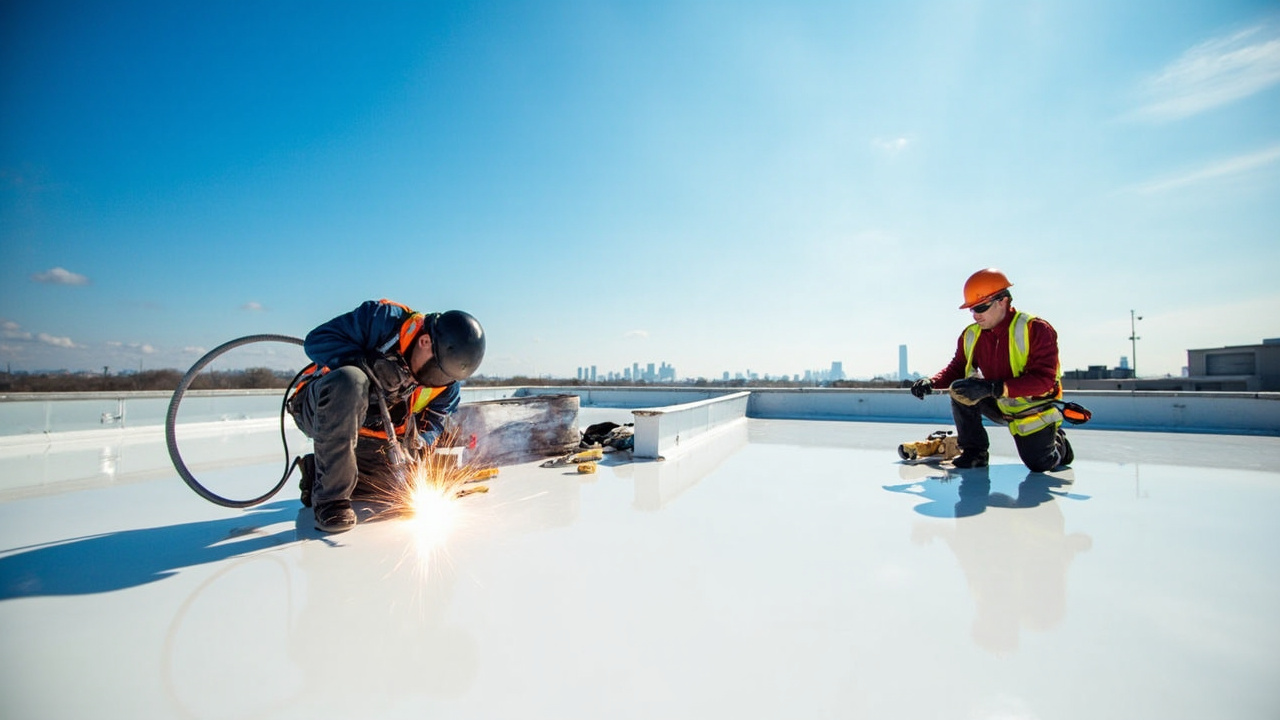
Our installation crews use only fully adhered or mechanically attached TPO membrane roofing. We avoid ballasted systems in Louisville due to wind uplift risk during severe weather. Every seam is hot-air welded using calibrated equipment that maintains a constant 900-degree weld temperature. We probe-test every seam after installation to verify bond strength. If a seam fails the probe test, we re-weld it immediately.

Flashing details matter. Most TPO roof failures happen at penetrations, not in the field membrane. We custom-fabricate all pipe boots, HVAC curbs, and parapet wall flashings using the same TPO material as your roof membrane. This eliminates the weak points created by mixing materials. We also install pressure-equalization vents to prevent membrane billowing and extend system life.

Fortress Roofing Louisville coordinates installation around your business hours. We can work second shift, weekends, or in phased sections to keep your operations running. Our project managers communicate daily with your facility team to address access restrictions, loading dock schedules, and safety protocols.

You get a watertight, code-compliant roof installed on schedule. We clean up daily and leave your property ready for business every morning.

What Happens During Your Commercial TPO Roof Installation

TPO Roofing Installation in Louisville – Minimize Downtime with Commercial-Grade Single-Ply Systems
01

Site Assessment and Planning

We inspect your building deck, measure drainage slopes, and identify all roof penetrations. Our team photographs problem areas and creates a scaled drawing showing membrane layout and seam placement. You receive a detailed scope of work that includes material specifications, attachment method, and a project timeline. We coordinate with your property manager to schedule work around deliveries, peak business hours, and employee parking.
02

Membrane Installation and Welding

Our crews install insulation boards, secure them to deck, and roll out TPO membrane in continuous sheets to minimize seams. We use hot-air welding equipment to fuse each overlap, creating a permanent bond stronger than the base membrane. All flashings are heat-welded to the field membrane. We install walkway pads at high-traffic areas and apply sealant at termination bars. Every penetration is sealed and tested before we move to the next section.
03

Quality Control and Handoff

We probe-test 100 percent of seams to verify weld integrity. Our project manager conducts a final walkthrough with you, pointing out drainage improvements and maintenance access points. You receive a roof system manual that includes material warranties, a maintenance schedule, and emergency contact information. We photograph the completed installation for your records and submit all documentation required for building department closeout and insurance updates.

Why Louisville Facility Managers Choose Fortress Roofing for TPO Installation

We operate exclusively in the Louisville metro. Our crews know the local building inspectors, understand Kentucky Uniform Building Code requirements for commercial roofing, and can pull permits faster than regional contractors who treat Louisville as an afterthought.

Our teams have installed TPO membrane roofing on distribution centers in Jeffersontown, retail centers in St. Matthews, and manufacturing facilities in Rubbertown. We understand the drainage challenges created by Louisville's clay soil and design roof systems that shed water to perimeter gutters, not into interior drains that clog during spring pollen season.

We stock TPO material locally. When you approve a project, we do not wait two weeks for a distributor shipment. We start within 72 hours. Our crews arrive with their own hot-air welding equipment, generators, and safety gear. You do not coordinate subcontractors or deal with multiple vendors.

Fortress Roofing Louisville carries commercial general liability coverage and workers' compensation insurance that meets Louisville Metro's commercial contractor requirements. We provide certificates of insurance directly to your property management company before we start work. If you need to add your building owner as an additional insured, we handle that paperwork within 24 hours.

We also understand the urgency of roof failure in a commercial setting. A leak over your server room or production line costs you thousands of dollars per hour. Our emergency response team can deploy temporary waterproofing within two hours of your call, then return to complete permanent TPO installation once we stabilize the situation.

You need a roofing contractor who treats your business continuity as the priority. We do.

What to Expect When You Schedule TPO Roofing Installation

Project Timeline and Scheduling

Most commercial TPO roof systems take three to seven days to install, depending on building size and complexity. We provide a written schedule before we start and update you daily on progress. If weather delays work, we communicate immediately and adjust the timeline. We can work split shifts or weekends to avoid disrupting your business hours. Our crews arrive on time, work efficiently, and clean up completely at the end of each day.

Pre-Installation Roof Evaluation

We send a project manager to your building for a complete roof inspection. This includes infrared scanning to detect hidden moisture, core samples to check deck condition, and a fastener pull test to verify structural integrity. You receive a written report with photos showing problem areas and recommended repairs. If we find structural issues that require engineering review, we coordinate with your architect or structural engineer to develop a compliant solution.

Installation Quality and Performance

Every TPO roof we install meets or exceeds manufacturer specifications for seam strength, fastener spacing, and flashing details. We document the installation with photos and provide you with a roof system manual. Our crews are factory-trained in TPO welding techniques and use calibrated equipment to ensure consistent seam quality. You get a roof system that passes building inspection on the first try and performs reliably through Louisville's weather extremes.

Maintenance and Long-Term Support

We provide a post-installation maintenance plan that includes annual roof inspections, drain cleaning, and seam checks. Our team can handle emergency repairs if storm damage occurs. We keep detailed records of your roof system in our database, so any technician we send knows your building's specifications and history. If you need documentation for insurance renewals or property sales, we provide it within 24 hours. We are your long-term roofing partner, not a one-time contractor.

Frequently Asked Questions

You Have Questions,
We Have Answers

What are the disadvantages of TPO roofing? +

TPO roofing has three primary drawbacks for commercial buildings in Louisville. First, membrane seams can fail prematurely if installers lack experience with heat welding techniques. Second, TPO formulations vary widely between manufacturers, making quality inconsistent. Third, the material offers lower puncture resistance compared to PVC, which matters in areas with storm debris. Louisville's freeze-thaw cycles also stress poorly installed seams. TPO typically lasts 15-20 years, shorter than some alternatives. The material can become brittle over time, especially with temperature swings common in Kentucky. Choose experienced contractors who understand proper welding protocols to minimize these risks.

What goes under a TPO roof? +

A commercial TPO roof system in Louisville requires multiple layers for code compliance and performance. The structural deck, typically steel or concrete, forms the base. Next comes a vapor retarder to control moisture migration. Polyiso or EPS insulation boards sit above this, providing R-value required by Kentucky energy codes. A cover board, often gypsum or cement, protects the insulation and creates a stable surface. Finally, the TPO membrane installs over this assembly. Louisville's humidity makes proper vapor control critical. Some projects skip the cover board to reduce costs, but this leaves insulation vulnerable to damage during installation and future maintenance.

Can you put TPO directly over plywood? +

You can install TPO directly over plywood, but it creates risks you should understand. Code requires a separation layer, typically a slip sheet, between the wood deck and membrane. The plywood must meet structural load requirements and remain completely dry. Louisville's humidity can cause wood decks to expand and contract, stressing the membrane. This method eliminates the thermal benefits of insulation, reducing energy efficiency. Most commercial projects in Louisville use insulation over the deck for better R-value and to meet energy codes. Direct application works for temporary structures or re-roofs where existing insulation remains intact below the deck.

Should TPO roofing be glued down? +

TPO roofing attachment method depends on your building conditions and wind exposure in Louisville. Fully adhered systems use bonding adhesive across the entire membrane, creating superior wind uplift resistance for tall buildings or exposed locations. This method costs more but eliminates billowing and performs better in storms. Mechanically attached systems use plates and screws through the membrane, installing faster at lower cost. Ballasted systems use river rock or pavers but require structural capacity most Louisville buildings lack. Wind speeds and building height determine the best approach. Buildings near the Ohio River face higher wind loads, making fully adhered systems the safer choice.

How Louisville's Humidity and Storm Patterns Make TPO the Right Choice for Commercial Flat Roofs

Louisville averages 45 inches of rainfall per year, concentrated in spring and fall. This creates standing water on flat roofs with inadequate drainage. TPO membrane roofing resists water absorption and does not degrade when submerged. The material also handles Louisville's 70 percent average humidity without supporting mold growth or biological contamination. Summer heat indexes above 100 degrees cause thermal expansion in roofing materials. TPO remains flexible through these temperature swings, preventing the cracking and seam separation common in older EPDM or modified bitumen systems. The reflective surface also reduces cooling loads, cutting energy costs during Louisville's extended cooling season from May through September.

Commercial buildings in Louisville must comply with the Kentucky Uniform Building Code and Louisville Metro's energy efficiency standards. TPO roof systems meet these requirements without additional insulation layers or costly modifications. Local building inspectors recognize TPO as a proven system and approve installations quickly when installed by qualified contractors. Fortress Roofing Louisville maintains relationships with Louisville Metro's inspection department and understands the documentation required for permit approval. We also work with local commercial insurance carriers who offer lower premiums for buildings with Class A fire-rated roofing. Choosing a local contractor who understands these regulatory and insurance factors protects your investment and simplifies the approval process.

Roofing Services in The Louisville Area

Fortress Roofing Louisville is proud to serve the entire metro area and surrounding communities. We've included a map here to help you easily locate our main office and visualize the broad service region we cover, ensuring that expert, trustworthy roofing help is always within reach for our neighbors. If you are located slightly outside the highlighted area, please call us—we are often able to accommodate projects across a wider geographic region to provide our quality services to those who need it most.

Address:
Fortress Roofing Louisville, 10200 Forest Green Blvd, Louisville, KY, 40223

Additional Services We Offer

Our news updates

Latest Articles & News from The Blogs

Why Modern Shed Style Roof Additions in the Highlands Leak More Often The sloped single-plane design of modern shed roof…

Why Modern Shed Style Roof Additions in the Highlands Leak More Often

Why Modern Shed Style Roof Additions in the Highlands Leak More Often The sloped single-plane design of modern shed roof…

Choosing the Right Roof for a Modern Farmhouse in Polo Fields or Shakes Run

Choosing the Right Roof for a Modern Farmhouse in Polo Fields or Shakes Run Modern farmhouses in Louisville’s Polo Fields…

The Real Cost of Solar Shingles for Eco Friendly Homes in the East End

The Real Cost of Solar Shingles for Eco Friendly Homes in the East End Solar shingles represent a revolutionary roofing…

Contact Us

Do not wait for a roof failure to shut down your operations. Call Fortress Roofing Louisville at (502) 678-7557 to schedule a free roof evaluation. We provide written estimates within 48 hours and can start installation within one week of approval.