menu

Commercial EPDM Rubber Roofing in Louisville – Minimize Downtime and Maximize Roof Lifespan

Industrial-grade ethylene propylene diene monomer roofing systems engineered for Louisville's commercial properties, delivering uninterrupted business operations through weather extremes and decades of reliable service.

Slider Image 1
Slider Image 2
Slider Image 3
Slider Image 4
Slider Image 5
Slider Image 7
Slider Image 8
Slider Image 9
Slider Image 10
Slider Image 11

Why Louisville Commercial Buildings Need EPDM Roofing Membrane Systems

Louisville's weather patterns create specific challenges for commercial roof systems. The city experiences temperature swings from below freezing in winter to 90-degree summers, combined with 45 inches of annual rainfall and occasional severe thunderstorms rolling off the Ohio River valley. This thermal cycling and moisture exposure accelerates deterioration in traditional roofing materials.

Single-ply rubber membrane systems address these challenges through superior elasticity and waterproofing. EPDM roofing membrane maintains flexibility across temperature extremes without cracking or becoming brittle. The synthetic rubber composition resists UV degradation, ozone damage, and chemical exposure from industrial emissions common in Louisville's manufacturing districts near the Rubbertown corridor and Riverport Industrial areas.

Commercial EPDM roof systems deliver operational advantages beyond weather resistance. Installation occurs with minimal disruption to business operations. The material arrives in large sheets, reducing seam count and installation time compared to built-up roofing or modified bitumen. For warehouses in the East End industrial parks or retail centers along Shelbyville Road, this translates to reduced labor costs and faster project completion.

The ethylene propylene diene monomer composition provides dimensional stability. The membrane does not shrink or expand significantly, maintaining watertight seals around HVAC penetrations, skylights, and roof drains. This stability matters for Louisville buildings with complex rooflines or extensive mechanical equipment, where seal failure leads to interior damage and business interruption.

Why Louisville Commercial Buildings Need EPDM Roofing Membrane Systems
How Commercial-Grade EPDM Installation Protects Business Continuity

How Commercial-Grade EPDM Installation Protects Business Continuity

Proper EPDM installation requires substrate preparation specific to commercial load requirements. Fortress Roofing Louisville begins with structural evaluation, verifying deck integrity and drainage slope. Louisville's freeze-thaw cycles can compromise roof decks over time. We identify soft spots, check for ponding water areas, and ensure adequate drainage to downspouts.

Insulation selection impacts both energy efficiency and system longevity. We install polyisocyanurate or expanded polystyrene insulation boards appropriate to your building's R-value requirements and roof traffic patterns. For facilities with rooftop equipment access, we specify higher-density insulation that withstands foot traffic without compression.

Membrane attachment method depends on building use and wind exposure. Fully adhered systems provide maximum wind uplift resistance for taller buildings or exposed locations near the river. Mechanically fastened systems work for lower-profile buildings where roof access for maintenance is frequent. Ballasted systems suit buildings with sufficient structural capacity and minimal roof penetrations.

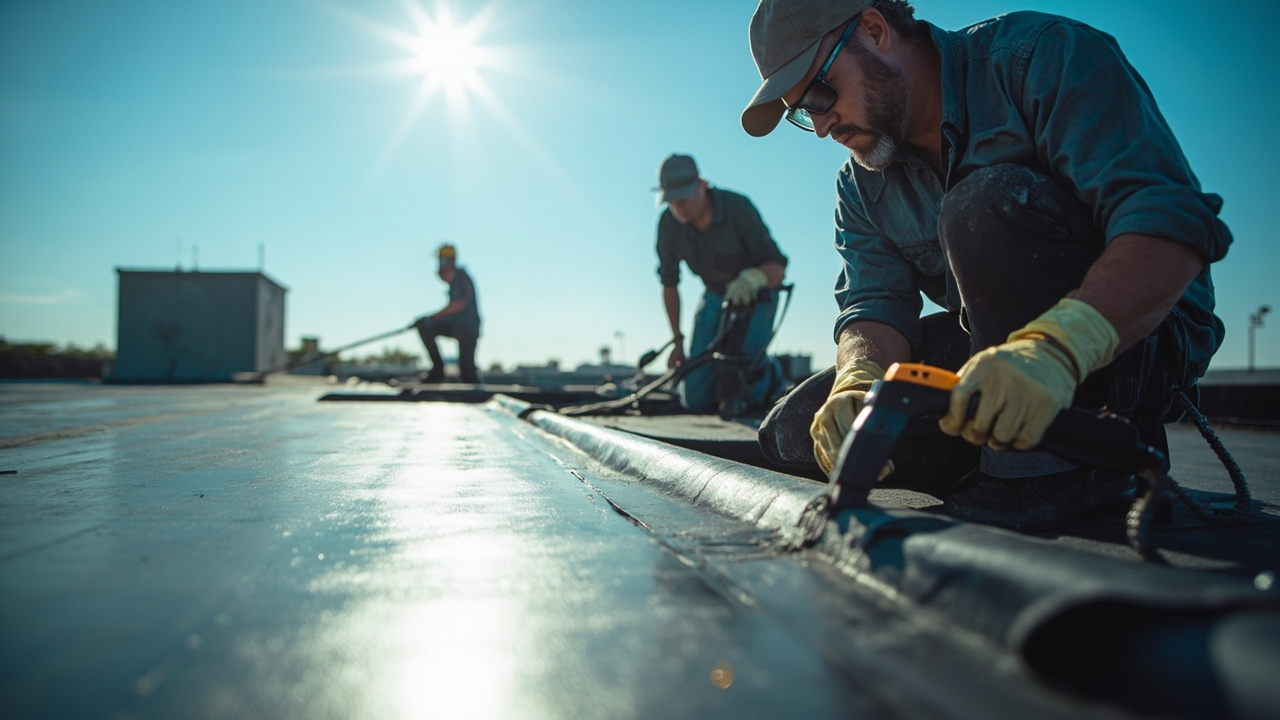
Seam welding represents the critical quality control point. We use hot-air welding to create vulcanized seams stronger than the membrane itself. Each seam undergoes probe testing to verify complete bonding. Flashings around penetrations receive multiple plies of EPDM and mastic sealant, creating redundant waterproofing layers.

Detail work separates adequate installation from leak-proof systems. We install prefabricated pipe boots, custom-fabricate inside and outside corners, and properly terminate membrane at parapets and equipment curbs. These details prevent the leak points that cause interior damage and business disruption.

Your Commercial EPDM Installation Timeline

Commercial EPDM Rubber Roofing in Louisville – Minimize Downtime and Maximize Roof Lifespan
01

Building Assessment and Planning

We conduct structural evaluation and infrared scanning to identify existing moisture intrusion or deck damage. This assessment determines tear-off requirements versus overlay installation. We measure roof dimensions, document penetrations, and photograph existing conditions. You receive a detailed scope of work specifying membrane thickness, attachment method, insulation R-value, and project timeline. We coordinate with your operations team to schedule work during low-activity periods and establish equipment protection protocols.
02

Membrane Installation and Sealing

Installation begins with insulation board placement and securing, followed by EPDM sheet positioning. Large commercial projects use cranes to position membrane sheets, minimizing foot traffic on fresh installation. Hot-air welding equipment bonds seams at controlled temperatures, creating watertight connections. All penetrations receive custom flashings and sealant applications. Daily progress reports keep you informed, and we maintain clean work zones to prevent debris infiltration into your operations. Weather monitoring ensures installation occurs within manufacturer specifications.
03

Quality Verification and Documentation

Every seam undergoes probe testing to verify complete adhesion. We conduct flood testing around drains and penetrations to confirm waterproofing integrity. You receive as-built drawings showing membrane layout, insulation specifications, and all penetration details. This documentation proves code compliance for Louisville Metro inspections and provides your facility manager with accurate records for future maintenance planning. We walk the completed roof with your team, explaining maintenance requirements and identifying any access considerations for future equipment service.

Why Louisville Businesses Choose Fortress Roofing for EPDM Systems

Commercial roofing failure costs more than repair fees. Water intrusion damages inventory, disrupts operations, and creates liability exposure. Choosing an experienced EPDM installer protects your investment and maintains business continuity.

Fortress Roofing Louisville understands commercial building requirements in Jefferson County. We work within Louisville Metro's building code requirements and coordinate with inspectors to ensure compliant installations. Our crews hold current safety certifications and follow OSHA protocols for fall protection and job site safety, reducing your liability exposure.

Louisville's commercial building stock ranges from historic structures in Old Louisville to modern distribution centers in Southwest Jefferson County. We adapt installation methods to building age and construction type. Older buildings with bar joist construction require different attachment methods than newer structures with structural steel decks. We evaluate load capacity before specifying insulation thickness or ballast weight.

Project scheduling aligns with your operational needs. We understand that retail centers cannot close during peak seasons, and warehouses operate on tight logistics schedules. Our crews work nights and weekends when necessary to avoid disrupting your business. We maintain multiple installation teams, allowing us to scale crew size to meet deadlines without sacrificing quality.

Weather contingency planning keeps projects on schedule. Louisville's spring and fall weather can be unpredictable. We monitor forecasts and adjust daily schedules to work around rain events. Materials remain protected on-site, and we never rush installation to meet arbitrary deadlines if conditions compromise quality.

What Your Commercial EPDM Project Includes

Installation Timeline and Coordination

Project duration depends on roof size, complexity, and tear-off requirements. A 20,000-square-foot warehouse roof typically requires five to seven working days for complete tear-off and installation. Larger distribution centers or multi-building complexes extend to two or three weeks. We provide detailed schedules showing daily progress milestones and coordinate deliveries to avoid impacting your parking or loading dock access. Pre-installation meetings establish communication protocols, emergency contacts, and daily site cleanup requirements. Your operations continue with minimal disruption.

Pre-Installation Building Evaluation

Comprehensive assessment identifies hidden problems before installation begins. We use infrared thermography to detect wet insulation and trapped moisture in existing roof assemblies. Core samples reveal deck condition and determine if structural repairs are necessary. This evaluation prevents discovering problems mid-project that cause delays and cost overruns. You receive a written report documenting findings, photographs of problem areas, and recommendations for substrate repairs. This transparency eliminates surprises and allows accurate budgeting for the complete scope of work needed to achieve a leak-free roof system.

Performance and Weather Resistance

Properly installed EPDM membrane delivers decades of service with minimal maintenance. The synthetic rubber composition resists Louisville's temperature extremes, maintaining flexibility in winter cold and stability in summer heat. Seams welded to manufacturer specifications create permanent bonds that outlast adhesive-only systems. The membrane's UV resistance prevents the surface degradation common in other single-ply materials. Your roof protects inventory and equipment through severe weather, maintaining interior climate control and preventing water damage. Energy efficiency improves through properly specified insulation, reducing HVAC operating costs year-round.

Maintenance Planning and Longevity

EPDM requires minimal maintenance compared to built-up or modified bitumen systems. Semi-annual inspections identify minor issues before they become leaks. We check seam integrity, clear debris from drains, and inspect flashings around penetrations. You receive inspection reports with photographs documenting roof condition and any recommended repairs. This proactive approach extends system life and prevents emergency repairs. We maintain records of your roof configuration, making future repairs or modifications straightforward. When equipment upgrades require new roof penetrations, we return with matching materials and proper flashing details to maintain waterproofing integrity.

Frequently Asked Questions

You Have Questions,
We Have Answers

What are the disadvantages of EPDM rubber? +

EPDM rubber roofing presents several operational drawbacks for commercial properties. The seams require precise installation and represent your weakest point for water intrusion. The black membrane absorbs heat in Louisville's humid summers, increasing cooling costs by up to 15%. Sharp objects puncture the material easily during HVAC maintenance or debris impact. Color fading occurs within 10 years, affecting appearance for customer-facing facilities. The membrane shrinks over time, pulling away from edges and penetrations. Chemical exposure from grease or oils causes degradation, making EPDM unsuitable for restaurant or industrial buildings with roof-mounted equipment that may leak fluids.

What is EPDM rubber roofing? +

EPDM rubber roofing is a synthetic rubber membrane made from ethylene propylene diene monomer. It comes in large black or white sheets, typically 10 to 50 feet wide, which minimizes seams on flat or low-slope commercial roofs. The material installs through mechanical fastening, full adhesive application, or ballasted systems using gravel. EPDM handles Louisville's temperature swings from 20°F winters to 90°F summers without cracking. The waterproof membrane protects warehouses, retail centers, and office buildings. It resists UV radiation and ozone exposure. Commercial property managers choose EPDM for budget-conscious roofing projects requiring reliable performance without significant maintenance overhead.

What are common problems with EPDM roofs? +

EPDM roofs experience predictable failure patterns that impact business operations. Seam failures account for 75% of leaks, especially in fully adhered systems where adhesive degrades. Ponding water accelerates membrane deterioration on roofs with inadequate drainage, common in Louisville's 45 inches of annual rainfall. Punctures from foot traffic or falling branches compromise the single-ply barrier. Shrinkage pulls the membrane away from perimeter flashing and penetrations after 15 years. Improper flashing details around HVAC units create entry points for moisture. Thermal cycling causes fasteners to loosen in mechanically attached systems. Bird pecking damages exposed edges. Regular inspections prevent minor issues from becoming business interruptions.

Does EPDM have to be glued down? +

EPDM installation method depends on your building requirements and budget. Fully adhered systems use contact adhesive or bonding adhesive across the entire roof deck, providing maximum wind uplift resistance for Louisville's occasional severe storms. Mechanically attached systems use plates and fasteners through the membrane into the deck, reducing installation time and cost. Ballasted systems lay loose membrane held down by river rock or pavers, offering easy repairs but requiring structural capacity for the additional weight. Loose-laid EPDM works only for protected areas. Commercial buildings in high-wind zones require full adhesion to meet code. Your structural engineer determines load capacity before selecting the attachment method.

What is the life expectancy of an EPDM roof? +

EPDM roofs last 20 to 25 years in Louisville's climate when installed and maintained correctly. The membrane's durability depends on installation quality, ponding water exposure, and foot traffic frequency. Commercial buildings with regular HVAC maintenance traffic see shorter lifespans near 18 years. White EPDM outlasts black by 3 to 5 years due to reduced thermal stress. Seam integrity determines functional lifespan more than membrane condition. Buildings with proper drainage and twice-yearly inspections reach 25 years. Deferred maintenance cuts life expectancy to 15 years. Budget for replacement at year 20 to avoid emergency roof failures that disrupt operations and damage inventory or equipment.

Can EPDM go over plywood? +

EPDM installs over plywood when the substrate meets specific requirements. The plywood must be exterior grade, minimum 5/8 inch thick, and properly fastened to structural framing. You need a cover board layer between plywood and EPDM to protect the membrane from wood resins and provide thermal resistance. The plywood surface must be smooth without knots, gaps, or projections that telegraph through the membrane. Moisture content must stay below 18% to prevent deck deterioration. Louisville's humidity requires vapor barriers in many applications. Plywood provides suitable substrate for warehouses and retail converting from shingle roofs. Structural engineers verify load capacity before installation begins.

What do you put under EPDM roofing? +

The substrate under EPDM roofing requires specific layers for code compliance and performance. Install insulation boards directly over the structural deck to meet Louisville energy codes. A cover board goes over insulation to protect it from traffic and prevent punctures. Use DensDeck, gypsum board, or high-density polyiso rated for membrane roofing. The cover board provides a smooth, stable surface for adhesive bonding. Some systems require slip sheets between insulation and membrane in mechanically attached applications. Vapor retarders install below insulation when interior humidity exceeds exterior conditions. Commercial buildings need fire-rated cover boards to meet FM Global or UL requirements for insurance compliance.

Can I walk on an EPDM roof? +

You can walk on EPDM roofs, but doing so improperly causes damage that leads to leaks. The membrane tolerates foot traffic when you wear soft-soled shoes and avoid dragging tools or equipment. Walk on designated pathways or use walk pads around HVAC units. Granular ballast in ballasted systems protects the membrane during maintenance. Avoid walking on EPDM in extreme heat when the material softens and punctures easily. Commercial buildings requiring frequent roof access need reinforced pathways or pavers at equipment locations. Train maintenance staff on proper roof access procedures. Unauthorized traffic voids warranties and creates liability issues when leaks damage tenant spaces or inventory.

What thickness of EPDM is best? +

Commercial EPDM roofing uses 45-mil or 60-mil thickness based on traffic exposure and budget. The 45-mil membrane costs less and works for roofs with minimal foot traffic and protective ballast systems. Specify 60-mil EPDM for roofs with regular HVAC maintenance, multiple penetrations, or mechanical attachment systems. The thicker membrane resists punctures and lasts 3 to 5 years longer in Louisville's climate. Retail centers and office buildings benefit from 60-mil durability. Warehouses with infrequent access can use 45-mil material. Building codes do not mandate thickness, but insurance carriers may require 60-mil for coverage. Your roofing contractor evaluates usage patterns before recommending thickness.

What is the 25% rule in roofing? +

The 25% rule determines when commercial roof repairs become uneconomical compared to replacement. When you spend 25% or more of a new roof's cost on repairs within a three-year period, full replacement makes better financial sense. The rule prevents throwing money at a failing system. For a warehouse with a 60,000 square foot roof costing 240,000 dollars to replace, spending over 60,000 dollars on repeated leak repairs triggers replacement consideration. Louisville building codes require permits for repairs exceeding 25% of roof area in some jurisdictions. The rule helps property managers budget capital expenses and avoid emergency replacements that disrupt operations and cost 30% more.

How Louisville's Ohio River Valley Climate Impacts Commercial Roofing Choices

Louisville sits in a transition zone where humid subtropical climate meets continental weather patterns. This creates rapid temperature fluctuations and high annual precipitation. The Ohio River valley channels moisture-laden air masses that produce frequent rain and occasional severe thunderstorms. Commercial buildings experience thermal cycling that stresses rigid roofing materials. EPDM's elasticity accommodates expansion and contraction without cracking. The membrane's resistance to standing water matters in Louisville, where heavy downpours can temporarily overwhelm roof drains on low-slope commercial buildings. Single-ply rubber membrane maintains waterproof integrity even when water ponds during storm events.

Louisville Metro enforces the International Building Code with local amendments specific to our region's wind loads and snow loads. Commercial EPDM installations must meet wind uplift requirements based on building height and exposure category. Fortress Roofing Louisville maintains familiarity with these code requirements and coordinates inspections with Louisville Metro's Division of Codes and Regulations. Our installation crews understand the documentation requirements for commercial projects, including fire rating certifications and insulation R-value verification. This local code knowledge prevents installation delays and ensures your building remains compliant for insurance and occupancy purposes.

Roofing Services in The Louisville Area

Fortress Roofing Louisville is proud to serve the entire metro area and surrounding communities. We've included a map here to help you easily locate our main office and visualize the broad service region we cover, ensuring that expert, trustworthy roofing help is always within reach for our neighbors. If you are located slightly outside the highlighted area, please call us—we are often able to accommodate projects across a wider geographic region to provide our quality services to those who need it most.

Address:
Fortress Roofing Louisville, 10200 Forest Green Blvd, Louisville, KY, 40223

Additional Services We Offer

Our news updates

Latest Articles & News from The Blogs

Replacing the TPO roof on your small business along Bardstown Road Your Bardstown Road commercial property faces unique challenges from…

Replacing the TPO roof on your small business along Bardstown Road

Replacing the TPO roof on your small business along Bardstown Road Your Bardstown Road commercial property faces unique challenges from…

How to get a professional roof certification before selling your Crestwood house

Selling a home in Crestwood KY means buyers expect proof your roof is sound. A professional roof certification gives buyers…

Luxury copper gutter installation for homes in the Cherokee Triangle

Luxury Copper Gutter Installation for Homes in the Cherokee Triangle\n\nCherokee Triangle homeowners understand that protecting their historic Victorian and Craftsman…

Contact Us

Stop worrying about roof leaks disrupting operations. Call Fortress Roofing Louisville at (502) 678-7557 for a comprehensive building assessment. We provide detailed proposals with transparent pricing and realistic timelines. Your business deserves a roof system that performs for decades.