menu

Emergency Flat Roof Patching in Louisville – Crews Dispatched in Under 60 Minutes

When water is pouring through your flat roof, minutes matter. Our emergency flat roof patching teams respond immediately to Louisville businesses and homeowners, stopping leaks before they destroy inventory, equipment, or your ceiling.

Slider Image 1
Slider Image 2
Slider Image 3
Slider Image 4
Slider Image 5
Slider Image 7
Slider Image 8
Slider Image 9
Slider Image 10
Slider Image 11

Why Flat Roofs Fail Fast in Louisville's Weather

A flat roof leak is not a slow problem. It is a flood waiting to happen.

Louisville sits in a climate zone where temperature swings are violent. Your flat roof expands in summer heat, contracts in winter freezes, and absorbs punishing rainfall year-round. The Ohio River Valley traps humidity, which accelerates membrane degradation. When a seam splits or a drain clogs, water does not run off. It pools. It sits. It finds every microscopic crack in your EPDM, TPO, or modified bitumen membrane.

You notice a stain on your ceiling. By the time you see it, gallons of water have already soaked into insulation, ceiling tiles, and electrical wiring. If you operate a warehouse, restaurant, or office building, that water is destroying inventory, shorting equipment, and creating liability.

Emergency flat roof repair is not about convenience. It is about stopping catastrophic loss. Urgent flat roof leak repair means a crew arrives before the damage spreads. Same day flat roof repair means you do not lose a week of revenue waiting for a contractor to return your call.

In Louisville, where storms roll in fast and drains clog with fallen leaves from our dense urban tree canopy, flat roofs fail without warning. A 24/7 flat roof patching service is the difference between a quick patch and a five-figure reconstruction project. When your roof is leaking, you need immediate flat roof leak fix. Not tomorrow. Not Monday morning. Now.

Why Flat Roofs Fail Fast in Louisville's Weather
How We Stop Flat Roof Leaks Before They Spread

How We Stop Flat Roof Leaks Before They Spread

Most roofing companies tell you to wait until business hours. We do not.

When you call Fortress Roofing Louisville, a live dispatcher answers. We send a truck with patching materials, tarps, and sealants. Our crews carry rolled EPDM patches, TPO welding equipment, and modified bitumen torches. We do not show up to look. We show up to fix.

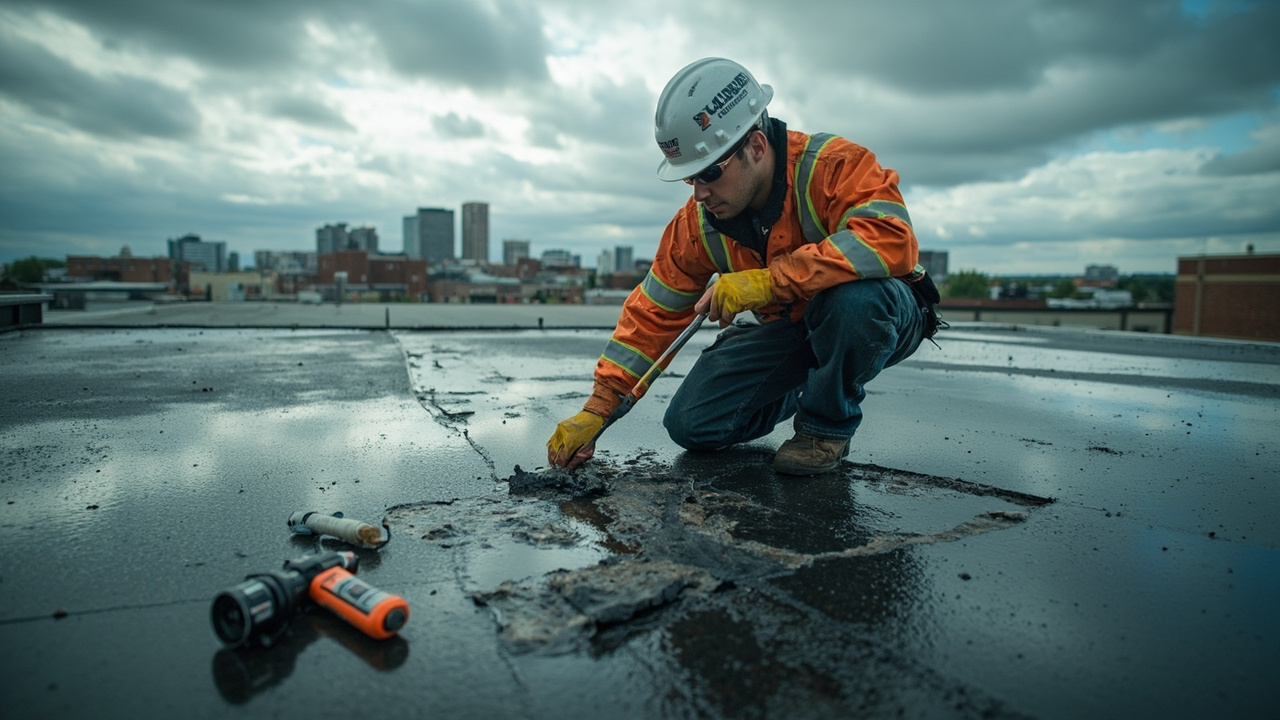
The first step is locating the breach. Flat roofs are deceptive. Water enters at one point but travels along the membrane before dripping through your ceiling. We use thermal imaging to trace moisture paths and pinpoint the exact failure point. If the puncture is in a seam, we strip the damaged section and heat-weld a new piece. If the membrane is blistered, we cut out the bubble, dry the substrate, and apply a multilayer patch with adhesive and mechanical fasteners.

If your drain is clogged, we clear it immediately. Ponding water weighs 5.2 pounds per gallon. A pool just 12 inches deep can add thousands of pounds of load to your roof deck. We also inspect the flashing around HVAC units, vents, and parapet walls. These transition points fail first.

For commercial clients, we prioritize containment. We tarp off the affected section, set up dehumidifiers, and coordinate with your insurance adjuster. For residential clients, we move furniture, protect electronics, and work fast.

Emergency flat roof patching is not a permanent repair. It is a triage. We stop the bleeding, then schedule a follow-up inspection to determine whether you need a section replacement or a full restoration.

What Happens When You Call for Emergency Patching

Emergency Flat Roof Patching in Louisville – Crews Dispatched in Under 60 Minutes
01

Immediate Dispatch

You call. We answer. No voicemail. No automated system. A dispatcher takes your address, confirms the type of flat roof membrane you have if known, and sends the nearest available crew. If you are unsure what type of roof you have, we bring multiple patching systems. Our trucks carry EPDM adhesive, TPO welding torches, and cold-applied sealants for all common flat roof types. Average response time in Louisville is under 60 minutes.
02

Locate and Seal

Once on site, we trace the water intrusion to its source using moisture meters and thermal cameras. Flat roofs leak at seams, penetrations, and low spots where water ponds. We clean the damaged area, dry it if possible using propane torches or heat guns, and apply a mechanical patch. For EPDM, we use peel-and-stick reinforced patches. For TPO, we heat-weld. For modified bitumen, we torch down a cap sheet.
03

Document and Plan

After the leak is stopped, we photograph the damage, mark the repair location, and provide a written summary. You receive a detailed assessment of whether this is an isolated failure or a symptom of systemic membrane aging. We explain what caused the breach, whether additional sections are at risk, and what permanent repair or replacement will cost. You leave with a roof that is no longer leaking and a clear action plan.

Why Louisville Property Owners Trust Us for Urgent Flat Roof Repairs

Louisville's flat roof inventory is diverse. We patch EPDM roofs on 1960s warehouses in Butchertown. We repair TPO membranes on new medical offices in St. Matthews. We fix asphalt-based systems on multi-family buildings in Old Louisville's historic districts.

Every neighborhood has different roof challenges. In Germantown, older commercial buildings have tar-and-gravel roofs that require hot-mopping techniques most contractors do not use anymore. In Jeffersontown, newer retail centers use TPO, which requires heat welding, not adhesive. In the Highlands, flat-roofed row houses have hidden parapet wall leaks that others miss.

We know Louisville's building code requirements. We know which repairs require permits and which qualify as emergency maintenance. We know how to work around the Louisville Metro Department of Codes and Regulations inspection schedule if your repair triggers a larger compliance issue.

We also understand the business side. If you operate a restaurant and your kitchen ceiling is dripping, you cannot afford to close for three days. We tarp, patch, and get you operational while scheduling the permanent fix during your slow hours.

Flat roofs fail at the worst times. Storms hit on weekends. Drains clog during spring pollen season. Membranes split during January freeze-thaw cycles. Fortress Roofing Louisville runs crews 24/7 because we know you cannot pause your business or your life to wait for a roofer.

We do not upsell during emergencies. We stop the leak. We give you options. We let you decide what happens next.

What You Get When You Call for Emergency Flat Roof Patching

Immediate Response

Our dispatch system prioritizes active leaks. If water is entering your building right now, you are first in the queue. We answer phones 24 hours a day, seven days a week, including holidays. Most Louisville calls are answered within two rings. If weather is severe and multiple properties are affected, we triage based on severity. A roof leaking into an electrical panel gets priority over a roof leaking into a storage room. Average arrival time is under 60 minutes for Louisville Metro addresses.

On-Site Damage Assessment

The crew inspects your entire flat roof, not just the obvious leak point. We check drain function, flashing integrity, and membrane condition. We use infrared cameras to detect trapped moisture under the membrane, which indicates hidden damage. You receive a verbal summary on-site and a written report within 24 hours. The report includes photos, measurements, and a breakdown of what failed, why it failed, and what needs to happen next. This documentation is critical for insurance claims.

Watertight Temporary Repair

Emergency patching is designed to hold for weeks or months, depending on conditions. We do not slap tar over a hole and leave. We prepare the surface, apply reinforced patches, and seal all edges. For large punctures or torn membranes, we install heavy-duty tarps secured with mechanical fasteners and weighted sandbags. If your roof cannot be patched safely in the dark or during active storms, we tarp first and return at dawn to complete the patch. You will not have water entering your building while we wait.

Follow-Up and Permanent Solutions

An emergency patch is a stopgap. After the crisis is over, we schedule a detailed roof inspection to determine the right long-term fix. If your flat roof is more than 15 years old and showing multiple failure points, a patch may only buy you a year. We provide cost estimates for section replacement, membrane overlays, or full tear-offs. If your roof is newer and the leak was caused by a single event like a fallen branch, a permanent patch may be sufficient. We give you all the information. You make the decision.

Frequently Asked Questions

You Have Questions,
We Have Answers

How to temporarily patch a flat roof? +

Clear debris and water from the leak area. Dry the surface completely with towels or a fan. Apply roofing cement or a peel-and-stick patch over the damaged section, extending 6 inches beyond the leak on all sides. Press firmly to seal edges. For Louisville's unpredictable weather, secure a tarp over the patch with sandbags if rain threatens. This buys you 24-48 hours. Flat roofs trap water, so call a professional immediately. Temporary patches fail fast in freeze-thaw cycles common here.

What is a temporary cover for a leaking flat roof? +

A heavy-duty poly tarp secured with sandbags or screwed-in boards works best for emergency coverage. Extend the tarp at least 4 feet past the leak in all directions to prevent wind uplift. Louisville's summer storms bring high winds, so anchor every corner tightly. Avoid nails that puncture the membrane further. Roll excess tarp material and weigh it down. This stops active leaking but does not fix the root problem. Schedule a professional inspection within 48 hours to prevent interior mold growth from trapped moisture.

How to repair a flat roof without replacing it? +

Small punctures or blisters can be repaired with roof coatings or patching membrane without full replacement. Clean the damaged area, cut away loose material, and apply compatible patching compound or EPDM tape. For seam failures common in Louisville's temperature swings, re-seal with lap sealant. Ponding water areas need tapered insulation added to improve drainage. Repairs work if damage covers less than 25 percent of the roof. Widespread cracking or membrane shrinkage means replacement is safer. A professional assessment prevents wasting money on repairs that fail.

What is the best way to repair a leaking flat roof? +

Identify the exact leak source first. Water travels on flat roofs, so the interior stain rarely matches the exterior damage. Clean and dry the area completely. Apply a rubberized membrane patch or cold-applied roofing cement, pressing edges down firmly. For Louisville's humid climate, use moisture-curing sealants that bond in damp conditions. Coat the patch with reflective aluminum coating to prevent UV breakdown. This method works for small areas. Persistent leaks mean flashing failure or membrane degradation. Stop the water now, but get a professional diagnosis within 72 hours.

How to temporarily cover a flat roof? +

Use a reinforced poly tarp rated for outdoor use. Extend coverage 3-4 feet beyond the damaged area on all sides. Secure edges with sandbags or 2x4 boards weighed down with cinder blocks. Never nail through a flat roof membrane unless you are sealing the penetration immediately. Louisville's wind gusts can rip loose tarps, so double-check anchor points. Roll excess tarp material tightly and secure it. This prevents water intrusion until a crew arrives. Replace tarps every few days if rain continues.

Does flex seal really work on roofs? +

Flex Seal provides short-term water resistance for minor cracks but fails on flat roofs under ponding water. Louisville's flat roofs hold water after storms, and Flex Seal breaks down under constant submersion. It does not bond well to dirty or wet surfaces, which you face in an emergency. The product works for vertical flashing or small gaps, not horizontal membrane repairs. Use commercial-grade roof cement or peel-and-stick patches instead. Flex Seal is a temporary band-aid, not a reliable repair for flat roof leaks.

Can I apply roof Maxx myself? +

Roof Maxx is a soy-based rejuvenator for asphalt shingles, not flat roofing membranes like EPDM, TPO, or modified bitumen. Applying it yourself to a flat roof wastes money and does nothing to stop leaks. Flat roofs require different materials and techniques than sloped shingle roofs. If you have a flat roof leak in Louisville, skip DIY treatments. You need membrane patches, sealants, or professional coating systems designed for low-slope applications. Call a flat roof specialist to diagnose the problem correctly.

How to fix a roof leak temporarily? +

Locate the leak from inside by tracing water stains. Move to the roof and clear the area of debris and standing water. Dry the surface with towels. Apply roofing cement or a rubberized patch, extending 6 inches past the damage. Press edges down firmly. Cover with a tarp if more rain is coming. Louisville's humidity slows drying, so use a fan if possible. This stops water intrusion for 24-48 hours. Schedule a professional repair immediately because temporary fixes degrade fast under UV and temperature swings.

What is the best temporary waterproof roof covering? +

Heavy-duty reinforced poly tarps rated 12-mil thickness or higher provide the best temporary waterproofing. Secure them with sandbags or weighted boards, never nails. For Louisville's summer storms, choose tarps with reinforced grommets to resist wind tears. Silver or white tarps reflect heat and last longer under sun exposure. Peel-and-stick rubberized membrane patches work for smaller areas and bond better than tarps. Both are stopgaps. Water trapped under coverings breeds mold in Louisville's humidity, so get permanent repairs done within a week.

Why is my flat roof leaking after heavy rain? +

Heavy rain exposes clogged drains, failed seams, or damaged flashing. Louisville's clay soil shifts during wet periods, cracking parapet walls and opening gaps. Ponding water sits on low spots, seeping through seams or blisters in the membrane. Debris blocks scuppers, forcing water to pool and find weak points. Older roofs lose elasticity in freeze-thaw cycles, cracking under water weight. Check drains first, then inspect seams and flashing. If leaks appear only after storms, drainage failure is likely. Call a roofer to assess slope and membrane integrity immediately.

How Louisville's Humidity and Storms Accelerate Flat Roof Failure

Louisville averages 45 inches of rain per year, concentrated in spring and early summer. Flat roofs depend on functioning drains and scuppers to evacuate water. When drains clog with pollen, leaves, or debris from our heavy tree cover, water pools. Ponding water degrades membrane adhesives, promotes algae growth, and creates freeze-thaw damage in winter. The Ohio River Valley also traps humidity, which accelerates UV degradation of TPO and EPDM membranes. Emergency flat roof patching becomes necessary faster here than in drier climates.

Fortress Roofing Louisville operates year-round because flat roof emergencies do not wait for good weather. We work with local insurance adjusters who understand Louisville's storm patterns and know that ponding water claims are common here. We also coordinate with the Louisville Metro Department of Codes and Regulations when emergency repairs trigger permit requirements. Choosing a local contractor means faster response, better knowledge of regional roof systems, and crews who understand that a spring storm can dump three inches of rain in 90 minutes.

Roofing Services in The Louisville Area

Fortress Roofing Louisville is proud to serve the entire metro area and surrounding communities. We've included a map here to help you easily locate our main office and visualize the broad service region we cover, ensuring that expert, trustworthy roofing help is always within reach for our neighbors. If you are located slightly outside the highlighted area, please call us—we are often able to accommodate projects across a wider geographic region to provide our quality services to those who need it most.

Address:
Fortress Roofing Louisville, 10200 Forest Green Blvd, Louisville, KY, 40223

Additional Services We Offer

Our news updates

Latest Articles & News from The Blogs

Why Modern Shed Style Roof Additions in the Highlands Leak More Often The sloped single-plane design of modern shed roof…

Why Modern Shed Style Roof Additions in the Highlands Leak More Often

Why Modern Shed Style Roof Additions in the Highlands Leak More Often The sloped single-plane design of modern shed roof…

Choosing the Right Roof for a Modern Farmhouse in Polo Fields or Shakes Run

Choosing the Right Roof for a Modern Farmhouse in Polo Fields or Shakes Run Modern farmhouses in Louisville’s Polo Fields…

The Real Cost of Solar Shingles for Eco Friendly Homes in the East End

The Real Cost of Solar Shingles for Eco Friendly Homes in the East End Solar shingles represent a revolutionary roofing…

Contact Us

Water is entering your building right now. Every minute you wait, the damage spreads. Call Fortress Roofing Louisville at (502) 678-7557. We dispatch crews immediately and stop flat roof leaks fast.