
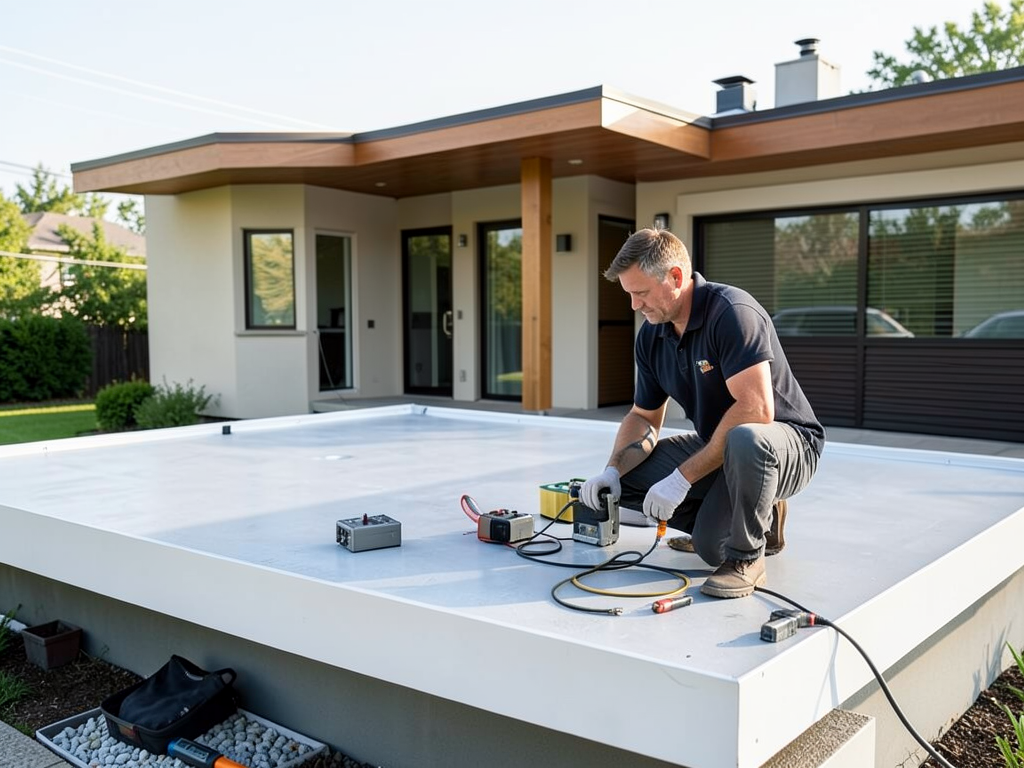
Upgrading the Flat Roof on Your Mid Century Modern Gem in Spring Valley
Your Mid Century Modern home in Spring Valley deserves a roofing system that honors its clean lines while standing up to Louisville’s punishing weather. The flat roof sections that define your home’s architectural character face unique challenges from our region’s high humidity, frequent thunderstorms, and seasonal freeze-thaw cycles. A failing flat roof doesn’t just look bad – it threatens the structural integrity of your entire home and can lead to costly interior damage. The most trusted roofing services in Germantown and Schnitzelburg.
Flat roofs on Mid Century Modern homes typically use built-up roofing or modified bitumen systems that have reached their 20-30 year lifespan. You’ll notice warning signs like ponding water that lingers more than 48 hours after rain, bubbling or blistering in the membrane, or interior water stains on your ceilings. These aren’t just cosmetic issues – they’re your roof crying for help before major failure occurs. Roofing Owensboro.
The good news is that modern flat roofing materials offer dramatically better performance than what was available when your home was built. Today’s TPO membranes reflect heat and resist UV damage, EPDM rubber provides exceptional flexibility for our temperature swings, and modified bitumen systems offer proven reliability with modern improvements. Each system brings specific advantages for Louisville’s climate and your home’s architectural style.
Understanding your options and the replacement process helps you make informed decisions that protect your investment. From proper drainage design to material selection and installation techniques, every detail matters when upgrading your flat roof. The right contractor will help you navigate building codes, choose materials that complement your home’s aesthetic, and provide warranties that give you peace of mind.
Understanding Your Mid Century Modern Flat Roof
Mid Century Modern architecture emerged in Louisville’s Spring Valley neighborhood during the 1950s and 1960s, featuring low-pitched or flat roof sections that create dramatic horizontal lines. These roofs weren’t just aesthetic choices – they were practical solutions for post-war construction that emphasized simplicity and functionality. However, the materials available at that time lacked the durability and weather resistance we expect today. Valley Leak Repair.
Most Spring Valley homes use built-up roofing (BUR) or modified bitumen systems. BUR consists of alternating layers of asphalt and reinforcing fabrics, while modified bitumen adds polymer modifiers for improved flexibility. Both systems work well initially but degrade over time from Louisville’s intense UV exposure, temperature fluctuations, and the area’s high humidity that promotes algae and moss growth.
The flat sections on these homes often serve multiple purposes – they might cover garage areas, provide transitions between different roof heights, or create usable rooftop spaces. This architectural complexity means replacement requires careful planning to maintain your home’s distinctive appearance while improving performance. The parapet walls and minimal slope that characterize these roofs also create drainage challenges that modern systems must address.
Spring Valley’s location near the Ohio River means your roof faces additional moisture exposure and potential for wind-driven rain. The neighborhood’s mature trees, while beautiful, drop leaves and debris that can clog drainage systems. Understanding these local factors helps explain why your roof might be failing and what solutions will work best for your specific situation.
Modern Flat Roofing Materials for Louisville Homes
Today’s flat roofing materials offer significant improvements over the original systems on Mid Century Modern homes. Thermoplastic Polyolefin (TPO) has become increasingly popular for residential applications due to its energy efficiency and durability. This single-ply membrane reflects up to 87% of solar radiation, helping reduce cooling costs during Louisville’s hot summers. TPO also resists algae growth, which is crucial in our humid climate where organic growth can quickly compromise roof integrity. Reliable residential roofing specialists serving Jeffersonville and Clarksville.
EPDM rubber roofing provides another excellent option, particularly for homes with complex roof geometries. This synthetic rubber membrane offers superior flexibility, allowing it to expand and contract with temperature changes without cracking. Louisville experiences temperature swings of 50-60 degrees between summer highs and winter lows, making EPDM’s flexibility particularly valuable. The material also withstands UV exposure and resists damage from hail, which affects our area several times each year.
Modified bitumen systems have evolved significantly since the 1960s. Modern polymer-modified asphalt provides better elasticity and UV resistance than traditional built-up roofing. These systems install in multiple layers, creating redundancy that helps prevent leaks. The granulated surface options can match your home’s exterior colors, maintaining the architectural integrity of your Mid Century Modern design.
Each material system has specific installation requirements and performance characteristics. TPO requires heat-welded seams that create a monolithic membrane, while EPDM uses adhesive or mechanical fastening. Modified bitumen can be torch-applied or cold-applied, with the latter being safer for occupied homes. Your contractor should help you understand which system best matches your home’s needs, your budget, and your long-term maintenance preferences.
Common Flat Roof Problems in Spring Valley
Ponding water represents the most frequent issue on flat roofs in Spring Valley. When water sits on your roof for more than 48 hours after rain, it indicates inadequate slope or clogged drainage. Our area receives 45-50 inches of rain annually, and the flat design that looks sleek can trap water if not properly engineered. This standing water accelerates membrane deterioration, promotes algae growth, and can eventually lead to structural damage as the roof deck absorbs moisture.
Membrane punctures and tears often occur from foot traffic during maintenance or from falling tree branches during Louisville’s frequent wind storms. The original roofing materials on Spring Valley homes typically have thinner membranes that are more susceptible to damage. Once a small puncture occurs, water can infiltrate and cause extensive damage before you notice any interior signs.. Read more about Why your New Albany small business might benefit from an EPDM rubber roof system.
Flashing failures around roof penetrations represent another common failure point. HVAC units, vents, and other rooftop equipment require proper flashing installation. The thermal expansion and contraction in our climate can cause older flashing materials to separate from the roof membrane. Spring Valley’s temperature variations can exceed 70 degrees between summer and winter, putting tremendous stress on these connection points.
Freeze-thaw cycles particularly affect flat roofs in our region. When temperatures fluctuate above and below freezing, any water trapped in small cracks or under the membrane expands as it freezes. This expansion widens existing damage and creates new failure points. Our area experiences dozens of freeze-thaw cycles each winter, making this a significant factor in roof degradation.
Proper diagnosis requires understanding these failure patterns. A qualified roofing contractor will use moisture meters to detect trapped water, infrared cameras to identify temperature variations that indicate moisture intrusion, and physical inspection to assess membrane condition. This diagnostic approach helps determine whether repair or replacement makes the most economic sense for your situation. Commercial flat roof repair and maintenance for business owners in NuLu.
The Replacement Process: What to Expect
Professional flat roof replacement follows a systematic process that protects your home and ensures quality results. The process begins with a comprehensive inspection that documents existing conditions, measures roof dimensions, and identifies structural issues. Your contractor should provide detailed photos and a written assessment explaining their findings and recommendations.. Read more about How to get a professional roof certification before selling your Crestwood house.
Permit requirements in Jefferson County require specific documentation for flat roof replacements. The Kentucky Residential Code mandates proper slope for drainage, adequate insulation R-values, and approved materials for your application. Your contractor should handle permit acquisition and ensure all work meets local building standards. This compliance protects you from potential issues when selling your home and ensures your warranty remains valid.
Surface preparation represents a critical phase that many homeowners don’t see. The existing roof material must be removed down to the deck, which may reveal hidden damage requiring repair. The deck surface gets cleaned and inspected for rot or structural issues. Any damaged sections receive replacement before new materials install. This preparation work, while not visible in the finished product, determines the longevity of your new roof.
Installation timing depends on weather conditions and material availability. Louisville’s spring and fall offer ideal installation conditions, while summer heat can make some materials difficult to work with and winter cold can prevent proper adhesion. Your contractor should provide a realistic timeline and communicate any weather-related delays. Most residential flat roof replacements complete within 3-5 days, though complex projects may require additional time.
Quality control during installation includes multiple inspection points. The contractor should verify proper slope for drainage, confirm all seams are correctly sealed, and test flashings around penetrations. Final cleanup should leave your property in better condition than when work began, with all debris removed and surrounding areas protected from damage during the project.
Cost Factors for Flat Roof Replacement
Several factors influence the cost of replacing your flat roof in Spring Valley. Roof size represents the most obvious factor – larger roofs require more materials and labor. However, complexity also significantly impacts cost. Multiple roof levels, numerous penetrations, or difficult access points increase labor time and may require specialized equipment or techniques.
Material selection dramatically affects both initial cost and long-term value. TPO membranes typically cost more upfront than EPDM but offer better energy efficiency and longer warranties. Modified bitumen systems fall in the middle range, while premium materials like PVC or specialized coatings can increase costs by 30-50%. Your contractor should help you understand the lifecycle costs, not just the initial price.
Deck condition substantially impacts project costs. If the existing deck shows water damage or rot, replacement becomes necessary before installing new roofing. This structural work adds significant cost but prevents future failures. A thorough inspection before providing quotes helps identify these potential issues upfront rather than as change orders during the project.
Building code requirements in Jefferson County may mandate specific improvements during replacement. Current codes often require higher insulation R-values than original construction, improved drainage systems, or enhanced fire ratings. While these upgrades increase initial costs, they improve energy efficiency and may qualify for tax incentives or insurance premium reductions.
Warranty options range from basic manufacturer warranties covering material defects to comprehensive systems including workmanship guarantees. Longer warranties typically cost more but provide better long-term protection. Some manufacturers offer warranties transferable to new homeowners, which can increase your home’s resale value. Understanding warranty terms helps you evaluate the true cost of different options.
Energy Efficiency and Modern Improvements
Modern flat roofing systems offer significant energy efficiency improvements over original installations. Cool roof technologies reflect solar radiation rather than absorbing it, reducing heat transfer into your home. In Louisville’s climate, where summer temperatures regularly exceed 90 degrees, this reflection can reduce cooling costs by 15-30%. TPO membranes with high solar reflectance indices (SRI) provide these benefits while maintaining the clean aesthetic of your Mid Century Modern design.
Insulation upgrades during replacement provide another opportunity for energy savings. Current building codes require R-30 insulation in roof assemblies, significantly higher than what was available in the 1960s. Proper insulation not only reduces energy costs but also prevents condensation issues that can damage roofing materials. The added insulation layer also improves sound dampening, reducing noise from rain and hail.
Ventilation improvements help manage moisture and temperature in your attic space. While flat roofs don’t have traditional attic spaces, the area between the roof deck and ceiling still requires proper airflow. Modern ventilation systems prevent moisture accumulation that can lead to mold growth and material deterioration. This is particularly important in Spring Valley’s humid climate where moisture management directly impacts roof longevity.
Solar integration represents an emerging option for flat roofs. The unobstructed surface area of flat roofs makes them ideal for solar panel installation. Some modern roofing systems incorporate solar-ready features, making future panel addition easier and more cost-effective. While the initial investment is substantial, solar integration can provide energy independence and potential tax incentives.
Smart monitoring systems now allow homeowners to track roof conditions remotely. These systems use sensors to detect moisture intrusion, measure temperature variations, and alert you to developing problems before they cause visible damage. While not standard on most residential projects, these systems can provide early warning of issues, potentially saving thousands in repair costs.
Choosing the Right Contractor in Louisville
Selecting a qualified roofing contractor requires careful evaluation beyond just price quotes. Experience with Mid Century Modern homes specifically matters because these roofs present unique challenges in maintaining architectural integrity while upgrading performance. A contractor familiar with Spring Valley’s housing stock understands the specific issues these homes face and can recommend appropriate solutions.
Proper licensing and insurance protect you throughout the project. In Kentucky, roofing contractors must carry general liability insurance and workers’ compensation coverage. Ask for proof of insurance and verify current status with the issuing companies. Additionally, check for manufacturer certifications that indicate the contractor has received specialized training on specific roofing systems.
References and portfolio review provide insight into a contractor’s work quality. Request photos of completed flat roof projects, particularly those on homes similar to yours. Contact references to ask about their experience with the contractor’s communication, adherence to schedules, and handling of any issues that arose during the project. A reputable contractor welcomes this scrutiny and provides detailed references.
Written contracts should detail every aspect of the project, including materials to be used, project timeline, payment schedule, and warranty terms. The contract should specify who handles permit acquisition and what building codes the project must meet. Avoid contractors who resist providing written agreements or who demand large upfront payments before work begins.
Communication throughout the project prevents misunderstandings and ensures your expectations align with the contractor’s execution. A good contractor provides regular progress updates, explains any discovered issues promptly, and seeks your input on decisions that affect the final result. This collaborative approach helps ensure the finished roof meets both your functional needs and aesthetic preferences.
Maintenance for Long-Term Performance
Regular maintenance extends the life of your new flat roof and protects your investment. Annual inspections identify developing issues before they become major problems. These inspections should check for membrane damage, verify drainage systems function properly, and inspect flashings around penetrations. Spring inspections are particularly important in Louisville to assess any winter damage and prepare for summer storms.
Drainage system maintenance prevents the most common flat roof failure. Keep scuppers and internal drains clear of debris, particularly after spring pollen season and fall leaf drop. Spring Valley’s mature trees drop substantial debris that can quickly overwhelm drainage systems. Consider installing leaf guards or upgrading to larger diameter drains if you experience frequent clogging.
Membrane cleaning removes organic growth that can degrade roofing materials. Louisville’s high humidity promotes algae and moss growth on roofing surfaces. While some modern materials include anti-microbial additives, periodic cleaning with appropriate solutions prevents buildup that can trap moisture and accelerate deterioration. Avoid pressure washing, which can damage roofing materials, and instead use soft washing techniques recommended by manufacturers.
Prompt repair of minor damage prevents costly failures. Small punctures or seam separations can allow water infiltration that damages insulation and deck materials before showing interior signs. Keep a small amount of matching repair material on hand for emergency patches, and establish a relationship with your roofing contractor for prompt service when issues arise.
Seasonal preparation helps your roof withstand Louisville’s weather extremes. Before winter, ensure drainage systems are clear to prevent ice dam formation. In spring, inspect for any damage from winter storms or freeze-thaw cycles. After summer’s intense UV exposure, check for any membrane degradation. This proactive approach can add years to your roof’s service life.
Frequently Asked Questions
How long does a flat roof replacement take?
Most residential flat roof replacements in Spring Valley complete within 3-5 days, weather permitting. Complex projects or those requiring deck repairs may take longer. Your contractor should provide a specific timeline after the initial inspection.
What’s the best flat roofing material for Louisville’s climate?
TPO offers excellent energy efficiency and UV resistance for our hot summers, while EPDM provides superior flexibility for temperature fluctuations. Modified bitumen offers proven reliability. The best choice depends on your specific home, budget, and preferences.
How much does flat roof replacement cost in Spring Valley?
Costs vary based on roof size, material selection, and any necessary repairs. Expect to invest between $8,000 and $20,000 for most residential flat roof replacements in the area. Complex projects or premium materials increase costs.
Will I need to move out during replacement?
Most flat roof replacements allow you to remain in your home. Some noise and temporary utility interruptions occur, but complete displacement is rarely necessary unless structural repairs are extensive.
How long will my new flat roof last?
Quality flat roofing systems typically last 20-30 years with proper maintenance. TPO and EPDM often carry 20-30 year warranties, while modified bitumen systems may offer 15-25 year coverage depending on the specific product.
Do I need permits for flat roof replacement?
Yes, Jefferson County requires permits for flat roof replacements. Your contractor should handle permit acquisition and ensure all work meets local building codes. This compliance protects your investment and warranty coverage.
How can I tell if my flat roof needs replacement or just repair?
Multiple factors determine whether repair or replacement makes sense. Age, extent of damage, and repair history all influence this decision. A professional inspection can assess your roof’s condition and recommend the most cost-effective solution.
What maintenance does a flat roof require?
Annual inspections, keeping drainage systems clear, and prompt repair of minor damage are essential. Professional inspections every 2-3 years help identify developing issues early. Maintenance requirements are minimal compared to the protection your roof provides.
Can I install solar panels on my flat roof?
Yes, flat roofs provide excellent surfaces for solar panel installation. The unobstructed area and proper orientation make them ideal for solar integration. Discuss solar options with your roofing contractor during the replacement planning phase.
What warranties come with flat roof replacement?
Warranties typically include manufacturer material warranties (covering defects) and contractor workmanship warranties (covering installation errors). Coverage periods vary by material and contractor, ranging from 10 to 30 years. Read warranty terms carefully to understand coverage limitations.
Protecting Your Mid Century Modern Investment
Your Mid Century Modern home in Spring Valley represents more than just shelter – it’s a piece of architectural history that deserves proper care. The flat roof sections that define your home’s character require specialized knowledge to replace correctly while maintaining the design integrity that makes your home special. Understanding your options, the replacement process, and what to expect helps you make informed decisions that protect both your home’s function and its aesthetic appeal.
Modern flat roofing materials offer dramatic improvements over the original systems, providing better energy efficiency, longer life, and enhanced durability against Louisville’s challenging climate. From TPO’s reflective properties that reduce cooling costs to EPDM’s flexibility that handles temperature swings, today’s options give you choices that weren’t available when your home was built. The right combination of materials and installation techniques can provide decades of reliable protection while complementing your home’s distinctive architecture.
Choosing qualified contractors who understand Mid Century Modern construction and Louisville’s specific building requirements ensures your project succeeds. Proper permitting, quality materials, and professional installation protect your investment and provide the peace of mind that comes with knowing your home is properly protected. Regular maintenance then extends your roof’s life, maximizing your investment and preventing costly failures.
Don’t wait for visible leaks or interior damage to address your flat roof issues. By then, significant damage may have already occurred to your home’s structure. A professional inspection can identify developing problems and help you plan for replacement on your schedule rather than during an emergency. Your Mid Century Modern gem in Spring Valley deserves nothing less than expert care that preserves its character while providing modern protection.
Call (502) 678-7557 today to schedule your flat roof inspection. Our experienced team understands the unique requirements of Spring Valley’s Mid Century Modern homes and can help you choose the best roofing solution for your specific situation. Don’t let another season of Louisville weather damage your home – take action now to protect your architectural investment.
Pick up the phone and call (502) 678-7557 before the next storm hits. Your home’s protection can’t wait, and our team is ready to provide the expert service your Mid Century Modern gem deserves. Schedule your inspection now and take the first step toward worry-free roof protection. For more information, visit EPA’s Urban Heat Island information. For more information, visit National Association of Certified Home Inspectors.
You may also find this helpful. Why Pine Needles from the Springhurst Evergreens Cause More Roof Damage than Leaves.
{
“@context”: “https://schema.org”,
“@type”: “BlogPosting”,
“headline”: “Upgrading the Flat Roof on Your Mid Century Modern Gem in Spring Valley”,
“description”: “Expert flat roof replacement for Mid Century Modern homes in Spring Valley. Learn about TPO, EPDM, and Modified Bitumen systems tailored to Louisville’s climate.”,
“wordCount”: 3395,
“datePublished”: “2026-06-13T09:56:00.000Z”,
“dateModified”: “2026-06-13T09:56:00.000Z”,
“inLanguage”: “en-US”,
“mainEntityOfPage”: {
“@type”: “WebPage”,
“@id”: “https://fortressroofinglouisville.com”
},
“publisher”: {
“@type”: “LocalBusiness”,
“name”: “Fortress Roofing Louisville”,
“url”: “https://fortressroofinglouisville.com”
},
“author”: {
“@type”: “Organization”,
“name”: “Fortress Roofing Louisville”,
“url”: “https://fortressroofinglouisville.com”
},
“image”: {
“@type”: “ImageObject”,
“url”: “https://fortressroofinglouisville.com/wp-content/uploads/2026/03/upgrading-the-flat-roof-on-your-mid-century-modern-1.png”
}
}
{
“@context”: “https://schema.org”,
“@type”: “RoofingContractor”,
“name”: “Fortress Roofing Louisville”,
“url”: “https://fortressroofinglouisville.com”,
“address”: {
“@type”: “PostalAddress”,
“addressLocality”: “Louisville”
},
“areaServed”: {
“@type”: “City”,
“name”: “Louisville”
}
}
{
“@context”: “https://schema.org”,
“@type”: “FAQPage”,
“mainEntity”: [
{
“@type”: “Question”,
“name”: “How long does a flat roof replacement take?”,
“acceptedAnswer”: {
“@type”: “Answer”,
“text”: “Most residential flat roof replacements in Spring Valley complete within 3-5 days, weather permitting. Complex projects or those requiring deck repairs may take longer. Your contractor should provide a specific timeline after the initial inspection.”
}
},
{
“@type”: “Question”,
“name”: “What’s the best flat roofing material for Louisville’s climate?”,
“acceptedAnswer”: {
“@type”: “Answer”,
“text”: “TPO offers excellent energy efficiency and UV resistance for our hot summers, while EPDM provides superior flexibility for temperature fluctuations. Modified bitumen offers proven reliability. The best choice depends on your specific home, budget, and preferences.”
}
},
{
“@type”: “Question”,
“name”: “How much does flat roof replacement cost in Spring Valley?”,
“acceptedAnswer”: {
“@type”: “Answer”,
“text”: “Costs vary based on roof size, material selection, and any necessary repairs. Expect to invest between $8,000 and $20,000 for most residential flat roof replacements in the area. Complex projects or premium materials increase costs.”
}
},
{
“@type”: “Question”,
“name”: “Will I need to move out during replacement?”,
“acceptedAnswer”: {
“@type”: “Answer”,
“text”: “Most flat roof replacements allow you to remain in your home. Some noise and temporary utility interruptions occur, but complete displacement is rarely necessary unless structural repairs are extensive.”
}
},
{
“@type”: “Question”,
“name”: “How long will my new flat roof last?”,
“acceptedAnswer”: {
“@type”: “Answer”,
“text”: “Quality flat roofing systems typically last 20-30 years with proper maintenance. TPO and EPDM often carry 20-30 year warranties, while modified bitumen systems may offer 15-25 year coverage depending on the specific product.”
}
},
{
“@type”: “Question”,
“name”: “Do I need permits for flat roof replacement?”,
“acceptedAnswer”: {
“@type”: “Answer”,
“text”: “Yes, Jefferson County requires permits for flat roof replacements. Your contractor should handle permit acquisition and ensure all work meets local building codes. This compliance protects your investment and warranty coverage.”
}
},
{
“@type”: “Question”,
“name”: “How can I tell if my flat roof needs replacement or just repair?”,
“acceptedAnswer”: {
“@type”: “Answer”,
“text”: “Multiple factors determine whether repair or replacement makes sense. Age, extent of damage, and repair history all influence this decision. A professional inspection can assess your roof’s condition and recommend the most cost-effective solution.”
}
},
{
“@type”: “Question”,
“name”: “What maintenance does a flat roof require?”,
“acceptedAnswer”: {
“@type”: “Answer”,
“text”: “Annual inspections, keeping drainage systems clear, and prompt repair of minor damage are essential. Professional inspections every 2-3 years help identify developing issues early. Maintenance requirements are minimal compared to the protection your roof provides.”
}
},
{
“@type”: “Question”,
“name”: “What warranties come with flat roof replacement?”,
“acceptedAnswer”: {
“@type”: “Answer”,
“text”: “Warranties typically include manufacturer material warranties (covering defects) and contractor workmanship warranties (covering installation errors). Coverage periods vary by material and contractor, ranging from 10 to 30 years. Read warranty terms carefully to understand coverage limitations.”
}
}
]
}
{
“@context”: “https://schema.org”,
“@type”: “BreadcrumbList”,
“itemListElement”: [
{
“@type”: “ListItem”,
“position”: 1,
“name”: “Home”,
“item”: “https://fortressroofinglouisville.com”
},
{
“@type”: “ListItem”,
“position”: 2,
“name”: “Blog”,
“item”: “https://fortressroofinglouisville.com/blog”
},
{
“@type”: “ListItem”,
“position”: 3,
“name”: “Upgrading the Flat Roof on Your Mid Century Modern Gem in Spring Valley”
}
]
}
{
“@context”: “https://schema.org”,
“@type”: “Service”,
“serviceType”: “Roofing”,
“provider”: {
“@type”: “LocalBusiness”,
“name”: “Fortress Roofing Louisville”,
“url”: “https://fortressroofinglouisville.com”
},
“areaServed”: {
“@type”: “City”,
“name”: “Louisville”
},
“description”: “Expert flat roof replacement for Mid Century Modern homes in Spring Valley. Learn about TPO, EPDM, and Modified Bitumen systems tailored to Louisville’s climate.”
}