menu

Commercial Roof Replacement in Louisville – Industrial-Grade Solutions That Keep Your Business Operational

Fortress Roofing Louisville delivers commercial roof replacement and industrial reroofing with precision scheduling, minimal downtime, and full code compliance for warehouses, retail centers, and multi-tenant properties across the greater Louisville metro.

Slider Image 1
Slider Image 2
Slider Image 3
Slider Image 4
Slider Image 5
Slider Image 7
Slider Image 8
Slider Image 9
Slider Image 10
Slider Image 11

Why Louisville Commercial Buildings Face Accelerated Roof Failure

Louisville sits at the convergence of extreme seasonal swings and high humidity, creating a perfect storm for commercial roof degradation. The city experiences brutal freeze-thaw cycles from December through March, where daytime thaws turn standing water into ice by nightfall. This repetitive expansion and contraction tears membrane seams, cracks EPDM rubber, and pops fasteners on metal panel systems.

Summer brings its own assault. When temperatures hit 95 degrees with 80 percent humidity, flat commercial roofs absorb and trap heat, accelerating UV degradation of TPO and PVC membranes. Add Louisville's clay-heavy soil, which shifts during seasonal moisture changes, and you get structural movement that stresses roof perimeters and parapet walls.

Commercial buildings in the Highlands, NuLu, and along Bardstown Road face additional challenges from tree canopy debris and organic growth. Blocked scuppers and clogged internal drains create ponding water, the leading cause of premature commercial roof failure. A warehouse roof designed for 20 years often shows critical weakness by year 12 in this climate.

Industrial roof replacement becomes necessary when membrane blistering, fastener pull-through, or seam separation compromises weatherproofing. Commercial building roof replacement cannot wait until interior damage appears. By then, you are managing tenant complaints, inventory exposure, and potential business interruption claims. Commercial flat roof replacement requires proactive assessment before minor deterioration becomes a liability issue.

Why Louisville Commercial Buildings Face Accelerated Roof Failure
How We Execute Commercial Reroofing Without Disrupting Operations

How We Execute Commercial Reroofing Without Disrupting Operations

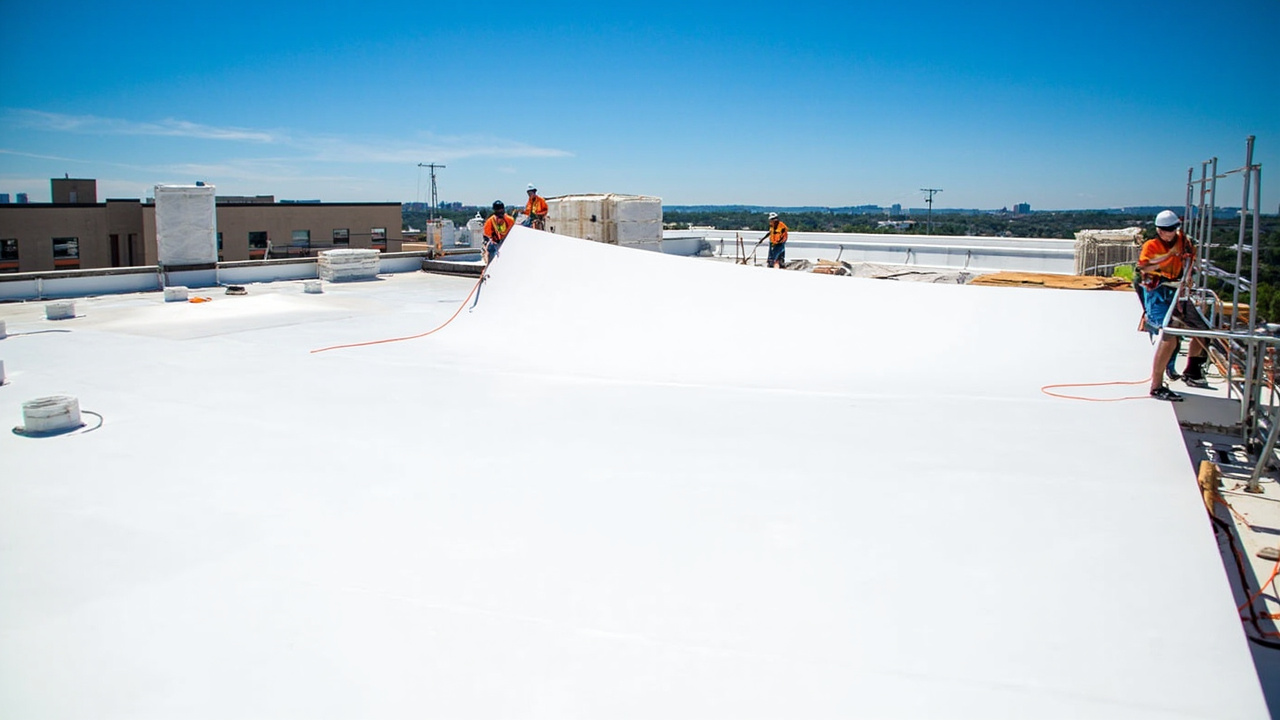
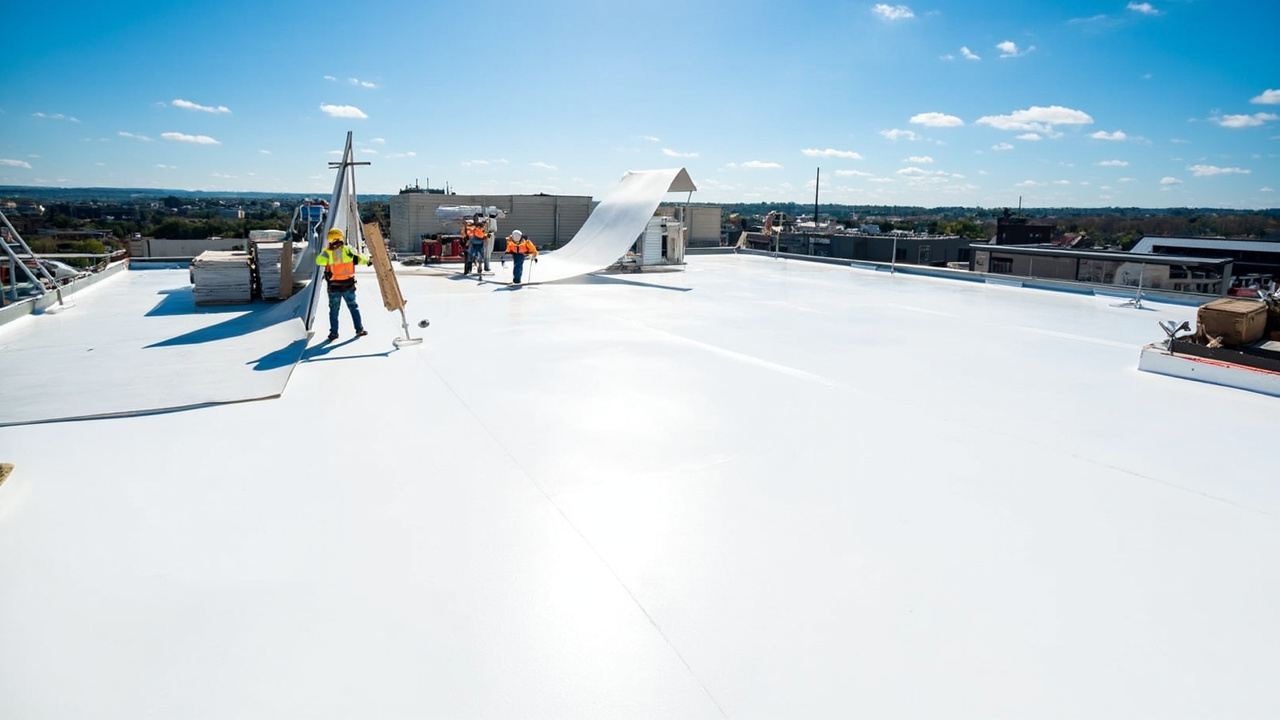
Commercial roof installation demands different capabilities than residential work. We mobilize larger crews, coordinate material deliveries in phases, and execute work in sections to maintain building functionality. For occupied buildings, we schedule noisy tear-off during off-hours and sequence work zones to keep specific areas accessible.

Our commercial roof replacement methodology starts with destructive testing of the existing assembly. We cut core samples to examine insulation condition, check for trapped moisture, and verify deck integrity. This determines whether you need a complete tear-off to the deck or can overlay the existing system. The difference affects project duration and cost by 40 percent.

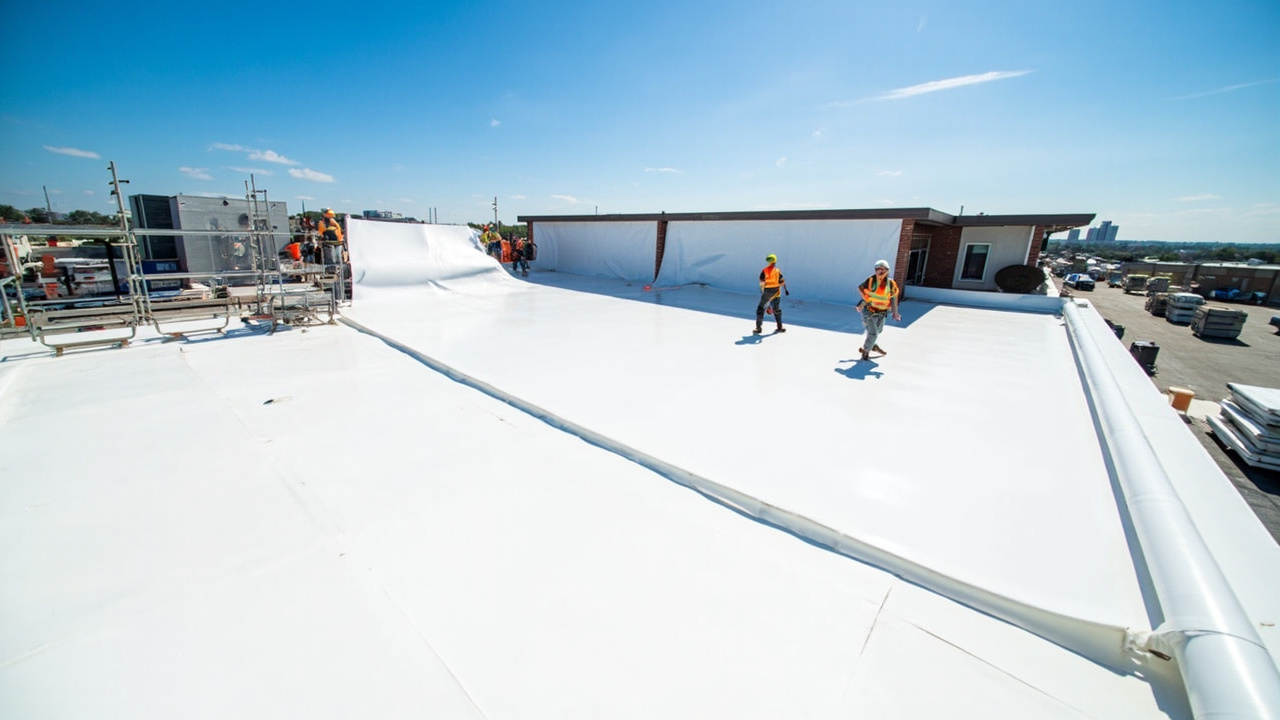
We use hot-air welded TPO or fully-adhered EPDM for most Louisville commercial applications. Mechanically-attached systems work for some metal deck structures, but fully-adhered assemblies handle wind uplift better and eliminate fastener thermal bridging. For buildings with HVAC equipment or high foot traffic, we install reinforced walkway pads and equipment curbs that meet manufacturer specifications for warranty compliance.

Flashing details make or break commercial roof performance. We fabricate custom metal counterflashing for parapet walls, install two-part termination bars at vertical transitions, and seal all penetrations with prefabricated pipe boots or pourable sealer pockets. Every seam gets overlap inspection, and we document weld quality with probe testing before concealment.

Louisville requires commercial reroofing to meet International Building Code wind uplift ratings for Zone 3. We submit engineering calculations and pull permits for all commercial building roof replacement projects over 2,000 square feet. Inspections happen at deck level and again after membrane installation.

How Commercial Roof Replacement Proceeds From Inspection to Completion

Commercial Roof Replacement in Louisville – Industrial-Grade Solutions That Keep Your Business Operational
01

Site Assessment and Engineering

We conduct a comprehensive roof inspection with moisture scanning, core sampling, and structural load evaluation. Our team documents existing conditions with drone photography and thermal imaging to identify hidden moisture intrusion. You receive a detailed scope document with material specifications, phasing options, and a timeline that accounts for your operational needs and weather windows.
02

Tear-Off and Deck Preparation

Crews remove the existing membrane system in controlled sections, exposing insulation and decking for inspection. We replace damaged deck panels, reinforce seams, and install new tapered insulation to eliminate ponding. Base sheets get mechanically fastened or fully adhered depending on wind rating requirements. All debris gets contained and removed daily to maintain site safety and prevent disruption to adjacent businesses.
03

Membrane Installation and Certification

Technicians install your new TPO, EPDM, or modified bitumen membrane system with factory-certified methods. All seams get welded or sealed per manufacturer standards, and we complete probe testing to verify bond integrity. Final inspections cover flashing details, equipment curbs, and drainage function. You receive warranty documentation, maintenance guidelines, and a digital record of your roof assembly for future reference and compliance verification.

Why Louisville Property Managers Choose Fortress Roofing for Commercial Projects

Commercial roof replacement requires contractors who understand the difference between stopping a leak and delivering a warrantable assembly. We hold manufacturer certifications from GAF, Firestone, and Carlisle, which means our installations meet factory standards for material warranties up to 20 years. More importantly, we understand Louisville's permitting process and work directly with Metro Louisville inspectors to schedule reviews without delaying your project.

Our crews have experience with the specific building types common to Louisville's commercial corridor. The tilt-up concrete warehouses along Grade Lane, the mixed-use buildings in Clifton, and the industrial facilities near Louisville Muhammad Ali International Airport all require different approaches to roof attachment and drainage design. We have completed projects at occupied retail centers where work had to pause for weekend traffic and at food service facilities where health department protocols governed our access and contamination control.

You need a contractor with adequate bonding capacity and commercial general liability coverage that protects your interest. We carry $5 million aggregate coverage and can provide payment and performance bonds for projects requiring them. Our safety program meets OSHA fall protection standards, and every crew member completes site-specific safety orientation before starting work.

Commercial building roof replacement in Louisville means coordinating with multiple stakeholders. We communicate directly with property managers, provide progress updates to ownership groups, and work with your maintenance staff to protect HVAC equipment and roof-mounted assets during construction. When we commit to a completion date, we staff appropriately and manage weather delays proactively to meet your deadline.

What to Expect During Your Commercial Roof Replacement Project

Project Timeline and Scheduling

Most commercial roof replacement projects take two to six weeks depending on building size and system complexity. A 20,000 square foot warehouse with straightforward geometry and good access takes roughly 10 working days in favorable weather. Multi-level retail centers or buildings with extensive HVAC equipment require more time for flashing details and coordination. We provide a detailed schedule during preconstruction, identify long-lead material items, and communicate any weather delays immediately. For occupied buildings, we phase work to maintain access to critical areas and schedule disruptive activities during your low-traffic periods.

Preconstruction Assessment Process

Your project begins with a detailed roof inspection that goes beyond visual assessment. We use infrared thermal imaging to map moisture intrusion, cut core samples to examine insulation and deck condition, and document drainage deficiencies. You receive a comprehensive report with photo documentation, a bill of materials, and multiple system options ranked by performance and budget. We review code requirements, discuss phasing strategies to minimize business disruption, and provide a transparent estimate that includes permit fees, engineering costs, and disposal expenses. This assessment typically takes three to five business days from initial contact to proposal delivery.

Quality Control and Final Inspection

Every commercial reroofing project undergoes multiple quality checkpoints. Seam welds get probed for bond integrity, flashing details get photographed for warranty documentation, and drainage function gets tested with controlled water flow before final acceptance. Metro Louisville inspectors review deck attachment, insulation R-value, and membrane installation at scheduled milestones. You receive a complete warranty package including manufacturer material warranties and our installation warranty. We provide a digital record of your roof system with material specifications, maintenance recommendations, and a schedule for periodic inspections to protect your investment.

Maintenance and Warranty Support

Your new commercial roof requires periodic maintenance to achieve its design life. We provide a customized maintenance plan that includes seasonal inspections, drain cleaning, and minor repairs as part of ongoing service agreements. Most membrane manufacturers require annual inspections to maintain warranty coverage. We document each visit, track any developing issues, and schedule repairs before minor problems compromise the system. Our maintenance contracts include priority scheduling for storm damage assessment and expedited repair service. For self-managed properties, we deliver a maintenance checklist and highlight the specific areas that need regular attention based on your building's configuration.

Frequently Asked Questions

You Have Questions,
We Have Answers

How much does it cost to replace 1000 sq ft of roof? +

Replacement costs for 1,000 square feet of commercial roofing in Louisville depend on the system type, structural conditions, and code requirements. TPO or EPDM single-ply membranes typically run lower than metal or built-up systems. Louisville's climate demands proper drainage design to handle heavy spring rains and freeze-thaw cycles, which affects substrate preparation costs. Factor in tear-off expenses, insulation upgrades to meet current energy codes, and flashing details around HVAC units. Request detailed line-item proposals from multiple contractors. Material costs fluctuate, so lock in pricing early to control your capital expenditure budget.

Does commercial insurance cover roof replacement? +

Commercial insurance coverage for roof replacement depends on your policy terms and loss circumstances. Policies typically cover sudden damage from storms, hail, or fire, but exclude wear and tear from deferred maintenance. Louisville sees severe thunderstorms and occasional hail events that can trigger claims. Insurers require documentation of regular inspections and maintenance records. Actual Cash Value policies depreciate your roof's age, while Replacement Cost policies pay full value. Review your policy's named perils and exclusions. Work with a commercial insurance adjuster familiar with Kentucky building codes to maximize legitimate claim reimbursement and minimize business interruption.

How to replace a commercial roof? +

Commercial roof replacement follows a structured process. Start with a comprehensive inspection to assess structural integrity and identify substrate damage. Obtain permits through Louisville Metro's Building Department. Schedule the tear-off during your low-occupancy period to minimize operational disruption. Contractors remove existing membranes, inspect decking for rot or corrosion, and make structural repairs. Install new insulation to meet current energy codes, then apply your chosen roofing system with proper drainage slopes. Critical elements include perimeter flashing, penetration details around HVAC units, and parapet caps. Final inspection ensures code compliance. Plan for 3-5 days minimum for most commercial projects.

What is the best type of commercial roofing system? +

The best commercial roofing system depends on your building type, budget, and operational requirements. TPO single-ply membranes offer excellent reflectivity for Louisville's hot summers and good puncture resistance. EPDM provides proven longevity and easier repairs. Modified bitumen works well for roofs with heavy foot traffic from maintenance crews. Metal standing seam systems deliver superior wind uplift resistance and longevity but cost more upfront. Consider your roof slope, existing structural capacity, and whether you need equipment access. Evaluate total lifecycle cost, not just installation price. Energy efficiency matters for controlling HVAC loads in Kentucky's humid climate.

Is $30,000 too much for a roof? +

Whether $30,000 is reasonable depends on your building size, system type, and scope complexity. For a small commercial building around 2,000-3,000 square feet with straightforward geometry, this falls within normal range. Louisville projects requiring extensive structural repairs, code-mandated insulation upgrades, or complex flashing details cost more. Compare multiple detailed proposals that break down materials, labor, tear-off, disposal, and permits separately. Verify contractors include proper drainage design for Louisville's rainfall patterns. Cheap bids often signal shortcuts in substrate preparation or inferior materials. Focus on ROI and system longevity rather than lowest initial cost. Request references from similar commercial properties.

What is the most expensive part of replacing a roof? +

Labor and substrate preparation represent the most expensive components of commercial roof replacement. Removing existing systems, disposing of materials, and repairing damaged decking or structural members drives costs significantly. In Louisville, buildings with multiple roof penetrations, complex flashing details, or parapet walls increase labor hours substantially. Structural reinforcement to meet current wind uplift codes adds expense. Material costs for membranes or metal panels fluctuate but remain secondary to skilled labor. Proper insulation installation to achieve required R-values impacts total cost. Corner-cutting on substrate preparation causes premature system failure. Invest in thorough prep work to maximize your replacement investment.

Is a commercial roof replacement tax deductible? +

Commercial roof replacement tax treatment depends on whether it qualifies as a repair or capital improvement. Full replacements typically constitute capital improvements, requiring depreciation over 39 years for nonresidential property under IRS guidelines. However, Section 179 may allow immediate expensing up to annual limits for qualifying improvements. Repairs that restore function without extending useful life may be fully deductible in the current year. Energy-efficient systems might qualify for additional tax credits. Consult your CPA or tax advisor familiar with Kentucky tax law and commercial property regulations. Proper documentation and cost segregation studies optimize your tax position and improve project ROI.

How old may a roof be before insurance claims it's too old? +

Insurance companies typically flag commercial roofs over 15-20 years old for coverage restrictions or exclusions. Many carriers require professional inspections for roofs approaching this age threshold. Louisville's climate accelerates aging through UV exposure, thermal cycling, and storm damage. Insurers may mandate replacement as a condition of policy renewal or impose higher deductibles for older systems. Some policies include sunset clauses that switch from replacement cost to actual cash value coverage after a certain age. Maintain detailed maintenance records and inspection reports to demonstrate proper care. Proactive replacement before age limits protects your insurability and prevents coverage gaps.

How to get a roof replaced for free? +

Free commercial roof replacement rarely exists outside specific grant programs or disaster relief scenarios. FEMA provides assistance after declared disasters affecting Louisville, but requires extensive documentation and covers only storm damage. Some energy efficiency programs offer rebates for reflective roofing systems that reduce urban heat island effects. Kentucky economic development incentives occasionally include building improvement grants for businesses in targeted zones. Manufacturer-sponsored programs may subsidize installations for demonstration purposes. Insurance claims cover legitimate losses but require deductible payments. Focus on lifecycle value and proper financing rather than seeking free solutions. Quality commercial roofing protects your business asset and operational continuity.

How long does a commercial roof replacement take? +

Commercial roof replacement timelines depend on building size, system complexity, and weather conditions. A typical 10,000-15,000 square foot building takes 5-10 working days for complete replacement. Larger properties or those with multiple roof levels extend to several weeks. Louisville's unpredictable spring weather can delay progress, as most systems require dry conditions for proper adhesion. Projects requiring structural repairs or extensive substrate work add time. Coordinate with your contractor to schedule during low-occupancy periods and minimize operational disruption. Plan for material delivery lead times, permit approvals through Louisville Metro, and final inspections. Include weather contingencies in your project timeline.

How Louisville's Clay Soil and Seasonal Moisture Affect Commercial Roof Longevity

Louisville sits on Maury silt loam and Crider clay soils that expand during wet periods and contract during drought. This seasonal movement creates stress at roof perimeters where the membrane ties into parapet walls and at interior columns where the deck flexes. Commercial buildings constructed on slab-on-grade foundations experience the most pronounced movement, often showing cracking at roof-to-wall transitions within five years of construction. Industrial roof replacement frequently addresses failure points caused by this structural movement rather than membrane degradation. We design expansion joints and use flexible flashing materials that accommodate movement without tearing, extending system life by years compared to rigid details.

Commercial building roof replacement in Louisville requires contractors familiar with Metro Louisville's permitting requirements and the specific challenges of the Ohio Valley climate. We maintain relationships with local building inspectors, understand the documentation requirements for commercial projects, and know which system types perform best in this humidity and temperature range. Our material suppliers stock products proven in Louisville conditions, and we do not experiment with untested assemblies on your building. Choosing a contractor with deep local experience means fewer callbacks, better warranty support, and a roof system engineered for the specific conditions your building faces.

Roofing Services in The Louisville Area

Fortress Roofing Louisville is proud to serve the entire metro area and surrounding communities. We've included a map here to help you easily locate our main office and visualize the broad service region we cover, ensuring that expert, trustworthy roofing help is always within reach for our neighbors. If you are located slightly outside the highlighted area, please call us—we are often able to accommodate projects across a wider geographic region to provide our quality services to those who need it most.

Address:
Fortress Roofing Louisville, 10200 Forest Green Blvd, Louisville, KY, 40223

Additional Services We Offer

Our news updates

Latest Articles & News from The Blogs

Why Modern Shed Style Roof Additions in the Highlands Leak More Often The sloped single-plane design of modern shed roof…

Why Modern Shed Style Roof Additions in the Highlands Leak More Often

Why Modern Shed Style Roof Additions in the Highlands Leak More Often The sloped single-plane design of modern shed roof…

Choosing the Right Roof for a Modern Farmhouse in Polo Fields or Shakes Run

Choosing the Right Roof for a Modern Farmhouse in Polo Fields or Shakes Run Modern farmhouses in Louisville’s Polo Fields…

The Real Cost of Solar Shingles for Eco Friendly Homes in the East End

The Real Cost of Solar Shingles for Eco Friendly Homes in the East End Solar shingles represent a revolutionary roofing…

Contact Us

Call Fortress Roofing Louisville at (502) 678-7557 for a detailed commercial roof inspection. We provide transparent estimates, multiple system options, and scheduling that minimizes disruption to your operations. Do not wait until interior damage forces an emergency replacement.