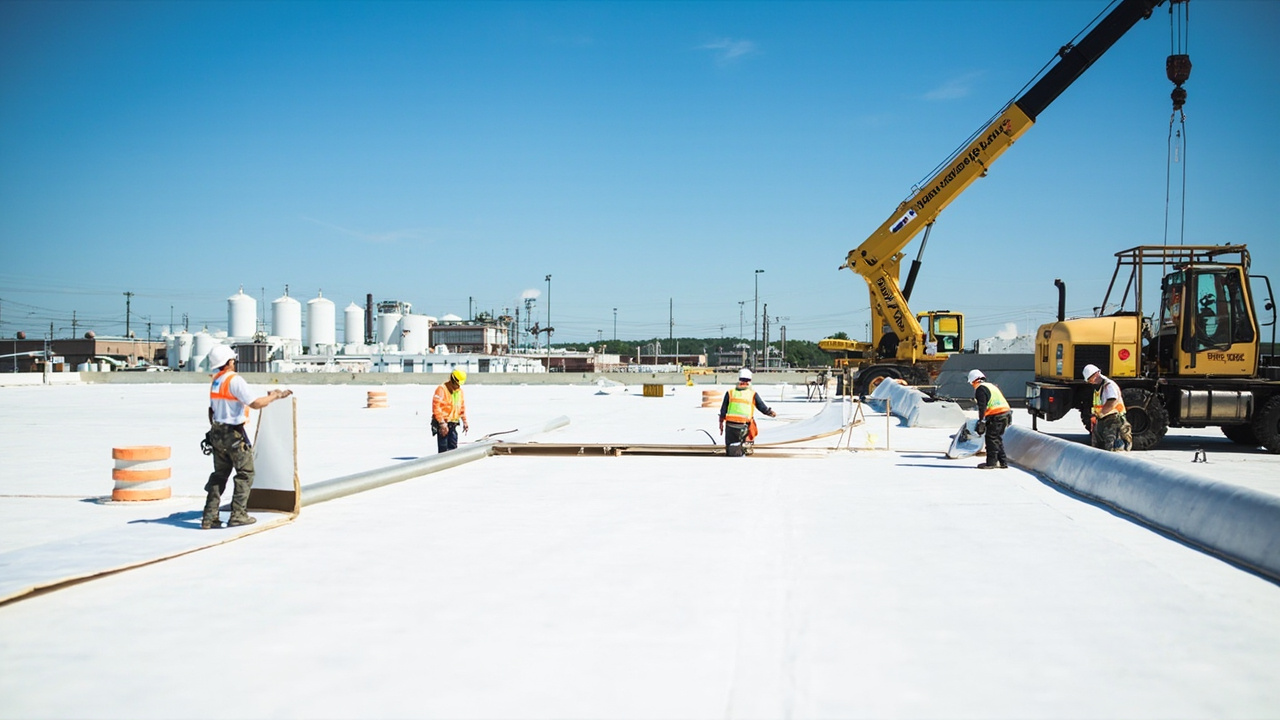
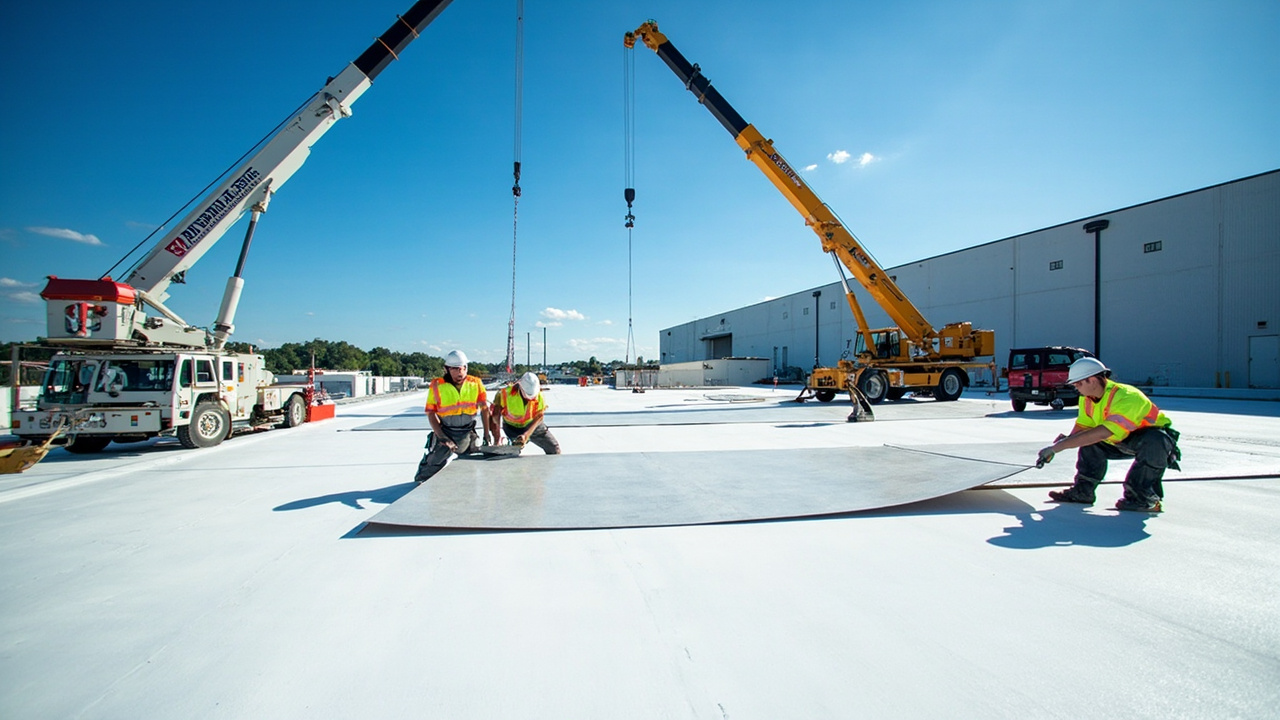
Louisville sits in a river valley where morning fog and high humidity create constant moisture exposure on commercial flat roofs. Industrial facilities near Rubbertown and the Port of Louisville face additional stress from temperature inversions that trap humid air against roof surfaces. This moisture infiltrates through failed flashing details or deteriorated membrane seams, saturating insulation layers underneath. Once insulation becomes wet, it loses thermal resistance and adds structural dead load. Factory roof replacement becomes necessary when saturated insulation compresses under its own weight, creating low spots where water ponds. The freeze-thaw cycles from December through March then crack the membrane surface, accelerating the failure cycle. Commercial roof replacement in Louisville requires understanding how valley humidity patterns interact with building mechanical systems that exhaust warm, moist air onto roof surfaces.
Louisville Metro requires commercial re-roofing projects to meet the 2020 International Building Code wind uplift standards for Exposure C conditions, which assumes open terrain typical of industrial parks. Contractors unfamiliar with these requirements often under-spec fastener spacing or use inadequate base sheet attachment, which leads to blow-offs during severe thunderstorms. Fortress Roofing Louisville maintains relationships with local building inspectors and understands the documentation requirements for permit approval on industrial properties. We know which older industrial buildings in Smoketown and Shelby Park have outdated structural systems that require engineering analysis before adding insulation thickness. This local knowledge prevents the costly surprises that delay projects and inflate budgets when out-of-town contractors discover mid-project compliance issues.