
The hidden link between poor roof ventilation and seasonal allergies in Fincastle homes
Stuffy attic air doesn’t just make your upstairs feel like a sauna in July. It creates a perfect breeding ground for mold spores, dust mites, and trapped VOCs that float straight into your living space. In Fincastle, where the Ohio River Valley humidity regularly hits 70% or higher, poor roof ventilation can turn your home into an allergy trigger factory. That musty smell in your upstairs bedroom? It’s not just old carpet. It’s likely a sign of trapped moisture feeding microscopic allergens that are making your family sneeze. Valley Leak Repair.
Your roof does more than keep rain out. It’s the lungs of your home’s ventilation system. When airflow stalls, humidity builds up, and the stack effect reverses. Instead of fresh air cycling through, pollutants get trapped and recirculated. Louisville’s climate makes this problem worse. Hot, humid summers mean attics can reach 150°F without proper exhaust. That heat doesn’t just waste energy—it bakes contaminants into your insulation and ceiling materials, releasing them into your air when temperatures drop.
How poor ventilation traps pollutants and allergens
Attic air moves in a cycle. Cool air enters through soffit vents at the eaves, gets warmed by your home’s heat, then rises to exit through ridge or box vents. When this cycle breaks, the air becomes stagnant. Moisture from showers, cooking, and breathing condenses on cool attic surfaces. That condensation feeds mold colonies, often Aspergillus or Cladosporium, which release spores that drift into bedrooms through light fixtures and attic hatches.
Beyond mold, poor ventilation traps volatile organic compounds from cleaning products, paint, and furniture. These VOCs concentrate in stagnant air, irritating respiratory systems. Dust mites thrive in humid conditions above 60% relative humidity. Their waste particles are among the most common indoor allergens. In Fincastle homes with closed-off attics, these microscopic irritants circulate year-round, not just during pollen season.. Read more about How the heavy pollen from Kentucky spring seasons can wreak havoc on your gutter downspouts.
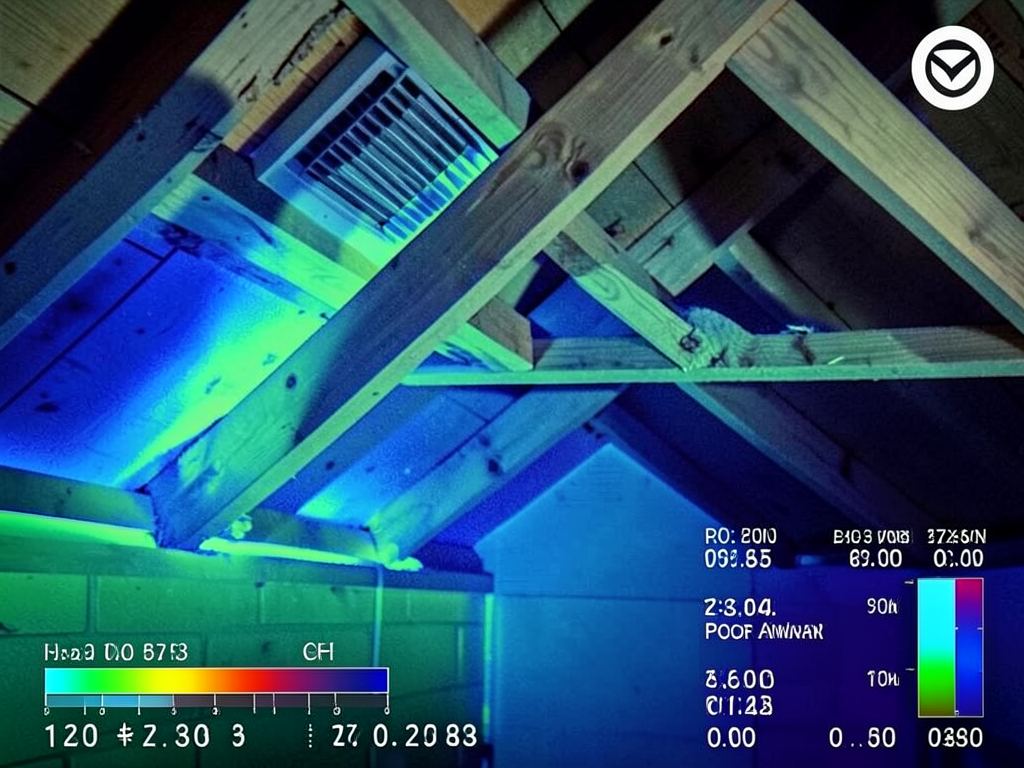
A thermal imaging scan showing hot spots in an attic with blocked soffit vents, with temperature readings indicating poor airflow.
The physics of airflow: intake vs. exhaust
Proper attic ventilation requires balance. The net free area (NFA) of intake vents should equal or slightly exceed exhaust vents. For every 150 square feet of attic floor space, building codes require at least 1 square foot of NFA. In Louisville’s humid climate, many homes need 1:150 ratio instead of the standard 1:300 to combat moisture buildup.
Soffit vents act as the lungs’ intake. They draw cool air along the underside of the roof deck. Ridge vents or box vents at the peak serve as exhaust, letting warm, moist air escape. When insulation blocks soffit vents or ridge vents get covered by shingles, the system fails. The stack effect stalls. Hot air stagnates, moisture condenses, and your indoor air quality plummets.
Active ventilation systems like solar-powered attic fans can boost airflow in homes where passive vents aren’t enough. These fans kick on when attic temperatures hit 95°F, pulling fresh air through the soffits and exhausting heat before it radiates into your living space. In Fincastle’s July heat, that difference can mean 20 degrees cooler upstairs and significantly fewer airborne irritants.. Read more about How New Soffits and Fascia Can Drastically Improve the Curb Appeal of Your Lyndon House.
Louisville’s humidity factor: preventing mold and mildew
The Ohio River Valley creates a perfect storm for attic moisture problems. Louisville averages 45 inches of rain annually, with summer dew points often exceeding 70°F. When warm, moist air hits a cool roof deck at night, condensation forms. This happens even in well-insulated attics if ventilation is inadequate.
Mold growth accelerates when relative humidity stays above 60% for 48 hours. In poorly ventilated attics, that threshold gets breached almost nightly during Kentucky summers. The result: black streaks on roof sheathing, curling shingles, and a musty odor that permeates upper floors. Beyond allergies, mold spores can trigger asthma attacks and other respiratory issues, particularly in children and elderly residents.
Ice damming in winter creates another moisture pathway. When heat escapes through an under-ventilated attic, it melts snow on the roof. Water runs down and refreezes at the eaves, backing up under shingles. This meltwater saturates roof decking, drips into insulation, and creates hidden mold colonies that release spores all year. Kentucky’s freeze-thaw cycles make this a recurring problem in Fincastle’s older homes.
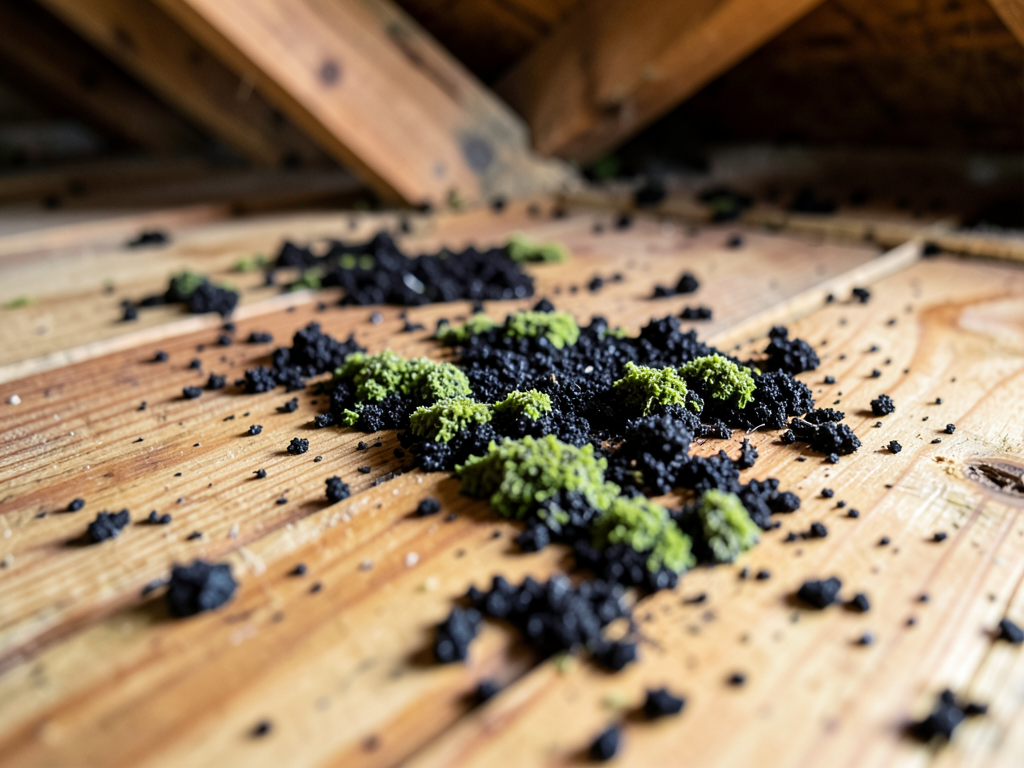
Close-up of mold growth on roof decking in a poorly ventilated attic, showing black and green fungal colonies on plywood.
Signs your Louisville home has poor roof ventilation
- Ice dams forming along eaves during winter months
- Peeling exterior paint on siding or trim, especially on the sunny side of the house
- Localized hot spots in upstairs rooms during summer, often above kitchens or bathrooms
- Musty odors in upper floors that persist even after cleaning
- Condensation on interior windows during temperature swings
- Higher than expected cooling bills from your LG&E statement
- Shingles that appear curled, cracked, or losing granules prematurely
These symptoms often appear together. A home with ice dams likely also has attic heat buildup and moisture problems. The same blocked airflow that causes winter ice also traps summer heat and humidity. If you notice two or more of these signs, your roof ventilation system needs professional assessment.
Recommended solutions and local building codes
Kentucky Residential Code Section 12.2.2 requires attic ventilation with a minimum 1:150 ratio of net free area to attic floor space. In Louisville’s humid climate, many building officials recommend 1:100 to ensure adequate moisture removal. Vents must be spaced to provide balanced intake and exhaust, with no more than 50% of the total vent area in any one location. Reliable residential roofing specialists serving Jeffersonville and Clarksville.
Common solutions include installing continuous ridge vents along the roof peak, which provide uniform exhaust along the entire ridge. Soffit vents should be cleaned or replaced if blocked by insulation—baffles can prevent this in the future. For homes with limited roof lines, turbine vents or solar fans can boost airflow without major structural changes.
Air sealing is critical before adding ventilation. Attic bypasses around light fixtures, plumbing vents, and attic hatches allow conditioned air to escape into the attic. This moisture-laden air condenses on roof surfaces, defeating ventilation improvements. A professional energy audit using thermal imaging can identify these bypasses. Sealing them first ensures ventilation systems work as designed.
Technician installing soffit vent baffles during an attic ventilation upgrade, showing proper airflow channels above insulation.
Class 4 impact-resistant shingles can also help in Louisville’s storm-prone climate. These shingles withstand hail up to 2 inches, reducing damage that creates pathways for moisture intrusion. While not a ventilation solution themselves, they protect your investment in a properly ventilated attic system.
Health impact: the allergy connection
Studies from the Environmental Protection Agency show indoor air can be 2-5 times more polluted than outdoor air. In poorly ventilated homes, that ratio climbs higher. Mold spores, dust mite waste, and chemical irritants concentrate in stagnant air, triggering allergic reactions even in people who don’t consider themselves sensitive.
Children are particularly vulnerable. Their developing respiratory systems react more strongly to airborne irritants. A 2019 study in the Journal of Allergy and Clinical Immunology found that improving home ventilation reduced asthma symptoms in children by 23%. For Fincastle families dealing with seasonal allergies, fixing roof ventilation can provide relief that medications alone cannot.
The connection isn’t just theoretical. Homeowners who upgrade attic ventilation often report fewer sinus infections, less morning congestion, and reduced need for antihistamines. The improvement comes from removing the constant low-level irritant load that keeps immune systems on high alert. Better ventilation means fewer triggers, not just better temperature control.
Call (502) 678-7557 today to schedule your inspection. Don’t let another allergy season pass with poor indoor air quality. Our Louisville-based team understands the specific ventilation challenges Fincastle homes face and can recommend solutions that improve both comfort and health.. Read more about Unique Roofing Challenges for Traditional Shotgun Houses in the Portland Area.
Frequently Asked Questions
How much does improving roof ventilation cost?
Costs vary based on your home’s design and existing conditions. Simple fixes like cleaning blocked soffit vents might cost a few hundred dollars. Installing ridge vents and proper baffles typically runs $1,500-$3,000. Complex retrofits or active ventilation systems can reach $5,000. We provide free assessments to give you accurate pricing.
Can I install ventilation myself?
While some basic maintenance is DIY-friendly, proper ventilation installation requires understanding building codes, roof structure, and moisture dynamics. Incorrect installation can trap moisture, cause ice dams, or create roof leaks. Professional installation ensures compliance with Kentucky codes and protects your warranty coverage.
How long does ventilation improvement take?
Most ventilation upgrades complete in one to two days. Simple soffit vent cleaning takes hours. Full system installations with ridge vents and baffles typically finish in a single day. Active ventilation additions might require an extra half day. We work efficiently to minimize disruption to your home.
Will better ventilation lower my energy bills?
Yes, in most cases. Improved ventilation reduces heat buildup in summer, meaning your AC runs less. In winter, it prevents ice dams that can cause costly water damage. Many Louisville homeowners report 10-15% reductions in cooling costs after proper ventilation upgrades. The improvement pays for itself over time.
Ready to breathe easier? Call (502) 678-7557 now. Your family’s health and comfort are worth the investment. We’re standing by to help Fincastle homeowners solve their ventilation problems for good. For more information, visit EPA Indoor Air Quality guidelines. For more information, visit Journal of Allergy and Clinical Immunology study.
{
“@context”: “https://schema.org”,
“@type”: “BlogPosting”,
“headline”: “The hidden link between poor roof ventilation and seasonal allergies in Fincastle homes”,
“description”: “Discover how poor attic ventilation in Fincastle homes traps allergens and pollutants, triggering seasonal allergies. Learn local solutions from Louisville roofing experts.”,
“wordCount”: 1561,
“datePublished”: “2026-05-27T08:00:00.000Z”,
“dateModified”: “2026-05-27T08:00:00.000Z”,
“inLanguage”: “en-US”,
“mainEntityOfPage”: {
“@type”: “WebPage”,
“@id”: “https://fortressroofinglouisville.com”
},
“publisher”: {
“@type”: “LocalBusiness”,
“name”: “Fortress Roofing Louisville”,
“url”: “https://fortressroofinglouisville.com”
},
“author”: {
“@type”: “Organization”,
“name”: “Fortress Roofing Louisville”,
“url”: “https://fortressroofinglouisville.com”
},
“image”: {
“@type”: “ImageObject”,
“url”: “https://fortressroofinglouisville.com/wp-content/uploads/2026/03/the-hidden-link-between-poor-roof-ventilation-and-1.png”
}
}
{
“@context”: “https://schema.org”,
“@type”: “RoofingContractor”,
“name”: “Fortress Roofing Louisville”,
“url”: “https://fortressroofinglouisville.com”,
“address”: {
“@type”: “PostalAddress”,
“addressLocality”: “Louisville”
},
“areaServed”: {
“@type”: “City”,
“name”: “Louisville”
}
}
{
“@context”: “https://schema.org”,
“@type”: “FAQPage”,
“mainEntity”: [
{
“@type”: “Question”,
“name”: “How much does improving roof ventilation cost?”,
“acceptedAnswer”: {
“@type”: “Answer”,
“text”: “Costs vary based on your home’s design and existing conditions. Simple fixes like cleaning blocked soffit vents might cost a few hundred dollars. Installing ridge vents and proper baffles typically runs $1,500-$3,000. Complex retrofits or active ventilation systems can reach $5,000. We provide free assessments to give you accurate pricing.”
}
},
{
“@type”: “Question”,
“name”: “Can I install ventilation myself?”,
“acceptedAnswer”: {
“@type”: “Answer”,
“text”: “While some basic maintenance is DIY-friendly, proper ventilation installation requires understanding building codes, roof structure, and moisture dynamics. Incorrect installation can trap moisture, cause ice dams, or create roof leaks. Professional installation ensures compliance with Kentucky codes and protects your warranty coverage.”
}
},
{
“@type”: “Question”,
“name”: “How long does ventilation improvement take?”,
“acceptedAnswer”: {
“@type”: “Answer”,
“text”: “Most ventilation upgrades complete in one to two days. Simple soffit vent cleaning takes hours. Full system installations with ridge vents and baffles typically finish in a single day. Active ventilation additions might require an extra half day. We work efficiently to minimize disruption to your home.”
}
},
{
“@type”: “Question”,
“name”: “Will better ventilation lower my energy bills?”,
“acceptedAnswer”: {
“@type”: “Answer”,
“text”: “Yes, in most cases. Improved ventilation reduces heat buildup in summer, meaning your AC runs less. In winter, it prevents ice dams that can cause costly water damage. Many Louisville homeowners report 10-15% reductions in cooling costs after proper ventilation upgrades. The improvement pays for itself over time.”
}
}
]
}
{
“@context”: “https://schema.org”,
“@type”: “BreadcrumbList”,
“itemListElement”: [
{
“@type”: “ListItem”,
“position”: 1,
“name”: “Home”,
“item”: “https://fortressroofinglouisville.com”
},
{
“@type”: “ListItem”,
“position”: 2,
“name”: “Blog”,
“item”: “https://fortressroofinglouisville.com/blog”
},
{
“@type”: “ListItem”,
“position”: 3,
“name”: “The hidden link between poor roof ventilation and seasonal allergies in Fincastle homes”
}
]
}
{
“@context”: “https://schema.org”,
“@type”: “Service”,
“serviceType”: “Roofing”,
“provider”: {
“@type”: “LocalBusiness”,
“name”: “Fortress Roofing Louisville”,
“url”: “https://fortressroofinglouisville.com”
},
“areaServed”: {
“@type”: “City”,
“name”: “Louisville”
},
“description”: “Discover how poor attic ventilation in Fincastle homes traps allergens and pollutants, triggering seasonal allergies. Learn local solutions from Louisville roofing experts.”
}