
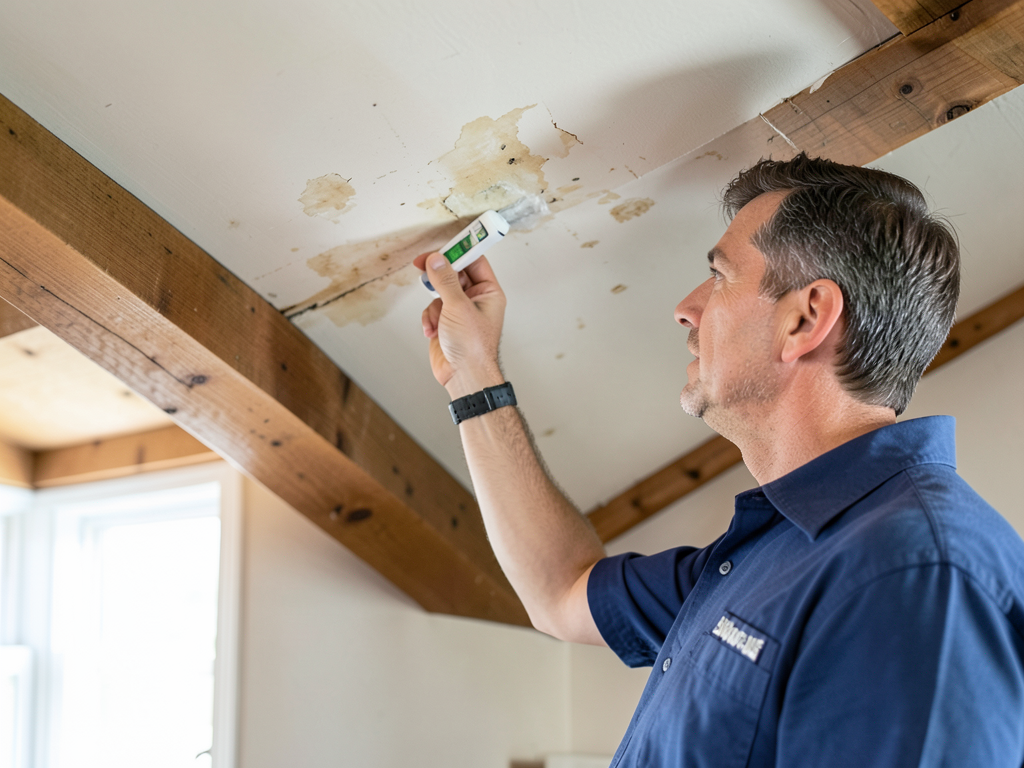
Finding and fixing the source of water stains on the ceilings of your Simpsonville home
Water stains on your Simpsonville ceiling can be alarming especially when there’s no visible roof damage. Before you call a roofer it’s important to understand that many ceiling stains have nothing to do with your roof at all. Louisville’s humid climate and older home construction in areas like Simpsonville create perfect conditions for condensation plumbing leaks and HVAC drainage issues that mimic roof leaks.
The first step is identifying the stain pattern. Brown rust-colored stains often indicate roof-related moisture while clear or yellowish stains typically point to plumbing or HVAC sources. Simpsonville homes especially those built before 2000 may have aging polybutylene pipes or inadequate attic ventilation that traps moisture against ceilings.
Let’s walk through the most common non-roof causes of ceiling stains in Simpsonville and how to diagnose them before making costly repair decisions. EPA mold guidelines.
The Difference Between a Roof Leak and ‘Ghost Leaks’
A true roof leak usually appears as a brown or rust-colored stain with water actively dripping during rain. These stains often grow larger after storms and may show water trails along rafters or ceiling joists. Simpsonville’s older homes with aging asphalt shingles are particularly vulnerable to flashing failures around chimneys and valleys. Valley Leak Repair.
‘Ghost leaks’ on the other hand are moisture problems that mimic roof leaks but originate from inside your home. These include HVAC condensation overflows attic sweating and plumbing supply line failures. The key difference is timing. Ghost leaks often appear regardless of weather conditions and may worsen during humid summer months when Simpsonville’s average July humidity exceeds 75%.. Read more about Understanding the difference between a roof repair and a partial replacement in Lynnview.
Understanding this distinction can save you thousands in unnecessary roof repairs. Many Simpsonville homeowners discover their ceiling stains were caused by a clogged AC drain line rather than a failing roof. Commercial flat roof repair and maintenance for business owners in NuLu.
Top 5 Non-Roof Causes of Ceiling Stains
1. HVAC Condensation and Drain Pan Overflows
Simpsonville’s hot humid summers create ideal conditions for HVAC condensation problems. When your air conditioner runs it pulls moisture from indoor air. This water collects in the evaporator coil drain pan and flows through a primary drain line to the exterior. If this line clogs with algae or debris water backs up and overflows into the secondary pan or directly onto your ceiling.
Older Simpsonville homes with attic-mounted HVAC units are particularly vulnerable. The secondary drain pan is designed as a backup but if it’s cracked or the emergency float switch fails water will drip through your ceiling. You might notice the stain near your AC vent or directly below the attic unit.
Diagnostic tip: Check if the stain appears near your HVAC vents or directly below where your attic unit would be located. If so your AC system is likely the culprit not your roof.
2. Attic Condensation (The Ohio Valley Humidity Factor)
Simpsonville sits in the Ohio Valley where summer humidity levels create perfect conditions for attic condensation. When warm moist air from your living space rises into a cool attic it hits surfaces below the dew point temperature causing water to condense on rafters insulation and even ceiling drywall.. Read more about How to spot out of town storm chasers after a major weather event in Shepherdsville.
This ‘attic sweating’ is especially common in Simpsonville homes with inadequate vapor barriers or poor attic ventilation. The moisture accumulates over time creating brown stains that look remarkably like roof leaks. You might notice the stain is worse on north-facing ceilings which stay cooler and collect more condensation.
Golden Nugget: Simpsonville’s average July humidity of 75% exceeds the threshold where condensation becomes a significant problem in poorly ventilated attics. Homes built before 2000 often lack the R-38 insulation and proper ventilation required by current Kentucky Residential Code standards.
3. Plumbing Leaks: Supply Lines vs. Drain Lines
Plumbing failures account for a significant portion of ceiling stains in Simpsonville especially in homes built between 1978 and 1995 when polybutylene piping was common. These gray plastic pipes become brittle over time and can fail catastrophically.. Read more about Dealing with roof leak disputes between landlords and tenants in the Louisville rental market.
Supply line leaks from your bathroom or kitchen above can create yellow or clear stains that grow over time. Drain line leaks are more insidious. A slow drain leak might only show as a stain during heavy water usage like showers or laundry cycles. The water travels along pipe threads or through cracked fittings before dripping onto your ceiling below.. Read more about What to do when your heavy stone chimney starts pulling away from your roof in Hurstbourne.
Diagnostic test: Run water in the bathroom above the stain for 10 minutes. If the stain darkens or grows larger you likely have a plumbing supply line issue. For drain lines the stain may only appear when flushing toilets or running full sinks.
4. Pest Infestations and Waste Accumulation
Raccoons squirrels and bats commonly invade Simpsonville attics especially in older neighborhoods near wooded areas. These pests create entry points that let in rainwater but they also leave behind waste that can stain ceilings below.
The stains from pest waste often have an irregular pattern and may be accompanied by a musty odor. You might also hear scratching sounds in your attic especially at dawn or dusk. Unlike water stains pest-related discoloration doesn’t change with weather conditions.
Visual clue: Pest stains often have a darker center where waste accumulated and may show claw marks or entry points near the stain perimeter.
5. Ice Dams and Improper Attic Ventilation
While Simpsonville doesn’t experience severe winters like northern states occasional freeze-thaw cycles can create ice dams along roof edges. When snow melts during the day and refreezes at night it forms a barrier that forces water under shingles.
This water travels along the roof deck until it finds a seam or nail hole dripping into your attic. The stain often appears near exterior walls where ice damming is most common. Poor attic ventilation exacerbates this problem by allowing warm air to melt snow from below.
Seasonal pattern: Ice dam stains typically appear during January or February thaws and may disappear once temperatures stabilize above freezing.
How to Diagnose the Source (Step-by-Step Guide)
Before calling any professional try these diagnostic steps to identify your ceiling stain source. This can save you time and money by directing you to the right specialist.
- Check Weather Correlation
Does the stain appear or grow during rain? If yes mark it as potential roof leak. If no proceed to HVAC check.
- Inspect HVAC Components
Locate your attic HVAC unit if present. Check for water in the secondary drain pan. Look for clogged primary drain lines or cracked overflow pans.
- Test Plumbing System
Run water in all fixtures above the stain for 10-15 minutes. Watch for stain changes. Flush toilets repeatedly to test drain lines.
- Examine Attic Space
Enter your attic during daylight. Look for daylight through roof penetrations. Check for condensation on rafters or insulation. Use a moisture meter on stained ceiling areas.
- Check for Pest Activity
Look for droppings entry holes or nesting materials. Listen for sounds during early morning or evening hours.
Moisture Meter Test: A moisture meter reading above 17% in the stained area indicates active moisture problems. Readings below 13% suggest the stain is old and the source has been fixed.
When to Call a Louisville Professional vs. DIY Fixes
DIY diagnosis is valuable but some situations require professional expertise. Here’s when to call each specialist:
| Symptom | Call This Professional | Why |
|---|---|---|
| Stain appears during rain only | Roofing Contractor | Indicates flashing or shingle failure |
| Stain near HVAC vent or attic unit | HVAC Technician | Drain line or pan overflow |
| Stain appears with water usage | Plumber | Supply or drain line failure |
| Musty odor with irregular stain | Pest Control + Roofer | Animal intrusion requiring sealing |
| Seasonal winter stains | Insulation Contractor | Attic ventilation and ice dam issues |
Golden Nugget: According to Kentucky Building Code Section R806.2 homes in Louisville’s climate zone require minimum 1 square foot of net free ventilation area per 300 square feet of attic floor space. Many Simpsonville homes built before 2000 don’t meet this standard contributing to condensation problems.
Protecting Your Louisville Home from Future Water Damage
Once you’ve identified and fixed the source preventing future stains requires addressing the underlying cause. For Simpsonville homes this often means improving attic ventilation installing proper vapor barriers and upgrading aging plumbing systems.
Consider these preventive measures based on your specific situation:
- Install attic fans or ridge vents to reduce humidity buildup
- Replace polybutylene pipes with PEX or copper before they fail
- Schedule annual HVAC maintenance to clean drain lines and check pans
- Add insulation to meet current Kentucky energy code requirements
- Install gutter guards to prevent ice dam formation
Moisture Prevention Rule: The EPA recommends keeping indoor humidity between 30-50%. In Simpsonville’s climate this often requires dehumidifiers during summer months especially in homes with crawl spaces or basements.
Regular inspections can catch problems before they cause ceiling damage. Check your attic quarterly for signs of moisture pest activity or HVAC issues. Pay special attention after severe weather events which can damage flashing or create new entry points for water.. Read more about Why the flashing around your dormer windows is the most likely spot for a leak in St. Matthews.
Call (502) 678-7557 today to schedule your inspection. Our Simpsonville specialists can identify the exact source of your ceiling stains and recommend the most cost-effective solution whether it’s a simple HVAC repair or a comprehensive moisture management system.
Don’t let ceiling stains become a bigger problem. Early diagnosis prevents structural damage mold growth and expensive emergency repairs. Whether you need a roofer plumber or HVAC technician understanding the source is the first step to protecting your Simpsonville home. Protecting your Lake Louisvilla home from high winds and waterfront humidity.
Frequently Asked Questions
Can a ceiling stain be from a past leak that’s already fixed?
Yes. Old stains often remain visible even after the moisture source is resolved. The drywall may have absorbed water creating permanent discoloration. A moisture meter reading below 13% indicates the area is dry even if the stain remains visible.
How long does it take for mold to grow from a ceiling leak?
Mold can begin growing within 24-48 hours of water exposure according to EPA guidelines. This is why quick identification and repair of ceiling stains is critical. The Kentucky Department of Housing recommends addressing any moisture intrusion within 24 hours to prevent mold growth.. Read more about How the heavy pollen from Kentucky spring seasons can wreak havoc on your gutter downspouts.
Should I just paint over a ceiling stain?
Never paint over active moisture stains. The water will continue to damage the drywall beneath and mold can grow behind the paint. Always identify and fix the source first then use a stain-blocking primer before repainting.
Why does my ceiling stain smell musty?
A musty odor indicates active moisture and potential mold growth. This requires immediate attention as mold can cause health issues and structural damage. The odor suggests the moisture source is still active and needs professional diagnosis. For more information, visit CPSC polybutylene pipe information.
You may also find this helpful. Keeping your detached backyard studio or she shed dry with a small scale roofing upgrade in NuLu.
{
“@context”: “https://schema.org”,
“@type”: “BlogPosting”,
“headline”: “Finding and fixing the source of water stains on the ceilings of your Simpsonville home”,
“description”: “Water stains on your Simpsonville ceiling but no roof leak? Learn how to diagnose HVAC, plumbing, and condensation issues before calling a roofer.”,
“wordCount”: 1786,
“datePublished”: “2026-05-20T12:29:00.000Z”,
“dateModified”: “2026-05-20T12:29:00.000Z”,
“inLanguage”: “en-US”,
“mainEntityOfPage”: {
“@type”: “WebPage”,
“@id”: “https://fortressroofinglouisville.com”
},
“publisher”: {
“@type”: “LocalBusiness”,
“name”: “Fortress Roofing Louisville”,
“url”: “https://fortressroofinglouisville.com”
},
“author”: {
“@type”: “Organization”,
“name”: “Fortress Roofing Louisville”,
“url”: “https://fortressroofinglouisville.com”
},
“image”: {
“@type”: “ImageObject”,
“url”: “https://fortressroofinglouisville.com/wp-content/uploads/2026/03/finding-and-fixing-the-source-of-water-stains-on-t-1.png”
}
}
{
“@context”: “https://schema.org”,
“@type”: “RoofingContractor”,
“name”: “Fortress Roofing Louisville”,
“url”: “https://fortressroofinglouisville.com”,
“address”: {
“@type”: “PostalAddress”,
“addressLocality”: “Louisville”
},
“areaServed”: {
“@type”: “City”,
“name”: “Louisville”
}
}
{
“@context”: “https://schema.org”,
“@type”: “FAQPage”,
“mainEntity”: [
{
“@type”: “Question”,
“name”: “Can a ceiling stain be from a past leak that’s already fixed?”,
“acceptedAnswer”: {
“@type”: “Answer”,
“text”: “Yes. Old stains often remain visible even after the moisture source is resolved. The drywall may have absorbed water creating permanent discoloration. A moisture meter reading below 13% indicates the area is dry even if the stain remains visible.”
}
},
{
“@type”: “Question”,
“name”: “How long does it take for mold to grow from a ceiling leak?”,
“acceptedAnswer”: {
“@type”: “Answer”,
“text”: “Mold can begin growing within 24-48 hours of water exposure according to EPA guidelines. This is why quick identification and repair of ceiling stains is critical. The Kentucky Department of Housing recommends addressing any moisture intrusion within 24 hours to prevent mold growth.”
}
},
{
“@type”: “Question”,
“name”: “Should I just paint over a ceiling stain?”,
“acceptedAnswer”: {
“@type”: “Answer”,
“text”: “Never paint over active moisture stains. The water will continue to damage the drywall beneath and mold can grow behind the paint. Always identify and fix the source first then use a stain-blocking primer before repainting.”
}
},
{
“@type”: “Question”,
“name”: “Why does my ceiling stain smell musty?”,
“acceptedAnswer”: {
“@type”: “Answer”,
“text”: “A musty odor indicates active moisture and potential mold growth. This requires immediate attention as mold can cause health issues and structural damage. The odor suggests the moisture source is still active and needs professional diagnosis. For more information, visit CPSC polybutylene pipe information.”
}
}
]
}
{
“@context”: “https://schema.org”,
“@type”: “HowTo”,
“name”: “How to Diagnose Ceiling Water Stains”,
“step”: [
{
“@type”: “HowToStep”,
“position”: 1,
“name”: “Check Weather Correlation”,
“text”: “Does the stain appear or grow during rain? If yes mark it as potential roof leak. If no proceed to HVAC check.”
},
{
“@type”: “HowToStep”,
“position”: 2,
“name”: “Inspect HVAC Components”,
“text”: “Locate your attic HVAC unit if present. Check for water in the secondary drain pan. Look for clogged primary drain lines or cracked overflow pans.”
},
{
“@type”: “HowToStep”,
“position”: 3,
“name”: “Test Plumbing System”,
“text”: “Run water in all fixtures above the stain for 10-15 minutes. Watch for stain changes. Flush toilets repeatedly to test drain lines.”
},
{
“@type”: “HowToStep”,
“position”: 4,
“name”: “Examine Attic Space”,
“text”: “Enter your attic during daylight. Look for daylight through roof penetrations. Check for condensation on rafters or insulation. Use a moisture meter on stained ceiling areas.”
},
{
“@type”: “HowToStep”,
“position”: 5,
“name”: “Check for Pest Activity”,
“text”: “Look for droppings entry holes or nesting materials. Listen for sounds during early morning or evening hours.”
}
],
“image”: “https://fortressroofinglouisville.com/wp-content/uploads/2026/03/finding-and-fixing-the-source-of-water-stains-on-t-1.png”
}
{
“@context”: “https://schema.org”,
“@type”: “BreadcrumbList”,
“itemListElement”: [
{
“@type”: “ListItem”,
“position”: 1,
“name”: “Home”,
“item”: “https://fortressroofinglouisville.com”
},
{
“@type”: “ListItem”,
“position”: 2,
“name”: “Blog”,
“item”: “https://fortressroofinglouisville.com/blog”
},
{
“@type”: “ListItem”,
“position”: 3,
“name”: “Finding and fixing the source of water stains on the ceilings of your Simpsonville home”
}
]
}
{
“@context”: “https://schema.org”,
“@type”: “Service”,
“serviceType”: “Roofing”,
“provider”: {
“@type”: “LocalBusiness”,
“name”: “Fortress Roofing Louisville”,
“url”: “https://fortressroofinglouisville.com”
},
“areaServed”: {
“@type”: “City”,
“name”: “Louisville”
},
“description”: “Water stains on your Simpsonville ceiling but no roof leak? Learn how to diagnose HVAC, plumbing, and condensation issues before calling a roofer.”
}