
Why the extreme Ohio River Valley humidity can cause your roof to age faster than normal
The Ohio River Valley’s notorious humidity creates unique challenges for Louisville homeowners. High moisture levels in the air don’t just make summer uncomfortable—they actively break down roofing materials through condensation, biological growth, and structural degradation. Understanding how Louisville’s specific climate affects your roof is the first step toward preventing premature failure and protecting your investment. The most trusted roofing services in Germantown and Schnitzelburg.
The Science of Humidity and Roofing Materials
Humidity becomes destructive when warm, moist air meets cooler surfaces. In Louisville’s climate, where summer dew points regularly exceed 70°F, this interaction happens constantly. When humid air contacts your roof deck or attic surfaces, condensation forms. This moisture accumulation creates the perfect environment for wood rot, mold growth, and material deterioration.. Read more about Why the direction your roof faces matters for shingle longevity in the Watterson Park area.
Asphalt shingles face particular challenges. The Kentucky climate promotes Gloeocapsa Magma, a blue-green algae that appears as black streaks on roofs. This organism feeds on limestone filler in shingles, breaking down the protective granules. Once granules loosen, shingles lose UV protection and become brittle. The freeze-thaw cycles common in Louisville winters then cause expansion and contraction, accelerating granule loss and creating curling or buckling.. Read more about Unique Roofing Challenges for Traditional Shotgun Houses in the Portland Area.
Wood components suffer similarly. Roof decking absorbs moisture from humid air, causing swelling and warping. Over time, this creates gaps that allow water infiltration. The Kentucky Residential Code requires specific moisture content levels for roof decking, but high humidity makes compliance difficult without proper ventilation systems. Reliable residential roofing specialists serving Jeffersonville and Clarksville.
Signs of Humidity Damage in Louisville Homes
Recognizing humidity-related damage early can prevent costly repairs. Homeowners should watch for these warning signs: EPA mold guidelines.
- Black or green streaks on shingles, especially on north-facing slopes where sunlight is limited
- Curling or buckling shingles that appear wavy or lifted at the edges
- Musty odors in the attic, particularly after rain when humidity rises
- Water stains on interior ceilings, often appearing as brown rings or patches
- Increased cooling costs as damaged shingles lose reflective properties
- Visible mold growth in attic spaces or on roof decking
Attic inspections reveal hidden damage. A moisture meter reading above 20% on roof decking indicates excessive humidity levels. Dark spots on wood surfaces suggest active mold growth. The Kentucky climate makes these conditions common, particularly in older homes with inadequate ventilation.. Read more about The hidden link between poor roof ventilation and seasonal allergies in Fincastle homes.
The Role of Attic Ventilation
Proper attic ventilation serves as your primary defense against humidity damage. The system works through air movement: cool air enters through soffit vents while hot, moist air exits through ridge vents or gable vents. This continuous airflow prevents moisture buildup and regulates attic temperature.. Read more about How to Vent Your Bathroom Fan Through the Roof Without Causing a Leak.
Ventilation requirements vary by roof design and local climate. The International Residential Code mandates 1 square foot of ventilation for every 150 square feet of attic space. In Louisville’s high-humidity environment, many homes need 1:300 ratios for optimal performance. Blocked soffit vents, common in Louisville’s older neighborhoods, create dead zones where moisture accumulates. International Association of Certified Home Inspectors.
Static ventilation systems include ridge vents, which run along the roof peak, and soffit vents installed under eaves. Power vents use electric fans to increase airflow but require electricity and can fail during storms. The choice depends on roof design, local wind patterns, and existing ventilation infrastructure.
Ventilation Comparison Table
| Ventilation Type | Cost Range | Effectiveness in High Humidity | Maintenance Needs |
|---|---|---|---|
| Ridge Vents | $400-800 | Excellent | Low (inspect annually) |
| Power Vents | $500-1,200 | Very Good | Medium (check motor/battery) |
| Gable Vents | $200-500 | Good | Low (clean screens) |
Preventative Maintenance Checklist for Kentucky Homeowners
Regular maintenance prevents humidity damage from becoming severe. Louisville homeowners should perform these inspections seasonally:. Read more about Using zinc strips to prevent unsightly mold and fungus on your Wildwood roof.
- Check attic ventilation openings for debris, nests, or blockages
- Inspect roof surface for algae growth, especially on shaded areas
- Examine flashing around chimneys, vents, and valleys for gaps
- Look for granule loss in gutters and downspouts
- Test attic moisture levels with a hygrometer (should stay below 60%)
- Check for proper soffit vent clearance from insulation
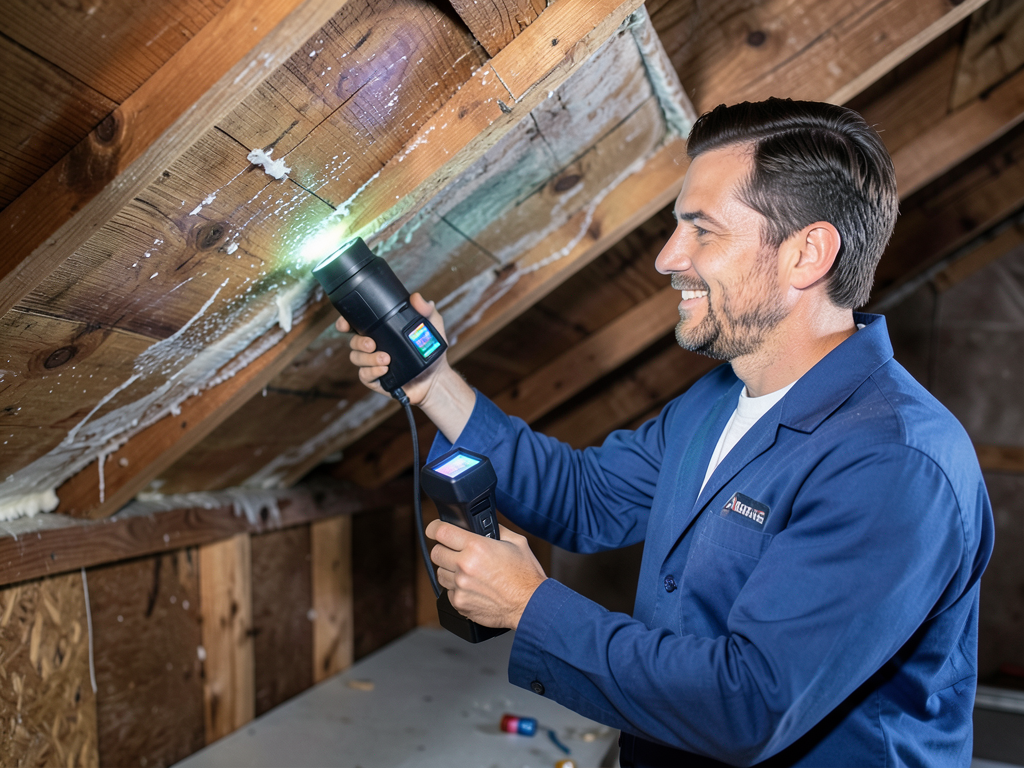
Professional inspections catch problems early. A trained technician uses moisture meters to detect hidden water damage, infrared cameras to identify temperature variations indicating moisture, and core sampling to assess shingle integrity. These diagnostic tools reveal issues before visible damage appears.
When to Call a Louisville Professional
Some humidity-related problems require professional intervention. Call a roofing specialist if you notice: Roofing Owensboro.
- Persistent musty odors despite cleaning efforts
- Visible mold covering more than 10 square feet
- Water stains that grow larger after rain
- Attic temperatures exceeding 130°F in summer
- Shingle damage covering more than 25% of roof surface
Professional remediation includes moisture barrier installation, ventilation upgrades, and material replacement. The process starts with a comprehensive inspection to identify all moisture sources. Technicians then develop a plan addressing ventilation deficiencies, replacing damaged materials, and preventing future issues.
Fortress Roofing technicians use thermal imaging to detect moisture patterns invisible to the naked eye. This technology reveals condensation accumulation, insulation gaps, and ventilation dead zones. Combined with moisture meter readings, these diagnostics provide a complete picture of your roof’s health.
Humidity-Resistant Roofing Solutions
Modern materials offer better protection against Louisville’s humidity. Impact-resistant shingles with algae-resistant granules cost 15-20% more but last 30-50% longer in high-moisture environments. Metal roofing reflects heat and resists biological growth but requires proper underlayment to prevent condensation.. Read more about Why Class 4 impact resistant shingles are the smartest investment for Sellersburg homeowners.
Synthetic slate provides the aesthetic of natural slate without moisture absorption issues. These materials maintain dimensional stability in Louisville’s temperature swings, preventing the cracking common in traditional slate during freeze-thaw cycles.
Proper underlayment creates a moisture barrier between decking and shingles. Synthetic underlayments outperform traditional felt in high-humidity conditions, maintaining integrity when exposed to prolonged moisture. Building codes in flood-prone Louisville areas may require Class A fire-rated underlayments for additional protection. Why we are the highest rated roofing team in the Louisville metro area.
The Cost of Inaction
Ignoring humidity damage leads to escalating repair costs. A minor ventilation issue costing $500 to fix can become a $5,000 roof replacement if moisture damages decking and structural components. Mold remediation adds $2,000-6,000 to repairs, while structural repairs can exceed $10,000. Commercial flat roof repair and maintenance for business owners in NuLu.
Energy costs also rise. Damaged shingles lose reflective properties, increasing cooling costs by 15-25% during Louisville’s muggy summers. Poor ventilation traps heat, forcing HVAC systems to work harder and reducing equipment lifespan.
Insurance complications arise from neglected maintenance. Many policies exclude damage from long-term moisture exposure or require proof of regular maintenance. Claims for humidity-related damage often face scrutiny, potentially leaving homeowners responsible for full repair costs.
Local Building Code Requirements
The Louisville Metro Department of Code Enforcement enforces specific requirements for moisture management. The Kentucky Residential Code Section R806 mandates minimum ventilation ratios and requires vapor barriers in certain climate zones. Louisville’s location in Zone 4 places it in the high-humidity category, triggering additional requirements.
Commercial buildings face stricter standards under the International Building Code. Section 1203 requires engineered ventilation systems for buildings exceeding 5,000 square feet. These systems must maintain specific air exchange rates to prevent moisture accumulation in large, enclosed spaces.
Historic districts like Old Louisville have additional preservation requirements. Any ventilation modifications must preserve architectural integrity while meeting modern moisture management standards. This often requires custom solutions that balance historical accuracy with performance requirements.
Frequently Asked Questions
How often should I inspect my roof for humidity damage?
Inspect your roof twice yearly, in spring and fall. Louisville’s seasonal transitions create the most stress on roofing materials. Professional inspections every 2-3 years catch issues before they become severe.
Can I install additional ventilation myself?
While DIY ventilation installation is possible, improper installation can trap moisture rather than remove it. Professional assessment ensures proper placement and sizing for your specific roof design and local climate conditions.
What’s the lifespan of a roof in Louisville’s humidity?
Standard asphalt shingles last 15-20 years in Louisville, compared to 20-25 years in drier climates. Premium materials with algae resistance and proper ventilation can extend lifespan to 25-30 years.
Does homeowners insurance cover humidity damage?
Insurance typically covers sudden damage but may exclude long-term moisture issues. Document regular maintenance and address problems promptly to maintain coverage eligibility.
How can I tell if my attic has adequate ventilation?
Proper ventilation keeps attic temperatures within 10-15°F of outdoor temperatures and maintains humidity below 60%. Signs of inadequate ventilation include extreme temperature differences, moisture on rafters, and ice dam formation in winter.
Take Action Before Humidity Damages Your Roof
Louisville’s humidity won’t wait for convenient timing. The combination of high moisture levels, temperature swings, and seasonal storms creates a perfect storm for roof deterioration. Early intervention prevents minor issues from becoming major expenses.
Call (502) 678-7557 today to schedule your free humidity and ventilation audit. Our technicians will assess your roof’s current condition, identify moisture problems, and recommend solutions tailored to Louisville’s unique climate challenges. Don’t wait until you see water stains on your ceiling—protect your home now.
Pick up the phone and call (502) 678-7557 before the next storm hits. Louisville’s humidity is relentless, but with proper protection, your roof can withstand whatever the Ohio River Valley weather throws at it.
{
“@context”: “https://schema.org”,
“@type”: “BlogPosting”,
“headline”: “Why the extreme Ohio River Valley humidity can cause your roof to age faster than normal”,
“description”: “Learn how Louisville’s high humidity accelerates roof damage through condensation, mold, and shingle degradation. Get expert solutions to protect your home.”,
“wordCount”: 1516,
“datePublished”: “2026-05-19T12:21:00.000Z”,
“dateModified”: “2026-05-19T12:21:00.000Z”,
“inLanguage”: “en-US”,
“mainEntityOfPage”: {
“@type”: “WebPage”,
“@id”: “https://fortressroofinglouisville.com”
},
“publisher”: {
“@type”: “LocalBusiness”,
“name”: “Fortress Roofing Louisville”,
“url”: “https://fortressroofinglouisville.com”
},
“author”: {
“@type”: “Organization”,
“name”: “Fortress Roofing Louisville”,
“url”: “https://fortressroofinglouisville.com”
},
“image”: {
“@type”: “ImageObject”,
“url”: “https://fortressroofinglouisville.com/wp-content/uploads/2026/03/why-the-extreme-ohio-river-valley-humidity-can-cau-1.png”
}
}
{
“@context”: “https://schema.org”,
“@type”: “RoofingContractor”,
“name”: “Fortress Roofing Louisville”,
“url”: “https://fortressroofinglouisville.com”,
“address”: {
“@type”: “PostalAddress”,
“addressLocality”: “Louisville”
},
“areaServed”: {
“@type”: “City”,
“name”: “Louisville”
}
}
{
“@context”: “https://schema.org”,
“@type”: “FAQPage”,
“mainEntity”: [
{
“@type”: “Question”,
“name”: “How often should I inspect my roof for humidity damage?”,
“acceptedAnswer”: {
“@type”: “Answer”,
“text”: “Inspect your roof twice yearly, in spring and fall. Louisville’s seasonal transitions create the most stress on roofing materials. Professional inspections every 2-3 years catch issues before they become severe.”
}
},
{
“@type”: “Question”,
“name”: “Can I install additional ventilation myself?”,
“acceptedAnswer”: {
“@type”: “Answer”,
“text”: “While DIY ventilation installation is possible, improper installation can trap moisture rather than remove it. Professional assessment ensures proper placement and sizing for your specific roof design and local climate conditions.”
}
},
{
“@type”: “Question”,
“name”: “What’s the lifespan of a roof in Louisville’s humidity?”,
“acceptedAnswer”: {
“@type”: “Answer”,
“text”: “Standard asphalt shingles last 15-20 years in Louisville, compared to 20-25 years in drier climates. Premium materials with algae resistance and proper ventilation can extend lifespan to 25-30 years.”
}
},
{
“@type”: “Question”,
“name”: “Does homeowners insurance cover humidity damage?”,
“acceptedAnswer”: {
“@type”: “Answer”,
“text”: “Insurance typically covers sudden damage but may exclude long-term moisture issues. Document regular maintenance and address problems promptly to maintain coverage eligibility.”
}
},
{
“@type”: “Question”,
“name”: “How can I tell if my attic has adequate ventilation?”,
“acceptedAnswer”: {
“@type”: “Answer”,
“text”: “Proper ventilation keeps attic temperatures within 10-15°F of outdoor temperatures and maintains humidity below 60%. Signs of inadequate ventilation include extreme temperature differences, moisture on rafters, and ice dam formation in winter.”
}
}
]
}
{
“@context”: “https://schema.org”,
“@type”: “BreadcrumbList”,
“itemListElement”: [
{
“@type”: “ListItem”,
“position”: 1,
“name”: “Home”,
“item”: “https://fortressroofinglouisville.com”
},
{
“@type”: “ListItem”,
“position”: 2,
“name”: “Blog”,
“item”: “https://fortressroofinglouisville.com/blog”
},
{
“@type”: “ListItem”,
“position”: 3,
“name”: “Why the extreme Ohio River Valley humidity can cause your roof to age faster than normal”
}
]
}
{
“@context”: “https://schema.org”,
“@type”: “Service”,
“serviceType”: “Roofing”,
“provider”: {
“@type”: “LocalBusiness”,
“name”: “Fortress Roofing Louisville”,
“url”: “https://fortressroofinglouisville.com”
},
“areaServed”: {
“@type”: “City”,
“name”: “Louisville”
},
“description”: “Learn how Louisville’s high humidity accelerates roof damage through condensation, mold, and shingle degradation. Get expert solutions to protect your home.”
}