
The Urban Heat Island Effect and What it Means for the Shingles on Your Downtown Property
Louisville’s downtown core can be up to 10 degrees hotter than surrounding rural areas due to the urban heat island effect. This temperature difference means your roof absorbs more heat throughout the day, causing shingles to expand and contract more frequently. The result is accelerated aging, more frequent repairs, and higher cooling costs for your property. EPA Urban Heat Island Information.
Dark asphalt shingles on downtown buildings can reach surface temperatures of 150-170 degrees on a sunny summer afternoon. This extreme heat causes thermal shock when evening temperatures drop, leading to cracking, curling, and granule loss that shortens your roof’s lifespan by 5-10 years compared to suburban properties.
Why Louisville is a ‘Heat Island’ Hotspot
Louisville ranks among the fastest-growing urban heat islands in the United States. The city’s dense concentration of buildings, roads, and parking lots absorbs and retains heat while replacing natural vegetation that would provide cooling shade and evaporative cooling. Louisville Metro Office of Sustainability.
The Ohio River corridor amplifies this effect. Downtown Louisville’s proximity to the river creates a heat-trapping basin where warm air circulates between the downtown core and the water. Areas like Butchertown and Phoenix Hill experience particularly intense heat buildup due to their dense urban fabric and limited tree canopy.
According to the Louisville Metro Office of Sustainability, the urban heat island effect contributes to an average of 4-6 additional cooling degree days per year in the downtown area compared to the city’s eastern suburbs. This translates to higher energy consumption and increased strain on the electrical grid during summer months.
The Role of Your Roof in Urban Warming
Traditional dark roofing materials absorb up to 90% of solar radiation, converting it to heat that radiates into the surrounding air. A typical downtown commercial building with black EPDM roofing can reach surface temperatures of 170-180 degrees on a sunny day, contributing significantly to the local heat island effect. Commercial flat roof repair and maintenance for business owners in NuLu.
The thermal mass of roofing materials compounds the problem. Concrete and asphalt roofs store heat during the day and release it slowly at night, preventing the natural cooling that would occur in areas with more vegetation. This creates a feedback loop where downtown temperatures remain elevated even after sunset. The most trusted roofing services in Germantown and Schnitzelburg.
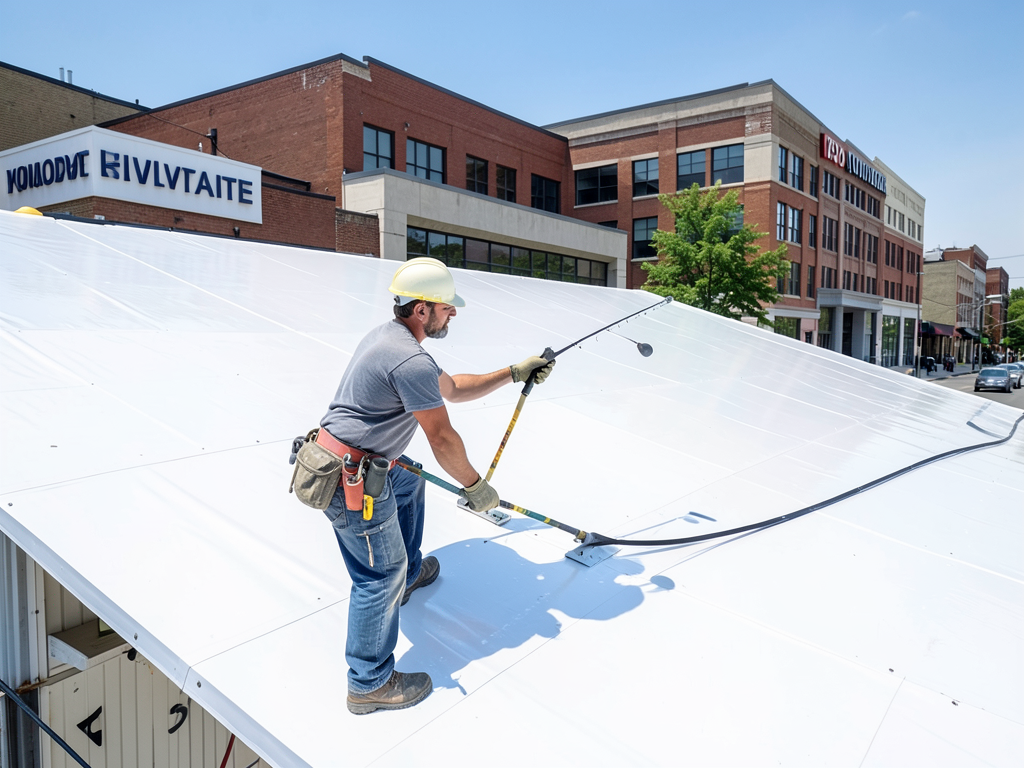
Roof color and material choice directly impact your building’s contribution to urban warming. A white TPO membrane reflects 70-80% of solar radiation compared to 5-10% for traditional black roofing, reducing the heat transferred to your building’s interior and the surrounding environment.. Read more about Improving Airflow with Solar Powered Attic Fans in the Humid East End Suburbs.
Top ‘Cool Roof’ Solutions for the Bluegrass State
Reflective shingles offer the most straightforward upgrade for many downtown properties. These specially coated asphalt shingles reflect 20-30% more sunlight than standard shingles while maintaining the traditional appearance many property owners prefer. Louisville’s high humidity requires algae-resistant coatings that maintain reflectivity over time.. Read more about Finding a commercial roof coating specialist for your Rubbertown warehouse.
TPO (Thermoplastic Polyolefin) membranes provide excellent heat reflection for flat commercial roofs. Modern TPO systems achieve Solar Reflectance Index ratings of 95-110, meaning they reflect 80-85% of solar radiation. These systems also resist Louisville’s seasonal temperature swings and UV exposure better than traditional EPDM.
Metal roofing with cool coatings represents another effective option. Standing seam metal roofs with specialized reflective finishes can achieve SRI ratings above 100 while providing the durability needed for Louisville’s severe weather patterns. The initial investment typically pays for itself through energy savings within 5-7 years.
Green roofs offer the most comprehensive heat island mitigation by replacing heat-absorbing surfaces with vegetation. While more expensive initially, these systems provide superior insulation, reduce stormwater runoff, and can extend roof life by protecting the underlying membrane from UV damage and temperature extremes. Protecting your Lake Louisvilla home from high winds and waterfront humidity.
Financial Incentives: Louisville Metro Cool Roof Rebates
The Louisville Metro Office of Sustainability offers rebates for cool roof installations that meet specific Solar Reflectance Index requirements. Properties in the downtown area can receive up to $0.20 per square foot for qualifying cool roof upgrades, with additional incentives available for projects that include energy efficiency improvements.
LG&E and Kentucky Utilities offer energy efficiency rebates that can be combined with city incentives. These programs provide rebates for cool roof installations that reduce cooling loads by at least 10% compared to existing conditions. Commercial properties in the downtown heat island zone often qualify for enhanced incentives due to the greater environmental benefit.
Federal tax credits for energy-efficient roofing materials can offset up to 10% of material costs for qualifying cool roof installations. These credits apply to Energy Star certified roofing products that meet specific reflectivity and emissivity requirements established by the EPA.
Local utility companies also offer energy audits that can identify specific cooling load reductions from cool roof installations. These assessments provide documentation needed for incentive applications and help property owners calculate expected energy savings based on Louisville’s specific climate conditions.
Long-term Benefits: Energy Savings and Roof Longevity
Cool roofing can reduce cooling costs by 15-30% in downtown Louisville buildings. A typical 10,000 square foot commercial property can save $1,500-3,000 annually on cooling costs, with savings increasing during the hottest months when cooling demand peaks.
The reduced thermal cycling extends roof life significantly. Traditional dark roofs in downtown Louisville often fail after 15-20 years due to the accelerated aging from heat exposure. Cool roofs can last 25-30 years or more, reducing replacement frequency and associated disposal costs. Why we are the highest rated roofing team in the Louisville metro area.
Lower roof temperatures also reduce stress on HVAC equipment. When roof surfaces remain cooler, air conditioning units don’t have to work as hard to reject heat, extending equipment life and reducing maintenance costs. This creates a compounding benefit where multiple building systems benefit from the cool roof installation.
Property values often increase with cool roof installations due to lower operating costs and improved energy efficiency ratings. Many commercial tenants now prioritize energy-efficient buildings, making cool roofs a valuable marketing feature for downtown property owners.
Making the Right Choice for Your Downtown Property
The best cool roofing solution depends on your building’s specific characteristics and your property’s priorities. Flat commercial buildings typically benefit most from TPO or PVC membranes, while sloped residential properties may be better suited for reflective shingles or metal roofing. Reliable residential roofing specialists serving Jeffersonville and Clarksville.
Building age and structure also influence the optimal solution. Historic downtown buildings may have weight limitations that restrict certain options, while newer buildings can often accommodate heavier green roof systems. A professional assessment considers these factors along with local building codes and energy efficiency goals.. Read more about Keeping your historic Carriage House roof in top shape in the Highlands and Old Louisville.
Installation timing matters in Louisville’s climate. Spring and fall offer ideal conditions for most cool roof installations, though modern materials can be installed year-round with proper techniques. Planning installations during off-peak seasons can also reduce costs and minimize disruption to building operations.
Professional installation ensures warranty compliance and optimal performance. Cool roof systems require specific installation techniques to achieve their rated performance levels, making experienced contractors essential for maximizing your investment’s benefits.
Frequently Asked Questions
How much cooler can a cool roof make my building?
Cool roofs can reduce roof surface temperatures by 50-80 degrees compared to traditional dark roofing. This translates to 5-15 degree reductions in indoor temperatures, depending on insulation levels and building design.
Will a cool roof work in Louisville’s humid climate?
Yes, modern cool roofing materials are specifically designed for humid climates. Reflective coatings resist algae growth, and many systems include moisture management features that prevent condensation issues common in high-humidity environments.
What’s the typical payback period for cool roof installation?
Most cool roof installations in Louisville achieve payback within 5-7 years through energy savings alone. When factoring in extended roof life and potential incentives, the effective payback period can be as short as 2-3 years.
Can I install a cool roof over my existing roof?
Many cool roof systems can be installed over existing roofs, reducing tear-off costs and landfill waste. However, the existing roof must be in good condition and meet specific requirements for the new system to perform properly.
Are cool roofs eligible for LEED certification points?
Yes, cool roofs contribute to LEED certification through heat island reduction credits. Buildings with high Solar Reflectance Index roofing can earn up to 2 LEED points for sustainable sites, plus additional points for energy performance improvements.
Take Action to Protect Your Downtown Property
Understanding how the urban heat island effect impacts your roof is the first step toward making informed decisions about your property’s future. The combination of higher temperatures, increased energy costs, and accelerated roof aging creates a compelling case for cool roof solutions.
Don’t wait until your current roof fails during a summer heat wave. The longer you postpone upgrades, the more you pay in unnecessary cooling costs and the greater the risk of heat-related roof damage. Modern cool roofing technology offers proven solutions that work specifically in Louisville’s challenging climate.
Call (502) 678-7557 today to schedule your inspection and learn which cool roof solution best fits your downtown property. Our experienced team understands Louisville’s unique heat island challenges and can recommend the most cost-effective approach for your specific building.
Pick up the phone and call (502) 678-7557 before the next heat wave hits. Your roof works hard every day to protect your property. Make sure it’s working efficiently to keep your building cool and your energy costs under control.
Fortress Roofing has helped dozens of downtown Louisville property owners reduce their cooling costs and extend roof life through smart cool roof solutions. We understand the local climate, building codes, and incentive programs that make these upgrades financially attractive.
Your downtown property deserves protection that goes beyond basic roofing. Contact us now to discover how cool roofing can transform your building’s performance while contributing to a cooler, more sustainable Louisville.
You may also find this helpful. Why your New Albany small business might benefit from an EPDM rubber roof system.
{
“@context”: “https://schema.org”,
“@type”: “BlogPosting”,
“headline”: “The Urban Heat Island Effect and What it Means for the Shingles on Your Downtown Property”,
“description”: “Learn how Louisville’s urban heat island effect accelerates roof wear and discover cool roofing solutions that cut energy costs and extend shingle life.”,
“wordCount”: 1652,
“datePublished”: “2026-05-04T11:48:00.000Z”,
“dateModified”: “2026-05-04T11:48:00.000Z”,
“inLanguage”: “en-US”,
“mainEntityOfPage”: {
“@type”: “WebPage”,
“@id”: “https://fortressroofinglouisville.com”
},
“publisher”: {
“@type”: “LocalBusiness”,
“name”: “Fortress Roofing Louisville”,
“url”: “https://fortressroofinglouisville.com”
},
“author”: {
“@type”: “Organization”,
“name”: “Fortress Roofing Louisville”,
“url”: “https://fortressroofinglouisville.com”
},
“image”: {
“@type”: “ImageObject”,
“url”: “https://fortressroofinglouisville.com/wp-content/uploads/2026/03/the-urban-heat-island-effect-and-what-it-means-for-1.png”
}
}
{
“@context”: “https://schema.org”,
“@type”: “RoofingContractor”,
“name”: “Fortress Roofing Louisville”,
“url”: “https://fortressroofinglouisville.com”,
“address”: {
“@type”: “PostalAddress”,
“addressLocality”: “Louisville”
},
“areaServed”: {
“@type”: “City”,
“name”: “Louisville”
}
}
{
“@context”: “https://schema.org”,
“@type”: “FAQPage”,
“mainEntity”: [
{
“@type”: “Question”,
“name”: “How much cooler can a cool roof make my building?”,
“acceptedAnswer”: {
“@type”: “Answer”,
“text”: “Cool roofs can reduce roof surface temperatures by 50-80 degrees compared to traditional dark roofing. This translates to 5-15 degree reductions in indoor temperatures, depending on insulation levels and building design.”
}
},
{
“@type”: “Question”,
“name”: “Will a cool roof work in Louisville’s humid climate?”,
“acceptedAnswer”: {
“@type”: “Answer”,
“text”: “Yes, modern cool roofing materials are specifically designed for humid climates. Reflective coatings resist algae growth, and many systems include moisture management features that prevent condensation issues common in high-humidity environments.”
}
},
{
“@type”: “Question”,
“name”: “What’s the typical payback period for cool roof installation?”,
“acceptedAnswer”: {
“@type”: “Answer”,
“text”: “Most cool roof installations in Louisville achieve payback within 5-7 years through energy savings alone. When factoring in extended roof life and potential incentives, the effective payback period can be as short as 2-3 years.”
}
},
{
“@type”: “Question”,
“name”: “Can I install a cool roof over my existing roof?”,
“acceptedAnswer”: {
“@type”: “Answer”,
“text”: “Many cool roof systems can be installed over existing roofs, reducing tear-off costs and landfill waste. However, the existing roof must be in good condition and meet specific requirements for the new system to perform properly.”
}
},
{
“@type”: “Question”,
“name”: “Are cool roofs eligible for LEED certification points?”,
“acceptedAnswer”: {
“@type”: “Answer”,
“text”: “Yes, cool roofs contribute to LEED certification through heat island reduction credits. Buildings with high Solar Reflectance Index roofing can earn up to 2 LEED points for sustainable sites, plus additional points for energy performance improvements.”
}
}
]
}
{
“@context”: “https://schema.org”,
“@type”: “BreadcrumbList”,
“itemListElement”: [
{
“@type”: “ListItem”,
“position”: 1,
“name”: “Home”,
“item”: “https://fortressroofinglouisville.com”
},
{
“@type”: “ListItem”,
“position”: 2,
“name”: “Blog”,
“item”: “https://fortressroofinglouisville.com/blog”
},
{
“@type”: “ListItem”,
“position”: 3,
“name”: “The Urban Heat Island Effect and What it Means for the Shingles on Your Downtown Property”
}
]
}
{
“@context”: “https://schema.org”,
“@type”: “Service”,
“serviceType”: “Roofing”,
“provider”: {
“@type”: “LocalBusiness”,
“name”: “Fortress Roofing Louisville”,
“url”: “https://fortressroofinglouisville.com”
},
“areaServed”: {
“@type”: “City”,
“name”: “Louisville”
},
“description”: “Learn how Louisville’s urban heat island effect accelerates roof wear and discover cool roofing solutions that cut energy costs and extend shingle life.”
}