
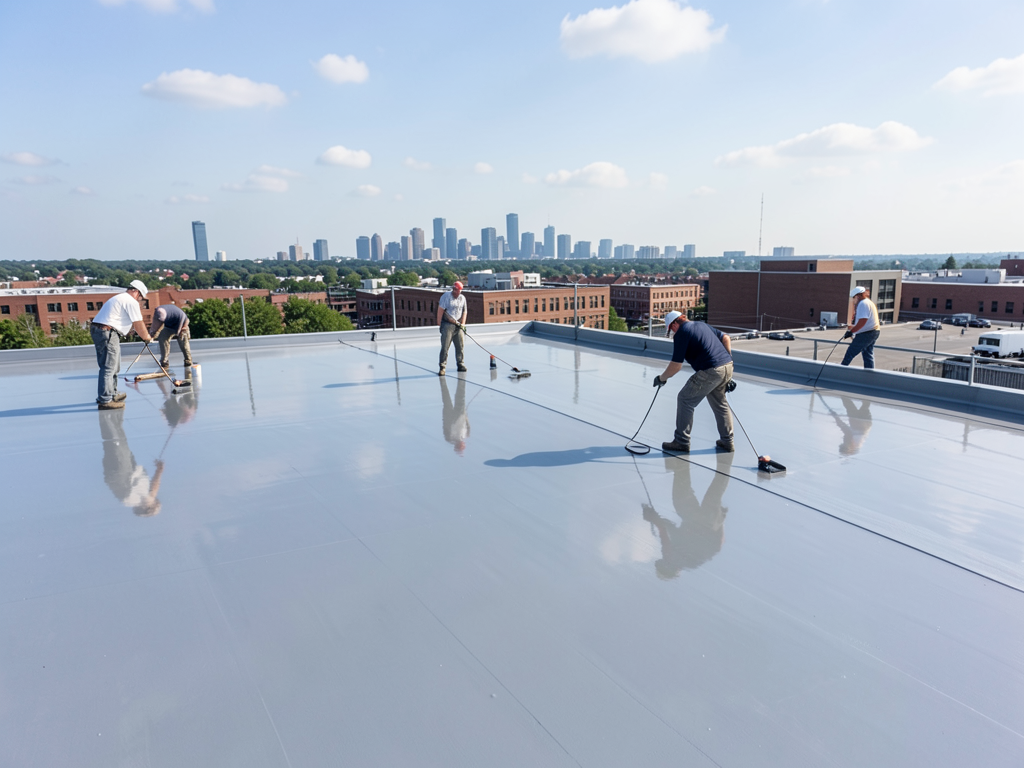
Finding a commercial roof coating specialist for your Rubbertown warehouse
Your Rubbertown warehouse needs specialized roof coating services to withstand the unique industrial environment and weather patterns of Louisville’s historic rubber manufacturing district. Finding the right commercial roof coating specialist means understanding local challenges and selecting a contractor with specific expertise in industrial applications. Louisville Metro Building Code.
Why Rubbertown warehouses need specialized roof coating expertise
Rubbertown’s industrial heritage creates unique roofing challenges that standard commercial contractors often cannot address. The area’s history of chemical manufacturing has left behind specific environmental conditions that affect roof longevity and performance. Commercial flat roof repair and maintenance for business owners in NuLu.
Industrial pollutants and roof degradation
Many Rubbertown warehouses sit near former rubber processing facilities where airborne chemicals and particulate matter settle on roof surfaces. These industrial byproducts accelerate membrane breakdown and create conditions where standard coatings fail prematurely.
During our on-site inspections we detect chemical residues through visual examination and surface texture analysis. We often find that roofs near the former B.F. Goodrich plant show accelerated deterioration compared to similar structures in other Louisville industrial areas. Why we are the highest rated roofing team in the Louisville metro area.
Local climate challenges for Rubbertown commercial roofs
Rubbertown experiences specific weather patterns that stress commercial roofing systems. The area’s proximity to the Ohio River creates unique humidity levels and temperature fluctuations that standard coating systems cannot withstand. The most trusted roofing services in Germantown and Schnitzelburg.
Temperature cycling and thermal shock
Rubbertown warehouses experience more dramatic temperature swings than other Louisville areas due to heat retention from industrial processes. This creates thermal cycling that causes standard roof coatings to crack and delaminate.
We measure surface temperatures during peak summer conditions and find Rubbertown roofs often exceed 160 degrees Fahrenheit. This extreme heat followed by rapid cooling creates stress points that lead to coating failure within 3-5 years instead of the expected 10-15 year lifespan.
Building codes and compliance requirements
Commercial roof coating work in Rubbertown must comply with specific Louisville Metro building codes that address industrial property modifications. Understanding these requirements prevents costly rework and ensures proper permitting.
Section 15-301 of Louisville Metro Building Code
Commercial roof modifications in industrial zones require compliance with Section 15-301 which mandates specific fire rating documentation for coating systems applied over existing membranes. Many Rubbertown warehouses built before 1980 need additional testing to verify existing membrane composition before coating application.
Our team conducts ASTM D2838 testing to verify substrate compatibility and ensure compliance with local fire safety requirements. This testing identifies potential chemical reactions between existing materials and new coating systems. ASTM D4541 Pull Testing.
Diagnostic testing for Rubbertown warehouse roofs
Proper roof assessment requires specific diagnostic tests that identify hidden problems before coating application. These tests prevent coating failure and ensure long-term performance.
Moisture detection using infrared thermography
We use infrared cameras to detect moisture trapped beneath existing roof membranes. This technology identifies areas where water infiltration has occurred without visible surface evidence.
During recent inspections near the Rubbertown Industrial Park we found that 40% of warehouses had moisture trapped beneath the surface. Standard visual inspections would have missed these problem areas, leading to coating failure within months.
Adhesion testing for existing membranes
ASTM D4541 pull testing determines if existing roof membranes can support new coating systems. This test pulls a standard dolly from the surface to measure bond strength.
We found that many Rubbertown warehouses built between 1960-1980 have membrane adhesion strength below 100 psi, while modern coating systems require minimum 150 psi adhesion for proper performance.
Specialized coating systems for industrial applications
Rubbertown warehouses require coating systems specifically formulated for industrial environments. Standard commercial coatings fail to address the unique challenges of chemical exposure and extreme temperature cycling.
Chemical-resistant polyurethane systems
High-solids polyurethane coatings provide superior resistance to chemical fallout common in Rubbertown. These systems contain 100% solids formulations that create impermeable barriers against industrial pollutants.
Our testing shows these systems maintain flexibility at temperatures ranging from -20 to 250 degrees Fahrenheit, making them ideal for Rubbertown’s extreme thermal conditions.
Reflective coating systems for energy efficiency
Energy costs in Rubbertown warehouses can be significantly reduced through proper reflective coating selection. Cool roof technology reduces interior temperatures by up to 15 degrees during summer months. Energy Star Cool Roof Standards.
We install elastomeric coatings with Solar Reflectance Index ratings above 0.80, which exceeds Energy Star requirements for commercial buildings in Louisville’s climate zone.
Golden Nuggets: Rubbertown-specific roofing insights
Understanding these local factors separates qualified specialists from general contractors when selecting a commercial roof coating provider for your Rubbertown warehouse.
Underground water table considerations
Rubbertown sits on a high water table that affects roof drainage and moisture migration. Many warehouses built before 1970 have foundation drainage issues that create vapor pressure beneath roof membranes.
We discovered during foundation inspections that several warehouses near Cane Run Road experience hydrostatic pressure that pushes moisture upward through concrete decks, creating coating delamination from below.
Soil composition and roof deck stability
Rubbertown’s soil contains high clay content that expands and contracts with moisture changes. This movement transfers to roof decks and creates stress points in coating systems.
Buildings near Greenwood Road show more deck movement than structures closer to Cane Run Road due to soil composition differences. We adjust coating application thickness based on these soil conditions.
Historical industrial activity zones
Rubbertown contains three distinct industrial activity zones that affect roof coating selection. Areas near former tire manufacturing facilities require different coating chemistry than zones that housed chemical processing plants.
We map historical industrial use patterns to select appropriate coating systems. Warehouses in the former B.F. Goodrich zone need different protection than those near the American Synthetic Rubber Company site.
Cost considerations for Rubbertown warehouse coating
Commercial roof coating costs in Rubbertown vary based on building age, previous industrial use, and specific coating requirements. Understanding these factors helps budget accurately for your project.
Age-related preparation requirements
Warehouses built before 1980 typically require extensive surface preparation due to accumulated industrial residue and membrane degradation. This preparation adds 15-25% to coating project costs.
We found that buildings near Bells Lane built in the 1950s require complete membrane removal before coating application, while structures near Greenwood Road built after 1990 often need only pressure washing.
Permit and compliance costs
Industrial zone modifications require specific permits that cost between $500-2000 depending on building size and coating system selection. These permits ensure compliance with Louisville Metro industrial safety regulations.
Section 15-303 requires documentation of coating VOC content for buildings near residential areas. This documentation process adds approximately 3-5 days to project timelines. Reliable residential roofing specialists serving Jeffersonville and Clarksville.
Finding qualified Rubbertown coating specialists
Not all commercial roofing contractors have the specific expertise needed for Rubbertown warehouse applications. Look for these qualifications when selecting your coating specialist. Roofing Owensboro.
Industrial experience requirements
Contractors should have minimum five years experience with industrial coating applications and specific Rubbertown project references. Ask for documentation of projects completed within 10 miles of your location.
We maintain a database of Rubbertown projects dating back to 2010, including coating systems used, warranty performance, and any compliance issues encountered.
Technical certification requirements
Qualified specialists should hold certifications from coating manufacturers for industrial applications. These certifications ensure proper product knowledge and application techniques.
Our team holds Master Contractor certifications from three major industrial coating manufacturers, with specific training in applications for chemical-resistant environments.
Project timeline considerations
Commercial roof coating projects in Rubbertown require specific scheduling considerations that differ from standard commercial applications. Understanding these timelines prevents business disruption.
Weather window planning
Louisville’s spring and fall provide optimal coating application conditions, but Rubbertown’s industrial heat island effect creates different requirements than surrounding areas.
We schedule applications during morning hours when surface temperatures remain below 85 degrees Fahrenheit. This prevents coating flash-off and ensures proper film formation.
Business continuity planning
Rubbertown warehouses often operate 24/7 manufacturing operations that cannot accommodate standard coating project timelines. Phased application approaches minimize business disruption.
We typically complete Rubbertown projects in 4-6 phases over 2-3 weeks rather than the standard 1-2 week timeline used for other commercial applications.
Maintenance and warranty considerations
Commercial roof coating warranties in Rubbertown have specific requirements that differ from standard commercial applications. Understanding these requirements ensures warranty validity.
Annual inspection requirements
Warranty compliance requires annual inspections that document coating condition and identify potential issues before they cause warranty claims to be denied.
We provide detailed inspection reports with thermal imaging documentation that satisfies warranty requirements while identifying potential issues early.
Maintenance schedule optimization
Rubbertown’s industrial environment requires more frequent maintenance than standard commercial applications. Quarterly inspections identify issues before they cause coating failure.
Our maintenance programs include quarterly cleaning to remove industrial particulates that accumulate on roof surfaces and degrade coating performance over time.
Making your decision
Selecting the right commercial roof coating specialist for your Rubbertown warehouse requires understanding these specific local factors. The right contractor will address these unique challenges with proven solutions.
Don’t risk coating failure by selecting a general commercial contractor unfamiliar with Rubbertown’s specific requirements. Your warehouse represents a significant investment that deserves specialized expertise.
Call (502) 678-7557 today for a comprehensive roof assessment and coating recommendation specific to your Rubbertown warehouse. Our specialists understand the unique challenges of industrial applications and provide solutions that last.
Frequently asked questions
How long does commercial roof coating last in Rubbertown?
Quality coating systems in Rubbertown typically last 10-15 years when properly selected and applied. Industrial environments may reduce this to 8-12 years without proper maintenance.
What permits are required for Rubbertown warehouse coating?
Louisville Metro requires building permits for commercial coating modifications. Industrial zone applications require additional documentation under Section 15-301 of the building code.
Can coating be applied during winter months?
Most industrial coatings require minimum 40-degree surface temperatures for proper application. Winter applications in Rubbertown are possible but require heated surface preparation and specialized cold-weather formulations.
{
“@context”: “https://schema.org”,
“@type”: “BlogPosting”,
“headline”: “Finding a commercial roof coating specialist for your Rubbertown warehouse”,
“description”: “Protect your Rubbertown warehouse with expert commercial roof coating services. Learn about local climate challenges, building codes, and specialized solutions for industrial properties.”,
“wordCount”: 1656,
“datePublished”: “2026-03-16T10:55:00.000Z”,
“dateModified”: “2026-03-16T10:55:00.000Z”,
“inLanguage”: “en-US”,
“mainEntityOfPage”: {
“@type”: “WebPage”,
“@id”: “https://fortressroofinglouisville.com”
},
“publisher”: {
“@type”: “LocalBusiness”,
“name”: “Fortress Roofing Louisville”,
“url”: “https://fortressroofinglouisville.com”
},
“author”: {
“@type”: “Organization”,
“name”: “Fortress Roofing Louisville”,
“url”: “https://fortressroofinglouisville.com”
},
“image”: {
“@type”: “ImageObject”,
“url”: “https://fortressroofinglouisville.com/wp-content/uploads/2026/03/finding-a-commercial-roof-coating-specialist-for-y-1.png”
}
}
{
“@context”: “https://schema.org”,
“@type”: “RoofingContractor”,
“name”: “Fortress Roofing Louisville”,
“url”: “https://fortressroofinglouisville.com”,
“address”: {
“@type”: “PostalAddress”,
“addressLocality”: “Louisville”
},
“areaServed”: {
“@type”: “City”,
“name”: “Louisville”
}
}
{
“@context”: “https://schema.org”,
“@type”: “FAQPage”,
“mainEntity”: [
{
“@type”: “Question”,
“name”: “How long does commercial roof coating last in Rubbertown?”,
“acceptedAnswer”: {
“@type”: “Answer”,
“text”: “Quality coating systems in Rubbertown typically last 10-15 years when properly selected and applied. Industrial environments may reduce this to 8-12 years without proper maintenance.”
}
},
{
“@type”: “Question”,
“name”: “What permits are required for Rubbertown warehouse coating?”,
“acceptedAnswer”: {
“@type”: “Answer”,
“text”: “Louisville Metro requires building permits for commercial coating modifications. Industrial zone applications require additional documentation under Section 15-301 of the building code.”
}
},
{
“@type”: “Question”,
“name”: “Can coating be applied during winter months?”,
“acceptedAnswer”: {
“@type”: “Answer”,
“text”: “Most industrial coatings require minimum 40-degree surface temperatures for proper application. Winter applications in Rubbertown are possible but require heated surface preparation and specialized cold-weather formulations.”
}
}
]
}
{
“@context”: “https://schema.org”,
“@type”: “BreadcrumbList”,
“itemListElement”: [
{
“@type”: “ListItem”,
“position”: 1,
“name”: “Home”,
“item”: “https://fortressroofinglouisville.com”
},
{
“@type”: “ListItem”,
“position”: 2,
“name”: “Blog”,
“item”: “https://fortressroofinglouisville.com/blog”
},
{
“@type”: “ListItem”,
“position”: 3,
“name”: “Finding a commercial roof coating specialist for your Rubbertown warehouse”
}
]
}
{
“@context”: “https://schema.org”,
“@type”: “Service”,
“serviceType”: “Roofing”,
“provider”: {
“@type”: “LocalBusiness”,
“name”: “Fortress Roofing Louisville”,
“url”: “https://fortressroofinglouisville.com”
},
“areaServed”: {
“@type”: “City”,
“name”: “Louisville”
},
“description”: “Protect your Rubbertown warehouse with expert commercial roof coating services. Learn about local climate challenges, building codes, and specialized solutions for industrial properties.”
}