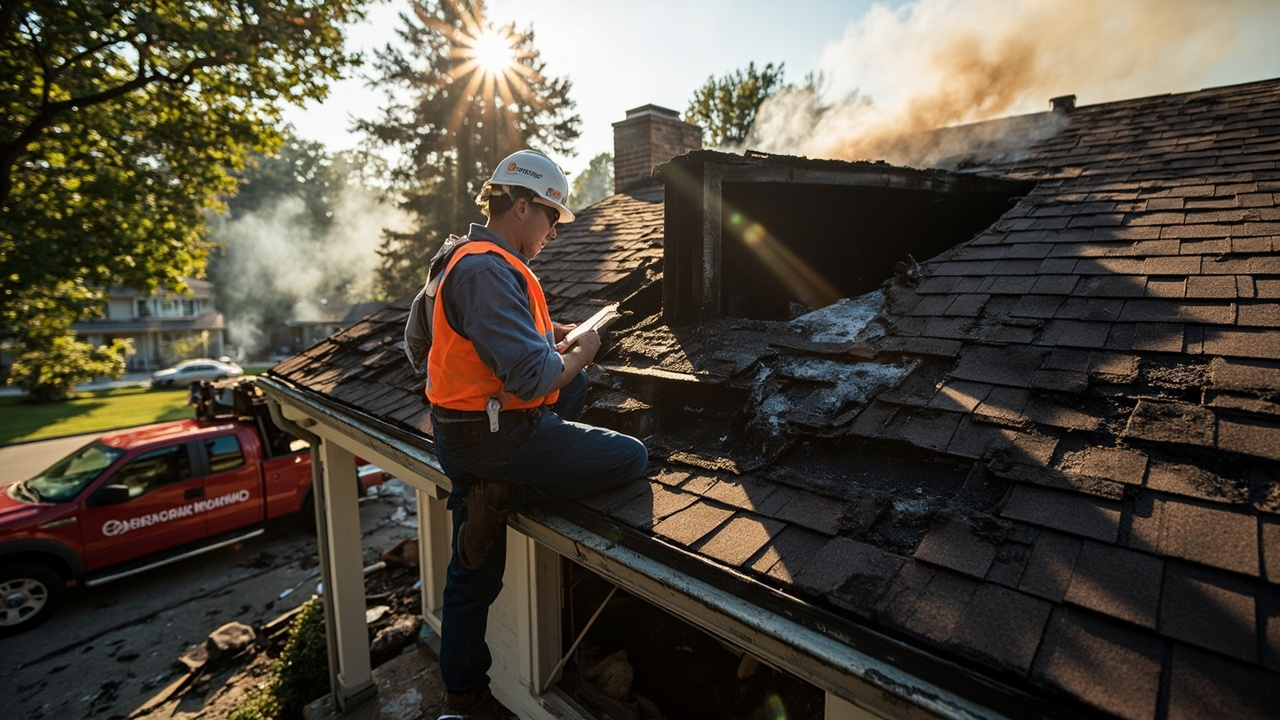


Louisville averages 75 percent humidity year-round, with summer months regularly exceeding 85 percent. This moisture-saturated air reacts with smoke residue on your roof, creating sulfuric and nitric acids that corrode metal components and degrade organic materials. Fire-damaged shingles absorb this humidity like sponges, accelerating granule loss and asphalt oxidation. The Ohio River Valley's notorious temperature swings cause this absorbed moisture to freeze and expand during winter nights, then thaw during sunny afternoons. This constant expansion and contraction in already weakened materials leads to catastrophic failure within weeks of the initial fire. Our post-fire roof inspection accounts for this Louisville-specific deterioration pattern, identifying damage that will manifest in the coming weeks so your insurance claim covers inevitable failures, not just current visible damage.
Louisville's building codes require specific fire-rated roofing materials in certain historic districts and commercial zones. We understand these requirements because we work with Metro Louisville's Department of Codes and Regulations weekly. Our smoke damage roof assessment includes code compliance review, ensuring your restoration meets current standards even if your original roof was grandfathered under older regulations. Insurance companies often deny claims when repairs do not meet code, leaving you responsible for expensive upgrades. We prevent this problem by identifying code issues during the initial inspection, clearly separating fire damage restoration from required code updates so your claim reflects accurate costs.