
Synthetic Slate versus Natural Stone (What Anchorage Homeowners Need to Know)
Choosing between synthetic slate and natural stone roofing in Louisville means weighing a century of proven performance against modern polymer technology. Natural slate offers unmatched longevity but demands structural reinforcement and specialized labor. Synthetic alternatives deliver Class 4 impact resistance and lighter weight at a fraction of the cost, making them ideal for homes in neighborhoods like Anchorage where severe storms and freeze-thaw cycles test roofing systems. The decision hinges on your home’s architecture, budget, and willingness to invest in structural upgrades for the timeless beauty of quarried stone. The most trusted roofing services in Germantown and Schnitzelburg.
Quick Comparison: Synthetic Slate vs Natural Stone
| Feature | Synthetic Slate | Natural Stone |
|---|---|---|
| Cost per Square | $600-$900 | $1,500-$2,500 |
| Weight per Square | 200-300 lbs | 800-1,500 lbs |
| Lifespan | 50-75 years | 100+ years |
| Impact Rating | Class 4 | Class 3-4 |
| Maintenance | Low (no moss growth) | Moderate (algae cleaning) |
Natural Slate: The Time-Tested Standard
Natural slate quarried from metamorphic rock formations delivers a 100-year lifespan when properly installed on reinforced roof decks. The material’s density resists Kentucky’s UV exposure and freeze-thaw cycles, but its weight requires engineered support structures that many Louisville homes lack. Historic districts like Old Louisville often mandate natural slate for its authentic character, though the material’s brittleness makes repairs costly and labor-intensive. EPA guidelines on recycled content in building materials.
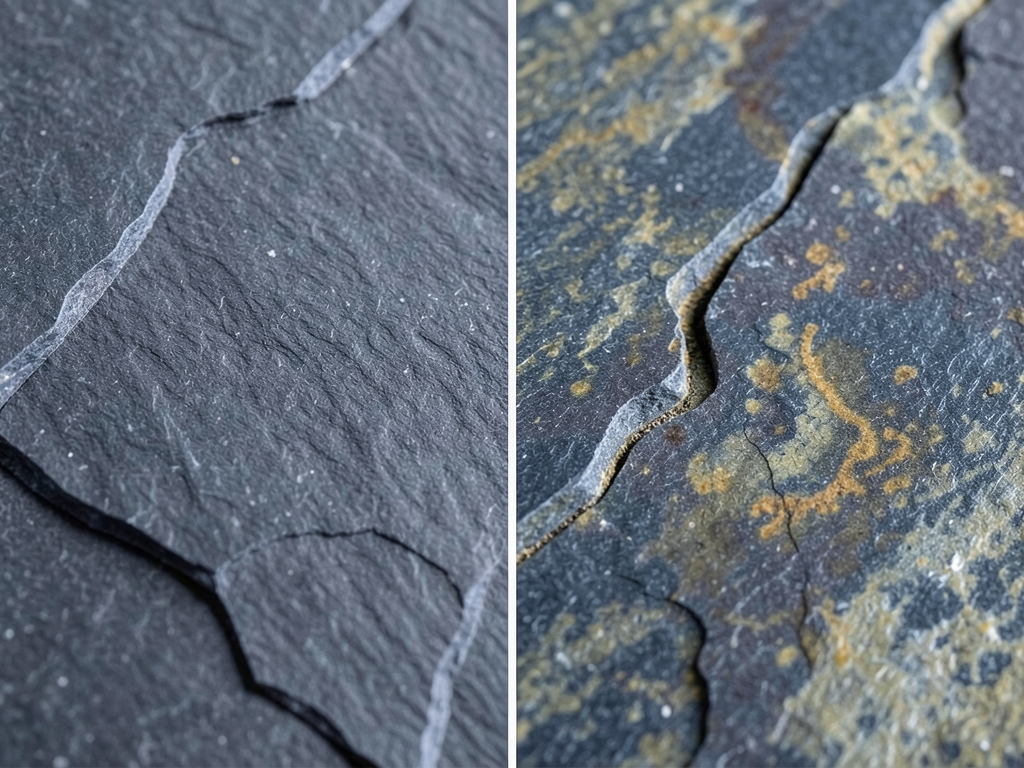
Natural slate’s absorption rate falls below 0.4%, preventing moisture penetration that causes freeze-thaw spalling. However, the material’s sharp edges and varying thicknesses demand precision cutting and specialized fasteners. Louisville’s humid summers accelerate algae growth on north-facing slopes, requiring periodic cleaning with low-pressure washing to maintain the slate’s natural luster.
Synthetic Slate: Modern Engineering for Kentucky Weather
Synthetic slate manufactured from polymer resins and recycled materials weighs one-third as much as natural stone while maintaining Class 4 impact resistance. Louisville homeowners benefit from DaVinci Roofscapes and Brava Roof Tile products that resist Kentucky’s severe hail events and resist moss growth in humid conditions. The material’s uniform dimensions speed installation and reduce labor costs by 40% compared to natural stone.
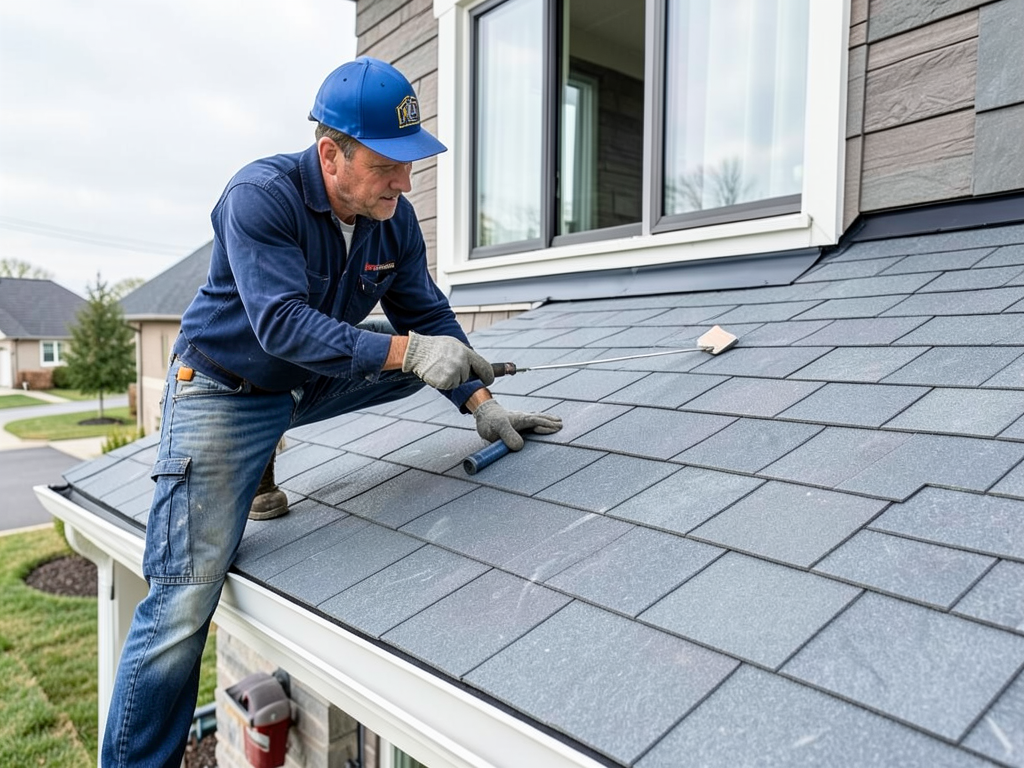
Polymer-based synthetics incorporate UV inhibitors that prevent color fading over decades of sun exposure. The material’s flexibility allows it to expand and contract with temperature swings without cracking, making it ideal for Louisville’s climate where summer temperatures exceed 90°F and winter nights drop below freezing. Installation requires no structural reinforcement, preserving existing roof framing.
Structural Considerations for Louisville Homes
Natural slate’s 800-1,500 pounds per square demands engineered roof trusses or steel reinforcement, particularly in homes built before 1980. Louisville’s older neighborhoods feature balloon framing that cannot support the dead load without modification. Synthetic slate’s 200-300 pounds per square installs directly over existing decking, eliminating costly structural work.. Read more about How to get a professional roof certification before selling your Crestwood house.
The Kentucky Residential Code Section R301.4 requires engineered calculations for loads exceeding 70 pounds per square foot. Homes in Anchorage and Prospect often need steel beam installation to support natural slate, adding $5,000-$10,000 to project costs. Synthetic slate bypasses these requirements, making it viable for homes with existing framing limitations. Reliable residential roofing specialists serving Jeffersonville and Clarksville.
Climate Performance in the Ohio Valley
Louisville’s freeze-thaw cycles test roofing materials through 40-50 annual temperature swings. Natural slate resists water absorption but develops hairline cracks from thermal stress over decades. Synthetic slate’s polymer composition flexes with temperature changes, preventing the microfractures that compromise natural stone’s integrity. Roofing Owensboro.
Spring hail storms in Jefferson County frequently exceed golf ball size, testing Class 4 impact ratings. Synthetic slate’s engineered polymer layers absorb impact energy without fracturing, while natural slate’s brittle composition can shatter under direct hits. Both materials resist wind uplift when properly fastened per ASTM D3161 standards for 90+ mph winds. ASTM D3161 wind resistance standards.
Maintenance and Long-Term Costs
Natural slate requires periodic inspection for cracked tiles, especially after severe weather. The material’s weight makes replacement labor-intensive, with specialized slate artisans charging $75-$125 per hour in the Louisville market. Synthetic slate’s uniform manufacturing eliminates the need for custom cutting during repairs. Commercial flat roof repair and maintenance for business owners in NuLu.
Louisville’s humidity promotes algae growth on all roofing materials, but synthetic slate’s non-porous surface resists Gloeocapsa magma colonization better than natural stone. Annual cleaning costs average $300-$500 for natural slate versus $150-$250 for synthetic alternatives. Both materials benefit from zinc or copper strips that prevent moss growth.
Aesthetic Considerations for Louisville Architecture
Historic Tudor and Victorian homes in Cherokee Triangle demand natural slate’s authentic texture and color variation. The material’s hand-split edges and natural cleft surfaces cannot be replicated by synthetics, though modern manufacturing achieves 95% visual similarity. Contemporary homes in Anchorage and Middletown often choose synthetic slate for its clean lines and consistent color.
Natural slate develops a patina over decades that many homeowners prize, while synthetic materials maintain their factory finish throughout their lifespan. The Kentucky Historic Preservation Review Board requires natural slate for properties in designated historic districts, limiting synthetic options for certain neighborhoods.
Insurance and Resale Value
Class 4 impact-rated synthetic slate qualifies for insurance premium discounts of 5-15% in Kentucky’s hail-prone regions. Louisville homeowners in areas like St. Matthews and the Highlands report annual savings of $200-$400 on homeowners insurance. Natural slate’s superior fire resistance provides additional discounts, though the material’s age and condition affect underwriting decisions. Why we are the highest rated roofing team in the Louisville metro area.
Resale value depends on neighborhood expectations and architectural compatibility. Natural slate commands premium pricing in historic districts and luxury markets, while synthetic slate appeals to buyers seeking low-maintenance solutions. Appraisers value both materials based on remaining lifespan and condition rather than original material cost.
Installation Expertise in Louisville
Natural slate installation requires craftsmen with 10+ years experience handling brittle materials. Louisville’s limited pool of qualified installers means project timelines extend 4-6 weeks versus 2-3 weeks for synthetic slate. The specialized labor commands $15-$25 per square foot versus $8-$12 for synthetic installations.
Synthetic slate manufacturers provide detailed installation manuals and offer manufacturer certification programs. Louisville contractors completing these programs demonstrate proficiency with polymer materials and warranty compliance. The training reduces installation errors and ensures proper fastening patterns for wind resistance.
Environmental Impact and Sustainability
Natural slate quarrying requires minimal processing but involves significant transportation emissions from eastern US quarries. The material’s 100+ year lifespan minimizes replacement frequency, reducing long-term environmental impact. Synthetic slate incorporates recycled content and offers end-of-life recyclability, though polymer production generates more initial emissions than stone quarrying.
Louisville’s growing emphasis on sustainable building practices favors materials with documented life-cycle assessments. Both options qualify for LEED points when sourced regionally and installed with proper underlayment systems. Synthetic slate’s lighter weight reduces transportation fuel consumption and eliminates structural material requirements.
The Louisville Verdict: Which Material Wins?
For homes in historic districts like Old Louisville or properties requiring architectural authenticity, natural slate remains the superior choice despite higher costs and maintenance requirements. The material’s proven 100-year performance and irreplaceable aesthetic justify the investment for properties where character drives value.
Synthetic slate dominates for modern homes in neighborhoods like Anchorage and Middletown where budget, installation speed, and Class 4 impact resistance matter most. The material’s 50-75 year lifespan, lower weight, and resistance to Kentucky’s severe weather make it the practical choice for most Louisville homeowners.
Your decision ultimately depends on whether you prioritize the timeless beauty and proven longevity of natural stone or the modern engineering, cost savings, and installation efficiency of synthetic alternatives. Both materials withstand Louisville’s climate when properly installed by qualified professionals.
Frequently Asked Questions
How long does synthetic slate last compared to natural stone?
Synthetic slate typically lasts 50-75 years while natural stone can exceed 100 years when properly maintained. The polymer composition of synthetics resists UV degradation but may show wear patterns after several decades.
Does synthetic slate look fake compared to natural stone?
Modern synthetic slate achieves 95% visual similarity to natural stone from street level. Close inspection reveals uniform dimensions and consistent coloring that natural slate’s hand-split edges and color variation lack.
Can my existing roof support natural slate?
Most homes built after 1980 can support natural slate with minimal reinforcement. Older Louisville homes often require engineered support structures, adding $5,000-$10,000 to installation costs.
Ready to Choose Your Roofing Material?
Call (502) 678-7557 today to schedule your inspection. Our Louisville roofing specialists will evaluate your home’s structure, discuss material options, and provide transparent pricing for both synthetic and natural slate installations. Don’t wait until storm season to make this important decision.
Pick up the phone and call (502) 678-7557 before the next storm hits. We’ll help you choose the right material for your home’s architecture, budget, and Louisville’s challenging climate. Your roof protects everything you value most.
{
“@context”: “https://schema.org”,
“@type”: “BlogPosting”,
“headline”: “Synthetic Slate versus Natural Stone (What Anchorage Homeowners Need to Know)”,
“description”: “Compare synthetic slate vs natural stone roofing for Louisville homes. Learn about cost, weight, durability, and Class 4 impact resistance for Kentucky weather.”,
“wordCount”: 1447,
“datePublished”: “2026-06-04T07:36:00.000Z”,
“dateModified”: “2026-06-04T07:36:00.000Z”,
“inLanguage”: “en-US”,
“mainEntityOfPage”: {
“@type”: “WebPage”,
“@id”: “https://fortressroofinglouisville.com”
},
“publisher”: {
“@type”: “LocalBusiness”,
“name”: “Fortress Roofing Louisville”,
“url”: “https://fortressroofinglouisville.com”
},
“author”: {
“@type”: “Organization”,
“name”: “Fortress Roofing Louisville”,
“url”: “https://fortressroofinglouisville.com”
},
“image”: {
“@type”: “ImageObject”,
“url”: “https://fortressroofinglouisville.com/wp-content/uploads/2026/03/synthetic-slate-versus-natural-stone-what-anchorag-1.png”
}
}
{
“@context”: “https://schema.org”,
“@type”: “RoofingContractor”,
“name”: “Fortress Roofing Louisville”,
“url”: “https://fortressroofinglouisville.com”,
“address”: {
“@type”: “PostalAddress”,
“addressLocality”: “Louisville”
},
“areaServed”: {
“@type”: “City”,
“name”: “Louisville”
}
}
{
“@context”: “https://schema.org”,
“@type”: “FAQPage”,
“mainEntity”: [
{
“@type”: “Question”,
“name”: “The Louisville Verdict: Which Material Wins?”,
“acceptedAnswer”: {
“@type”: “Answer”,
“text”: “For homes in historic districts like Old Louisville or properties requiring architectural authenticity, natural slate remains the superior choice despite higher costs and maintenance requirements. The material’s proven 100-year performance and irreplaceable aesthetic justify the investment for properties where character drives value.”
}
},
{
“@type”: “Question”,
“name”: “How long does synthetic slate last compared to natural stone?”,
“acceptedAnswer”: {
“@type”: “Answer”,
“text”: “Synthetic slate typically lasts 50-75 years while natural stone can exceed 100 years when properly maintained. The polymer composition of synthetics resists UV degradation but may show wear patterns after several decades.”
}
},
{
“@type”: “Question”,
“name”: “Does synthetic slate look fake compared to natural stone?”,
“acceptedAnswer”: {
“@type”: “Answer”,
“text”: “Modern synthetic slate achieves 95% visual similarity to natural stone from street level. Close inspection reveals uniform dimensions and consistent coloring that natural slate’s hand-split edges and color variation lack.”
}
},
{
“@type”: “Question”,
“name”: “Can my existing roof support natural slate?”,
“acceptedAnswer”: {
“@type”: “Answer”,
“text”: “Most homes built after 1980 can support natural slate with minimal reinforcement. Older Louisville homes often require engineered support structures, adding $5,000-$10,000 to installation costs.”
}
},
{
“@type”: “Question”,
“name”: “Ready to Choose Your Roofing Material?”,
“acceptedAnswer”: {
“@type”: “Answer”,
“text”: “Call (502) 678-7557 today to schedule your inspection. Our Louisville roofing specialists will evaluate your home’s structure, discuss material options, and provide transparent pricing for both synthetic and natural slate installations. Don’t wait until storm season to make this important decision.”
}
}
]
}
{
“@context”: “https://schema.org”,
“@type”: “BreadcrumbList”,
“itemListElement”: [
{
“@type”: “ListItem”,
“position”: 1,
“name”: “Home”,
“item”: “https://fortressroofinglouisville.com”
},
{
“@type”: “ListItem”,
“position”: 2,
“name”: “Blog”,
“item”: “https://fortressroofinglouisville.com/blog”
},
{
“@type”: “ListItem”,
“position”: 3,
“name”: “Synthetic Slate versus Natural Stone (What Anchorage Homeowners Need to Know)”
}
]
}
{
“@context”: “https://schema.org”,
“@type”: “Service”,
“serviceType”: “Roofing”,
“provider”: {
“@type”: “LocalBusiness”,
“name”: “Fortress Roofing Louisville”,
“url”: “https://fortressroofinglouisville.com”
},
“areaServed”: {
“@type”: “City”,
“name”: “Louisville”
},
“description”: “Compare synthetic slate vs natural stone roofing for Louisville homes. Learn about cost, weight, durability, and Class 4 impact resistance for Kentucky weather.”
}