
Solving drainage issues on flat roof additions in the Belknap neighborhood
Water pooling on your flat roof addition isn’t just an eyesore—it’s a ticking time bomb for structural damage. In Belknap, where many homes feature rear additions with low-slope roofs, improper drainage leads to ponding water that can cause leaks, membrane deterioration, and even roof collapse during heavy storms. The good news is that most drainage problems can be solved with the right approach, whether through tapered insulation systems, properly sized scuppers, or interior drains designed for Louisville’s rainfall patterns. Louisville and Jefferson County Metropolitan Sewer District.
The first step is understanding why water accumulates. Most flat roofs aren’t truly flat—they should have a minimum positive slope of 1/4 inch per foot toward drainage points. When this slope is missing or when drains become clogged with debris from nearby oak and maple trees, water has nowhere to go. In the Ohio Valley’s climate, where spring storms can dump several inches of rain in hours, even small drainage deficiencies become major problems.
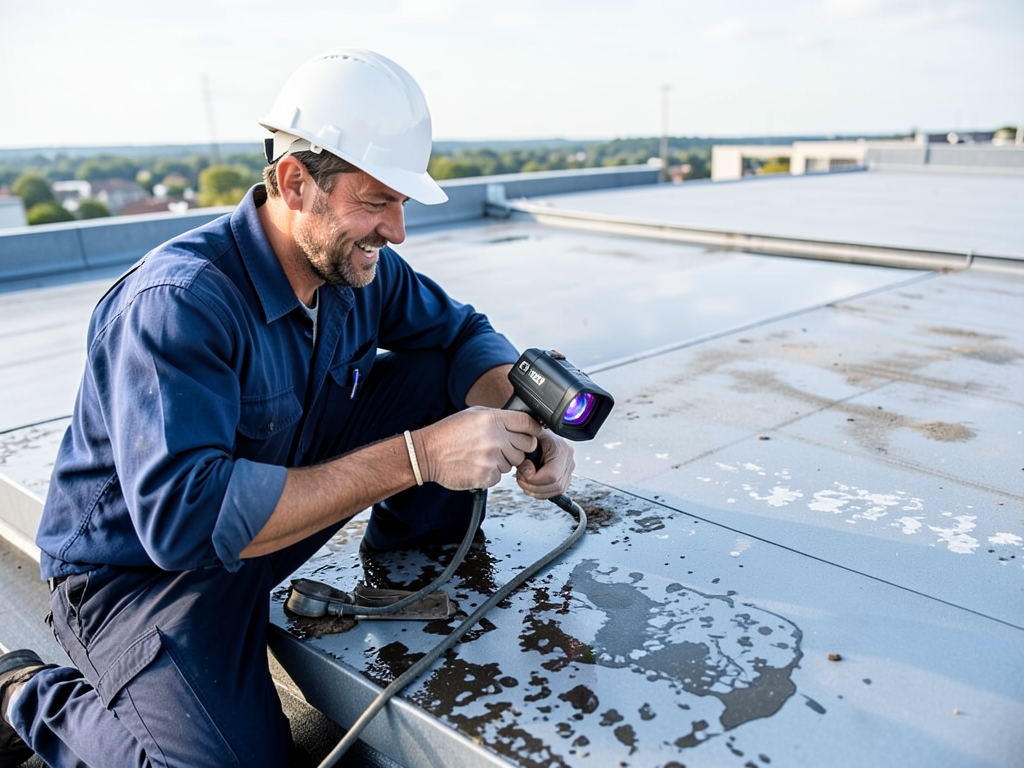
Before attempting any repairs, you need to identify the specific cause of your drainage issue. Is it a slope problem, a drain capacity issue, or something else entirely? A professional inspection using thermal imaging can reveal hidden moisture patterns that indicate where water is pooling and how long it’s been there. This diagnostic step is crucial because treating the symptom without addressing the underlying cause means the problem will return. Commercial flat roof repair and maintenance for business owners in NuLu.
Common solutions include installing tapered insulation to create proper slope, upgrading to larger diameter drains, adding additional drainage points, or installing siphonic drainage systems that can handle higher volumes of water. The best solution depends on your roof’s construction, the extent of the problem, and your budget. In historic Belknap homes, preserving the original architecture while solving modern drainage issues requires careful planning and specialized expertise.
Don’t wait until the next heavy rain to discover your roof can’t handle the water load. Call (502) 678-7557 today to schedule a comprehensive drainage assessment. Our team understands the unique challenges of Belknap’s older homes and can recommend solutions that protect your investment while maintaining your home’s character.
Understanding flat roof drainage fundamentals
Flat roof drainage isn’t about creating steep slopes—it’s about working with gravity to move water efficiently to designated exit points. The physics are simple: water flows downhill, so your roof needs a consistent, positive pitch directing water to drains, scuppers, or gutters. Without this, water becomes stagnant, creating what’s called ‘ponding water’ in the roofing industry. The most trusted roofing services in Germantown and Schnitzelburg.
The minimum slope requirement comes from the International Building Code, which mandates at least 1/4 inch of fall per foot for flat roofs. This translates to a 2% grade—barely noticeable to the eye but critical for drainage. In Louisville’s climate, where we receive an average of 45 inches of rainfall annually with concentrated spring storms, this minimum slope becomes even more important. International Building Code drainage requirements.
Water weighs approximately 5 pounds per square foot for every inch of depth. A 1,000 square foot roof with just one inch of standing water is holding 5,000 pounds of weight. During extended rainy periods, this load can cause structural stress, especially in older homes where the framing wasn’t designed for modern roofing materials and water loads. Roofing Owensboro.
The most effective drainage systems incorporate multiple redundancies. Primary drains handle normal rainfall, while overflow drains or scuppers provide backup during heavy storms. This fail-safe approach prevents catastrophic failure when debris blocks the main drains or when rainfall exceeds design capacity.
Understanding these fundamentals helps you recognize when your drainage system isn’t performing as it should. If you notice water remaining on your roof more than 48 hours after rainfall, or if you see visible sagging in the roof deck, you likely have a drainage problem that needs professional attention.
Common drainage problems in Belknap additions
Belknap’s architectural character includes many homes with rear additions built in different eras, creating flat roof sections where the original structure meets the addition. These transition areas are particularly vulnerable to drainage problems because they often involve different construction methods and materials.
One of the most common issues we see is differential settling. The original home’s foundation and the addition’s foundation settle at different rates due to soil composition and moisture content. Louisville’s expansive clay soils expand when wet and contract when dry, causing gradual movement that can create low spots in flat roof sections. These depressions become collection points for water during every rainfall.
Another frequent problem involves inadequate drain sizing. Many older additions were built with drainage systems designed for smaller roof areas or lighter rainfall patterns than we experience today. A single 3-inch drain might have been sufficient in 1970, but modern 4-inch or 6-inch drains are often needed to handle today’s storm intensities.
Debris accumulation is particularly problematic in Belknap due to the mature tree canopy. Large oak and maple trees surrounding many properties drop leaves, twigs, and seeds that find their way into roof drains. During fall months, this organic material can completely block drainage systems, causing water to back up and find alternative paths into the building.
The age of many Belknap homes also means that roofing materials have reached or exceeded their expected service life. EPDM membranes from the 1980s and 1990s often develop shrinkage cracks, while modified bitumen systems can lose their seams’ integrity. These material failures create additional pathways for water intrusion when drainage systems are overwhelmed.
Understanding these specific challenges helps explain why generic drainage solutions often fail in Belknap. The solution needs to address not just the immediate water problem but also the underlying structural and material issues unique to older additions in this neighborhood.
Interior drains vs. scuppers vs. gutters: choosing the right system
Selecting the appropriate drainage system depends on your roof’s size, configuration, and the building’s architecture. Each option has specific advantages and limitations that make it more or less suitable for different situations in Belknap homes.
Interior drains are the most common solution for larger flat roof areas. These drains sit flush with the roof surface and connect to internal piping that carries water down through the building’s walls. For commercial buildings or large residential additions, interior drains can handle substantial water volumes and remain hidden from view. However, they require careful installation to prevent leaks at the drain-to-membrane connection point. Reliable residential roofing specialists serving Jeffersonville and Clarksville.
Scuppers are openings in parapet walls that allow water to drain from the roof edge. They work well for roofs with accessible exterior walls and can handle overflow situations effectively. Scuppers are particularly useful in historic renovations where maintaining the building’s exterior appearance is important. The downside is that they can become blocked by ice in winter or debris in fall, and they require regular cleaning to remain functional.
Gutters and downspouts offer a traditional approach that works well for smaller roof areas and homes where interior drainage would be difficult to install. Modern seamless aluminum gutters can handle significant water volumes, and oversized downspouts reduce the risk of overflow. The main disadvantage is that gutters require more frequent maintenance and can be damaged by falling tree limbs or ice accumulation.
Siphonic drainage systems represent the most advanced option available. These systems use engineered fittings to create a vacuum effect that rapidly draws water from the roof surface. Siphonic systems can handle extremely high rainfall intensities and require fewer drains than traditional gravity systems. However, they require precise engineering and professional installation, making them more expensive initially but often more cost-effective long-term.
For most Belknap homes, a hybrid approach often works best. Primary drainage might use interior drains for the main roof area, with scuppers providing overflow protection and secondary drainage. This redundancy ensures that even if one system fails, water still has a path off the roof.
Consider your specific situation carefully. A roof with heavy tree coverage might benefit more from scuppers that are easier to clean, while a large commercial addition might require the capacity of a siphonic system. The right choice depends on your roof’s characteristics and your long-term maintenance preferences.
Creating positive slope with tapered insulation
When a flat roof lacks proper slope, the most effective solution is often adding tapered insulation rather than rebuilding the entire roof structure. This approach, called ‘cricket and saddle’ construction in the roofing industry, creates the necessary drainage angles without the cost and disruption of structural modifications.
Tapered insulation systems use precisely cut foam panels that vary in thickness from one end to the other. A typical system might range from 1/2 inch thick at the high point to 4 inches thick at the drain location, creating the required 1/4 inch per foot slope. These panels lock together to form a solid, insulating substrate that supports the new roof membrane.
The installation process requires careful planning and measurement. First, we establish the high point of the roof, typically near the center or at one end, depending on the building’s configuration. From there, we calculate the fall to each drain location, ensuring that every square foot of roof has a path to drainage. This planning phase is critical because mistakes in slope calculation can create new ponding areas.
One advantage of tapered insulation is that it adds thermal value to your roof. Standard tapered systems provide R-values ranging from R-5 to R-20, depending on the thickness and material used. This insulation bonus can improve your home’s energy efficiency while solving the drainage problem.
However, tapered insulation isn’t suitable for every situation. If your roof deck has significant deflection or damage, those structural issues need to be addressed first. Additionally, adding several inches of insulation raises the roof height, which can affect door clearances, window heights, and transitions to adjacent roof areas.
The cost of tapered insulation installation varies based on roof size and complexity, but it typically ranges from $3 to $6 per square foot installed. While this represents a significant investment, it’s often much less expensive than rebuilding the roof structure to achieve proper slope.
For Belknap homes with historic value, tapered insulation offers another benefit: it can be installed over existing roofing materials in many cases, preserving the building’s exterior appearance while solving the underlying drainage issues. This approach minimizes disruption to the home’s character while providing modern waterproofing protection.
Louisville building codes and drainage requirements
Understanding local building requirements is essential for any drainage modification project. Louisville’s building codes incorporate both state regulations and local amendments that address the specific challenges of our region’s climate and construction practices.
The Kentucky Residential Code, which adopts the 2018 International Residential Code with state amendments, requires minimum roof slopes of 1/4 inch per foot for built-up roofing and single-ply membranes. For roofs with a slope less than 1/2 inch per foot, the code mandates additional design considerations to ensure adequate drainage capacity.
Louisville Metro’s floodplain management regulations add another layer of requirements, particularly for properties near the Ohio River or in low-lying areas. These regulations may require elevated mechanical equipment, specific drainage patterns to prevent water from flowing toward foundations, and documentation of how modified drainage will affect adjacent properties.
The Louisville and Jefferson County Metropolitan Sewer District (MSD) has specific requirements for roof drainage connections to the storm sewer system. New or modified roof drains typically need permits, and the MSD requires calculations showing that your drainage system won’t overwhelm the municipal infrastructure during peak rainfall events.
For historic districts within Belknap, any exterior modifications may require approval from the Louisville Historic Preservation District Review Committee. While drainage improvements are generally allowed, the committee may have specific requirements about maintaining the building’s historic character, particularly regarding visible components like scuppers or downspouts.
Energy efficiency requirements also factor into drainage projects. The Kentucky Energy Code requires minimum insulation levels for new roofing assemblies, which often means that any major roof work must include upgraded insulation to meet current standards.
Working with a contractor familiar with these local requirements is crucial. Violations can result in stop-work orders, fines, and the need to tear out and redo work that doesn’t meet code. More importantly, proper permitting ensures that your drainage improvements are inspected and verified to meet all safety and performance standards.
Before starting any drainage modification, we recommend checking with the Louisville Metro Department of Codes and Regulations to understand the specific requirements for your property. Some neighborhoods have additional overlay districts or historic designations that impose extra requirements beyond the standard building code.
Maintenance strategies for long-term drainage performance
Even the best-designed drainage system will fail without proper maintenance. In Louisville’s climate, where we experience everything from spring thunderstorms to winter ice storms, a proactive maintenance schedule is essential for preventing drainage problems before they cause damage.
Seasonal maintenance should begin in early spring, before the heavy rainfall season starts. This involves clearing all roof drains, scuppers, and gutters of winter debris, including leaves that may have accumulated under snow. Check that all drainage components are securely attached and that no ice damage occurred during winter freezes.
Summer maintenance focuses on vegetation control. The humid Ohio Valley climate promotes rapid algae and moss growth on roof surfaces. While these organisms don’t directly cause drainage problems, they can trap moisture and create slippery conditions that make maintenance dangerous. Light pressure washing or application of EPA-approved roof cleaners can prevent excessive growth.
Fall maintenance is critical in Belknap due to the heavy leaf drop from mature trees. Schedule at least two thorough cleanings during October and November, when leaf fall is heaviest. Pay special attention to areas where roof slopes meet walls or other structures, as these collection points often trap leaves and debris.
Winter preparation should occur in late November. This includes checking that all drains are clear, installing heating cables if needed to prevent ice dams, and ensuring that overflow drains are not blocked by fall debris. In Louisville’s freeze-thaw cycles, even small amounts of standing water can create dangerous ice sheets.
Beyond seasonal tasks, monthly visual inspections can catch developing problems early. Look for signs of ponding water, check that drainage components are secure, and watch for any changes in how water flows off the roof during rainfall. Early detection of minor issues prevents major repairs later.
Professional inspections should occur annually, typically in late winter or early spring. A qualified roofing contractor can identify issues that aren’t visible from the ground, such as membrane deterioration, fastener problems, or developing low spots that are just beginning to collect water.
Document all maintenance activities, including dates, work performed, and any observations about the roof’s condition. This documentation proves valuable if warranty claims arise and helps track the roof’s performance over time, allowing you to anticipate when major repairs or replacement might be needed.
Remember that drainage maintenance isn’t just about the roof itself. Check that downspouts direct water away from foundations, that splash blocks are in place and functioning, and that underground drainage pipes are clear. Poor ground drainage can create foundation problems that eventually affect roof drainage through structural movement.
Warning signs of drainage problems
Recognizing the early warning signs of drainage issues can save you thousands in repair costs. Many homeowners miss these indicators until significant damage has already occurred, making early detection crucial for protecting your investment. Protecting your Lake Louisvilla home from high winds and waterfront humidity.
The most obvious sign is visible ponding water on your roof. After rainfall, any areas where water remains pooled more than 48 hours indicate inadequate slope or blocked drainage. Even shallow puddles can cause problems over time, as they promote membrane deterioration and add unnecessary weight to the roof structure.
Interior signs often appear before exterior damage becomes visible. Water stains on ceilings or walls, particularly near the center of the building or along exterior walls, suggest that water is finding paths through the roofing assembly. These stains may appear as yellowish or brownish discoloration and often grow larger with subsequent rainfall.
Musty odors in attic spaces or upper floors indicate moisture accumulation. In Louisville’s humid climate, even small amounts of water intrusion can create conditions for mold and mildew growth within 24-48 hours. If you notice persistent damp smells, especially after rainfall, investigate immediately.
Exterior signs include peeling paint on fascia boards, deteriorating soffit materials, and visible sagging in roof lines. These symptoms suggest that water is not only penetrating the roof but also affecting adjacent building components. Wood rot in these areas often indicates long-term moisture exposure.
During rainfall, observe how water flows off your roof. If you see water overflowing from gutters, cascading over roof edges where it shouldn’t, or creating new drainage paths, your system isn’t handling the volume properly. Also listen for unusual sounds like water dripping inside walls or gurgling in drain pipes, which can indicate blockages or improper drainage slopes.
Energy bill increases can also signal drainage problems. When water saturates roofing insulation, it loses its thermal resistance properties. If you notice unexplained increases in heating or cooling costs, particularly after periods of heavy rainfall, moisture in your roof assembly could be the culprit.
Physical changes to the roof surface provide additional clues. Blistering or bubbling of roof membranes, separation at seams or flashings, and the appearance of vegetation growing on the roof all indicate chronic moisture problems. Even small cracks in roofing materials can expand rapidly once water begins penetrating the assembly.
Don’t ignore these warning signs. What starts as a minor drainage inconvenience can quickly escalate into major structural damage, mold contamination, or complete roof failure. Early intervention by qualified professionals can address problems while they’re still manageable and cost-effective to repair.
Cost factors and return on investment
Understanding the costs associated with drainage improvements helps you make informed decisions about protecting your property. While prices vary based on roof size, complexity, and chosen solutions, having realistic expectations about investment requirements is important for planning purposes.
Basic drain cleaning and minor repairs typically cost between $300 and $800, depending on roof accessibility and the extent of clogging. This represents the minimum investment needed to restore proper function to an existing system and should be considered routine maintenance rather than a capital improvement.
Installing tapered insulation to create proper slope ranges from $3 to $6 per square foot, including removal of existing roofing materials if necessary. For a 1,000 square foot addition, this translates to $3,000 to $6,000 for the tapered system alone. This solution addresses the root cause of many drainage problems and provides long-term reliability.
Upgrading to larger diameter drains or adding additional drainage points typically costs $1,000 to $2,500 per drain installed, including cutting into the roof, installing the new drain assembly, and connecting to existing drainage piping. This solution works well when the existing drain size is inadequate for the roof area.
Siphonic drainage systems represent the premium option, with costs ranging from $15 to $25 per square foot of roof area. While significantly more expensive upfront, these systems can handle extremely high rainfall intensities and may reduce the number of drains needed. For large commercial applications or areas with severe drainage problems, the investment often proves worthwhile.
Additional costs to consider include permits from Louisville Metro (typically $100 to $500 depending on project scope), potential interior repairs if water damage has occurred, and temporary protection measures during installation. If your roof requires replacement due to age or damage, factor in those costs as well.
The return on investment for drainage improvements comes through several channels. Most directly, proper drainage prevents costly water damage repairs, which can easily exceed $10,000 for interior ceiling, wall, and flooring repairs if left unaddressed. Insurance deductibles alone often exceed the cost of preventive drainage work.
Energy efficiency improvements from proper drainage and insulation upgrades can reduce heating and cooling costs by 10-30%, providing annual savings that offset the initial investment over time. Additionally, a well-maintained roof with proper drainage typically lasts 5-10 years longer than a roof with chronic water problems, delaying the substantial cost of roof replacement.
Property value protection represents another significant return factor. Water damage and roofing problems are major red flags for potential buyers and can reduce property values by 5-15%. Conversely, documented drainage improvements and proper maintenance can enhance marketability and support higher asking prices.
Finally, consider the peace of mind value. Knowing that your roof can handle Louisville’s severe weather events without interior damage or emergency repairs provides intangible but real benefits that many homeowners find worth the investment.
Frequently Asked Questions
How do I know if my flat roof has a drainage problem?
Look for standing water that remains more than 48 hours after rainfall, water stains on interior ceilings or walls, musty odors in upper floors, and visible sagging in roof areas. During rainfall, observe if water overflows from gutters or creates new drainage paths off the roof.
Can I fix drainage issues myself or do I need a professional?
Basic drain cleaning might be a DIY task if you’re comfortable on roofs and have proper safety equipment. However, diagnosing slope problems, installing tapered insulation, or modifying drainage systems requires professional expertise to ensure proper waterproofing and code compliance. Working on roofs also involves significant safety risks.
How much does it cost to fix flat roof drainage problems?
Costs range from $300-$800 for basic drain cleaning to $3,000-$6,000 for tapered insulation installation on a 1,000 square foot area. Complete drainage system upgrades typically cost $1,000-$2,500 per drain installed, while siphonic systems run $15-$25 per square foot.
How long does a drainage improvement project take?
Simple drain cleaning takes a few hours. Installing tapered insulation typically requires 2-3 days for a residential addition. Complete drainage system replacements might take 1-2 weeks, depending on roof size and weather conditions. Most projects can be completed without requiring you to vacate your home.
Will improving drainage affect my home’s appearance?
Most drainage improvements are invisible from the ground. Tapered insulation and interior drains don’t change your home’s exterior appearance. Scuppers and gutters can be color-matched to your home’s trim. For historic homes in Belknap, we can often install modern drainage systems while maintaining the original architectural character.
What building permits are required for drainage modifications?
Most drainage modifications require permits from Louisville Metro Department of Codes and Regulations. The specific requirements depend on the scope of work, but typically include plumbing permits for drain modifications and building permits for structural changes. We handle all permitting as part of our drainage improvement services.
Choosing the right contractor for your drainage project
Selecting a qualified contractor for drainage improvements requires careful evaluation beyond basic licensing and insurance. The complexity of flat roof drainage systems demands specific expertise that not all roofing contractors possess, particularly for older homes in historic neighborhoods like Belknap.
Start by verifying that potential contractors have specific experience with flat roof drainage systems. Ask for examples of similar projects they’ve completed, particularly in older homes or historic districts. A contractor who primarily works on steep-slope residential roofs may lack the specialized knowledge needed for flat roof drainage solutions.
Check references thoroughly, focusing on projects completed at least two years ago. Drainage problems often develop gradually, so long-term references provide better insight into the contractor’s work quality than recent projects. Ask previous clients whether they’ve experienced any water intrusion since the work was completed and how the contractor responded to any issues.
Verify that the contractor understands Louisville’s specific building requirements. They should be familiar with MSD regulations, historic district requirements if applicable, and local building code amendments. A contractor who can’t discuss these requirements likely lacks the local expertise necessary for your project.
Ask about their approach to diagnosing drainage problems. Quality contractors use diagnostic tools like thermal imaging to identify moisture patterns and may conduct water tests to verify drainage performance before and after improvements. Avoid contractors who propose solutions without first conducting a thorough assessment of your specific situation.
Review their warranty offerings carefully. Standard roofing warranties often exclude drainage components or have limited coverage periods for drainage-related issues. Look for contractors who provide specific warranties for drainage improvements and who will warranty both materials and workmanship for an appropriate period.
Communication style matters significantly for drainage projects. The best contractors explain their proposed solutions in terms you can understand, provide detailed written proposals, and are willing to answer questions throughout the process. Avoid contractors who use high-pressure sales tactics or who can’t explain why they’re recommending specific solutions.
Finally, consider whether the contractor has proper insurance coverage for the specific work involved. Flat roof work often requires workers’ compensation coverage and liability insurance that specifically includes roofing operations. Don’t hesitate to request proof of insurance and to verify coverage with the insurance provider.
Remember that the lowest price rarely represents the best value for drainage improvements. Quality materials, proper installation techniques, and thorough testing all contribute to higher upfront costs but provide better long-term performance and fewer problems. Investing in quality workmanship from the start typically saves money over the life of your roof.
Ready to solve your flat roof drainage problems? Call (502) 678-7557 today to schedule your comprehensive drainage assessment. Our team has extensive experience with Belknap’s unique architectural challenges and can recommend solutions that protect your home while preserving its character. Don’t wait for the next heavy rain to discover your roof can’t handle the water load.
Protecting your investment for the long term
Flat roof drainage improvements represent a significant investment in your property’s protection and value. When properly designed, installed, and maintained, these systems provide decades of reliable performance, keeping your home dry and your belongings safe from water damage.
The key to long-term success lies in understanding that drainage improvements aren’t a one-time fix but rather part of an ongoing building maintenance strategy. Your roof’s drainage needs will change over time due to settling, material aging, and changing weather patterns. Regular inspections and maintenance ensure that your system continues to perform as designed throughout its service life.
Documentation plays a crucial role in protecting your investment. Keep records of all drainage work, including before and after photos, contractor information, warranty documents, and maintenance logs. This documentation proves valuable for insurance claims, property sales, and future maintenance planning.
Consider establishing a relationship with a qualified roofing contractor who can provide ongoing maintenance and monitoring services. Many contractors offer annual maintenance agreements that include scheduled inspections, priority service for any issues that arise, and discounts on repairs. These agreements often pay for themselves through early problem detection and prevention of major damage.
Stay informed about your roof’s condition by learning to recognize the warning signs of developing problems. Understanding what to look for empowers you to catch issues early when they’re easier and less expensive to address. Your contractor can provide specific guidance based on your roof’s construction and the improvements that have been made.
Finally, remember that proper drainage is about more than just protecting your roof. It’s about safeguarding your entire home, including its contents, structural integrity, and the health of its occupants. Water intrusion can lead to mold growth, wood rot, and even foundation problems that affect the entire building. By investing in proper drainage, you’re protecting much more than just the roof over your head.
Don’t let drainage problems compromise your home’s safety and value. Call (502) 678-7557 now to speak with our drainage specialists. We’ll assess your specific situation, explain your options in clear terms, and recommend solutions that fit your needs and budget. Your home deserves the best protection available, and we’re here to provide it.
{
“@context”: “https://schema.org”,
“@type”: “BlogPosting”,
“headline”: “Solving drainage issues on flat roof additions in the Belknap neighborhood”,
“description”: “Flat roof drainage problems in Belknap homes? Learn how to fix ponding water, prevent leaks, and comply with Louisville building codes. Call (502) 678-7557.”,
“wordCount”: 4613,
“datePublished”: “2026-03-23T07:02:00.000Z”,
“dateModified”: “2026-03-23T07:02:00.000Z”,
“inLanguage”: “en-US”,
“mainEntityOfPage”: {
“@type”: “WebPage”,
“@id”: “https://fortressroofinglouisville.com”
},
“publisher”: {
“@type”: “LocalBusiness”,
“name”: “Fortress Roofing Louisville”,
“url”: “https://fortressroofinglouisville.com”
},
“author”: {
“@type”: “Organization”,
“name”: “Fortress Roofing Louisville”,
“url”: “https://fortressroofinglouisville.com”
},
“image”: {
“@type”: “ImageObject”,
“url”: “https://fortressroofinglouisville.com/wp-content/uploads/2026/03/solving-drainage-issues-on-flat-roof-additions-in-1.png”
}
}
{
“@context”: “https://schema.org”,
“@type”: “RoofingContractor”,
“name”: “Fortress Roofing Louisville”,
“url”: “https://fortressroofinglouisville.com”,
“address”: {
“@type”: “PostalAddress”,
“addressLocality”: “Louisville”
},
“areaServed”: {
“@type”: “City”,
“name”: “Louisville”
}
}
{
“@context”: “https://schema.org”,
“@type”: “FAQPage”,
“mainEntity”: [
{
“@type”: “Question”,
“name”: “How do I know if my flat roof has a drainage problem?”,
“acceptedAnswer”: {
“@type”: “Answer”,
“text”: “Look for standing water that remains more than 48 hours after rainfall, water stains on interior ceilings or walls, musty odors in upper floors, and visible sagging in roof areas. During rainfall, observe if water overflows from gutters or creates new drainage paths off the roof.”
}
},
{
“@type”: “Question”,
“name”: “Can I fix drainage issues myself or do I need a professional?”,
“acceptedAnswer”: {
“@type”: “Answer”,
“text”: “Basic drain cleaning might be a DIY task if you’re comfortable on roofs and have proper safety equipment. However, diagnosing slope problems, installing tapered insulation, or modifying drainage systems requires professional expertise to ensure proper waterproofing and code compliance. Working on roofs also involves significant safety risks.”
}
},
{
“@type”: “Question”,
“name”: “How much does it cost to fix flat roof drainage problems?”,
“acceptedAnswer”: {
“@type”: “Answer”,
“text”: “Costs range from $300-$800 for basic drain cleaning to $3,000-$6,000 for tapered insulation installation on a 1,000 square foot area. Complete drainage system upgrades typically cost $1,000-$2,500 per drain installed, while siphonic systems run $15-$25 per square foot.”
}
},
{
“@type”: “Question”,
“name”: “How long does a drainage improvement project take?”,
“acceptedAnswer”: {
“@type”: “Answer”,
“text”: “Simple drain cleaning takes a few hours. Installing tapered insulation typically requires 2-3 days for a residential addition. Complete drainage system replacements might take 1-2 weeks, depending on roof size and weather conditions. Most projects can be completed without requiring you to vacate your home.”
}
},
{
“@type”: “Question”,
“name”: “Will improving drainage affect my home’s appearance?”,
“acceptedAnswer”: {
“@type”: “Answer”,
“text”: “Most drainage improvements are invisible from the ground. Tapered insulation and interior drains don’t change your home’s exterior appearance. Scuppers and gutters can be color-matched to your home’s trim. For historic homes in Belknap, we can often install modern drainage systems while maintaining the original architectural character.”
}
},
{
“@type”: “Question”,
“name”: “What building permits are required for drainage modifications?”,
“acceptedAnswer”: {
“@type”: “Answer”,
“text”: “Most drainage modifications require permits from Louisville Metro Department of Codes and Regulations. The specific requirements depend on the scope of work, but typically include plumbing permits for drain modifications and building permits for structural changes. We handle all permitting as part of our drainage improvement services.”
}
}
]
}
{
“@context”: “https://schema.org”,
“@type”: “BreadcrumbList”,
“itemListElement”: [
{
“@type”: “ListItem”,
“position”: 1,
“name”: “Home”,
“item”: “https://fortressroofinglouisville.com”
},
{
“@type”: “ListItem”,
“position”: 2,
“name”: “Blog”,
“item”: “https://fortressroofinglouisville.com/blog”
},
{
“@type”: “ListItem”,
“position”: 3,
“name”: “Solving drainage issues on flat roof additions in the Belknap neighborhood”
}
]
}
{
“@context”: “https://schema.org”,
“@type”: “Service”,
“serviceType”: “Roofing”,
“provider”: {
“@type”: “LocalBusiness”,
“name”: “Fortress Roofing Louisville”,
“url”: “https://fortressroofinglouisville.com”
},
“areaServed”: {
“@type”: “City”,
“name”: “Louisville”
},
“description”: “Flat roof drainage problems in Belknap homes? Learn how to fix ponding water, prevent leaks, and comply with Louisville building codes. Call (502) 678-7557.”
}