
Protecting your Lake Louisvilla home from high winds and waterfront humidity
Lake Louisvilla homeowners face unique challenges from waterfront humidity and frequent high wind storms. Your roof takes the brunt of these forces, and without proper protection, you risk costly water damage, mold growth, and structural issues. The combination of moisture-laden air from the Ohio River and the open exposure to wind creates a perfect storm for roofing problems that generic solutions simply cannot handle. Roofing Owensboro.
Living near water means your shingles face constant moisture exposure that accelerates algae growth and wood rot. The wind patterns that sweep across the lake can lift shingles, damage flashing, and create entry points for water. These aren’t just seasonal concerns – they’re year-round threats that require specialized knowledge of how waterfront conditions affect roofing materials and installation techniques.. Read more about The best shingle options for high wind areas in Mount Washington.
The good news is that with the right approach, you can protect your home from these environmental stressors. Understanding the specific vulnerabilities of waterfront properties and choosing materials and installation methods designed for these conditions makes all the difference between a roof that fails in five years and one that protects your home for decades.
Why waterfront homes need specialized roofing protection
Waterfront properties in Lake Louisvilla sit in a microclimate that differs significantly from inland areas. The proximity to water creates higher humidity levels that can reach 80-90% during summer months, compared to 60-70% just a few miles inland. This constant moisture exposure means your roof faces accelerated wear patterns that most roofing contractors never encounter. Why we are the highest rated roofing team in the Louisville metro area.
The wind dynamics near water bodies create another layer of complexity. Open water allows wind to build speed without obstruction, and when those gusts hit your roof, they create uplift forces that can exceed standard design requirements. Many homes in the Lake Louisvilla area were built before modern wind load calculations became standard, leaving them vulnerable to damage from storms that would barely affect inland properties.
Local building patterns compound these issues. Many waterfront homes feature complex roof designs with multiple valleys, dormers, and varying pitches that create numerous potential failure points. Each transition point between different roof sections requires precise flashing installation, and even small gaps can become major water intrusion points when combined with high winds driving rain sideways. Valley Leak Repair.
Call (502) 678-7557 today to schedule your waterfront roof inspection before the next storm hits.
Common waterfront roofing problems we see in Lake Louisvilla
Algae and moss growth represents the most visible waterfront roofing problem. The constant moisture creates ideal conditions for these organisms to thrive, and once established, they retain even more moisture against your shingles. This biological growth not only looks unsightly but actively breaks down roofing materials through constant moisture retention and the acidic compounds some organisms produce.
Wind damage patterns in waterfront areas show distinct characteristics. Rather than uniform shingle loss, we often see lifting along the windward edges first, followed by progressive failure as water penetrates beneath the damaged areas. The damage typically concentrates on the sides facing the water, where wind speeds are highest and debris impact is most common.
Flashing failures represent another waterfront-specific issue. The constant temperature fluctuations near water cause metal flashing to expand and contract more dramatically than inland areas. Over time, this movement breaks the seals around chimneys, vents, and roof penetrations. When combined with wind-driven rain, even small gaps become major leak sources.
Underlayment degradation occurs faster in waterfront environments. Standard roofing felt breaks down when exposed to constant moisture, and many Lake Louisvilla homes have underlayment that’s deteriorated beyond its useful life even when the visible shingles appear intact. This hidden damage often goes unnoticed until major leaks develop.
Best roofing materials for high wind and humidity resistance
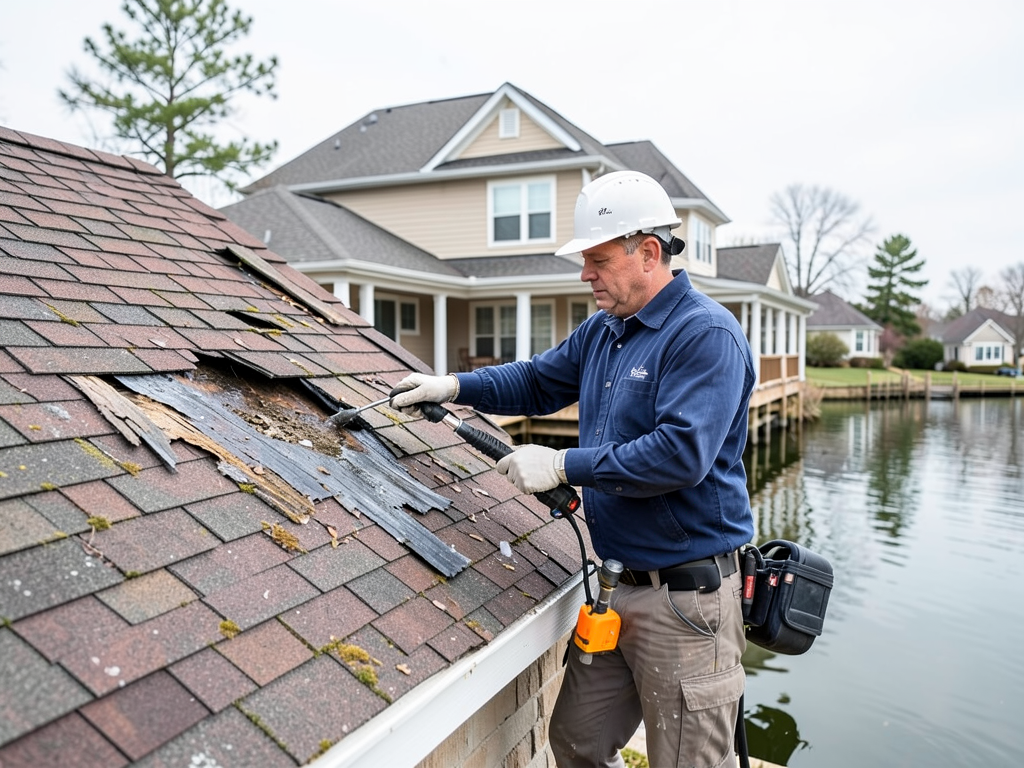
Class 4 impact-resistant shingles offer the best protection for waterfront homes. These shingles withstand winds up to 130 mph and resist impact damage from hail and debris. The rubberized asphalt composition remains flexible in temperature extremes, preventing the cracking that standard shingles develop in waterfront environments. While they cost 15-20% more upfront, their 30-50 year lifespan and superior wind ratings make them cost-effective for waterfront properties.
Metal roofing provides exceptional wind resistance when properly installed. Standing seam metal roofs can withstand winds exceeding 140 mph when secured with the appropriate clip systems. The smooth surface sheds water efficiently, and the non-porous material resists algae growth. The initial investment runs 2-3 times higher than asphalt, but the 40-70 year lifespan and minimal maintenance requirements offset the cost over time.
Synthetic slate offers the aesthetic appeal of natural slate with superior wind and moisture resistance. These composite materials weigh less than natural slate, reducing structural stress on older homes. They resist algae growth and maintain their color even under constant UV exposure. The cost runs 1.5-2 times that of premium asphalt shingles, but the 50-year warranties and authentic appearance justify the investment for many waterfront homeowners.
Modified bitumen roofing works well for low-slope waterfront applications. The rubberized asphalt composition remains flexible in temperature extremes and resists wind uplift when properly torched down. The granulated surface resists algae growth, and the seamless installation eliminates many leak points common in traditional built-up roofing systems.
| Material Type | Wind Rating | Moisture Resistance | Expected Lifespan | Best For |
|---|---|---|---|---|
| Class 4 Asphalt | Up to 130 mph | Good with algae-resistant coating | 30-50 years | Most waterfront homes |
| Standing Seam Metal | Up to 140+ mph | Excellent | 40-70 years | Contemporary designs |
| Synthetic Slate | Up to 110 mph | Excellent | 50+ years | Historic aesthetics |
| Modified Bitumen | Up to 90 mph | Excellent | 20-30 years | Low-slope applications |
Installation techniques that maximize waterfront protection
Enhanced fastening patterns make the difference between a roof that survives a storm and one that fails. Standard installation uses four nails per shingle, but waterfront installations require six nails minimum. The additional fasteners prevent wind uplift and create redundant holding points if one fastener fails. We also use ring-shank nails that grip the wood deck more securely than smooth nails.
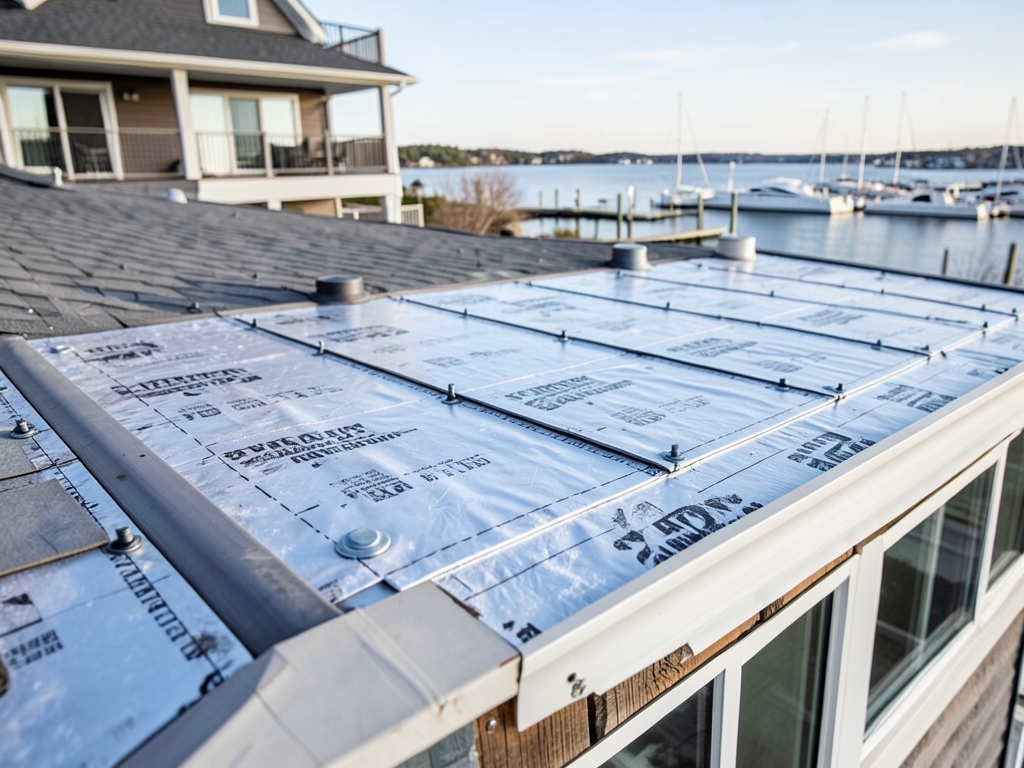
Ice and water shield installation extends beyond code requirements for waterfront homes. While building codes typically require this protective membrane in valleys and along eaves, waterfront properties benefit from complete coverage. The self-adhering membrane creates a waterproof barrier that remains intact even if shingles are damaged or blown off during a storm.
Ventilation strategies for waterfront homes differ from standard designs. The constant moisture requires enhanced airflow to prevent condensation in attic spaces. We install ridge vents with baffled designs that prevent wind-driven rain infiltration while maintaining airflow. The intake vents are positioned to create cross-ventilation that moves moist air out before it can condense on structural elements.
Flashing details receive extra attention in waterfront installations. We use lead-coated copper flashing that resists corrosion in salty or mineral-rich water environments. The flashing extends further up vertical surfaces and includes additional counter-flashing layers. All penetrations receive custom-fabricated flashings rather than standard pre-formed pieces, ensuring perfect fits that prevent water intrusion.
Preventative maintenance for waterfront roof longevity
Regular inspections catch problems before they become expensive repairs. Waterfront roofs need inspection twice yearly – once in spring after winter storms and again in fall before winter weather arrives. We check for lifted shingles, damaged flashing, and early signs of algae growth. The inspections also identify ventilation issues that could lead to moisture problems inside your home. EPA mold prevention guidelines.
Gutter maintenance takes on added importance near water. The combination of wind-blown debris and accelerated biological growth means gutters clog faster in waterfront areas. Clean gutters at least quarterly, and consider installing gutter guards designed for high-debris environments. Ensure downspouts direct water at least five feet from your foundation to prevent basement moisture issues.
Algae and moss prevention requires proactive treatment rather than reactive cleaning. We apply EPA-registered treatments that inhibit biological growth without damaging roofing materials. These treatments typically last 2-3 years and prevent the black streaks and green patches that make waterfront homes look aged and poorly maintained.
Tree management around waterfront properties prevents many common roofing problems. Overhanging branches drop debris that holds moisture against your roof and provides a pathway for algae spores. Keep branches trimmed back at least six feet from your roof surface, and remove any dead trees that could fall during storms.
The Kentucky Residential Code Section R905.2.5 requires specific wind resistance ratings for roofing in areas prone to high winds. For Lake Louisvilla, which falls in the 90-115 mph wind zone, this means using shingles rated for these wind speeds and following enhanced fastening requirements. Many older homes were built before these requirements existed, making them particularly vulnerable to modern storm patterns. Reliable residential roofing specialists serving Jeffersonville and Clarksville.
Storm damage assessment and insurance claim process
Wind damage often appears minor but creates major vulnerabilities. A few lifted shingles can allow water to penetrate beneath the roofing layers, causing damage that spreads rapidly. After any significant wind event, check your roof for missing or damaged shingles, especially on the windward sides. Look for shingle granules in your gutters – their presence indicates shingle deterioration that could lead to leaks.
Hail damage requires trained eyes to identify. Small hail impacts create bruising that breaks the shingle’s protective granules without creating visible holes. These bruises accelerate aging and create weak points that fail during subsequent storms. We use moisture meters and infrared scanning to detect water infiltration beneath apparently intact shingles.
Insurance claim documentation needs to be thorough and timely. Most policies require notification within a specific timeframe after damage occurs. We provide detailed damage assessments with photos showing the extent and location of damage, along with estimates for complete restoration. This documentation helps ensure your claim receives fair consideration.
Code compliance upgrades often become necessary during insurance repairs. If your roof is damaged beyond certain thresholds, building codes may require upgrades to meet current standards. This could include enhanced underlayment, improved ventilation, or upgraded fastening systems. Understanding these requirements before starting repairs prevents costly change orders during the project. Commercial flat roof repair and maintenance for business owners in NuLu.
Don’t wait for the next storm. Call (502) 678-7557 now for your comprehensive waterfront roof assessment.
Energy efficiency considerations for waterfront homes
Reflective roofing materials reduce cooling costs in waterfront environments. The combination of high humidity and summer heat creates significant cooling loads, and reflective shingles can reduce roof surface temperatures by 50-60 degrees. This temperature reduction translates to 10-15% lower cooling costs and reduces the strain on your HVAC system.
Ventilation optimization improves both energy efficiency and moisture control. Proper attic ventilation prevents heat buildup that radiates into living spaces and creates moisture problems that can lead to mold growth. We calculate the exact ventilation requirements based on your roof area and local climate conditions to ensure optimal performance.
Insulation upgrades complement roofing improvements for maximum energy efficiency. Many waterfront homes have insufficient attic insulation that allows heat transfer and creates condensation problems. Adding proper insulation levels while addressing roofing issues provides immediate energy savings and prevents moisture-related damage.
Solar integration becomes more viable with the right roofing system. Modern solar installations require roofs that can support the additional weight and provide clean mounting surfaces. We design roofing systems with future solar installation in mind, ensuring your investment in a new roof doesn’t prevent you from adding solar panels later.
Cost factors for waterfront roofing projects
Material selection represents the largest cost variable in waterfront roofing. Premium materials like Class 4 shingles or metal roofing cost 20-50% more than standard options but provide superior protection and longer lifespans. The right material choice depends on your home’s architecture, your budget, and your long-term plans for the property.
Installation complexity affects labor costs significantly. Waterfront homes often feature complex roof designs with multiple valleys, dormers, and varying pitches that require more time and expertise to install properly. These architectural features create additional flashing points and transition areas that must be sealed perfectly to prevent leaks.
Permit requirements and code compliance add costs but provide essential protection. Lake Louisvilla falls under Oldham County permitting requirements, which include specific wind resistance standards and inspection requirements. These permits ensure your roof meets current safety standards and can affect your insurance rates and home value.
Removal and disposal of existing roofing layers impacts project costs. Many waterfront homes have multiple layers of roofing that must be removed before new installation. The weight of wet, deteriorated roofing materials can stress older structures, making complete removal necessary despite the added cost.
Choosing the right roofing contractor for waterfront properties
Experience with waterfront conditions matters more than general roofing experience. Contractors who primarily work inland may not understand the specific challenges of moisture management, wind dynamics, and material selection for waterfront environments. Ask potential contractors about their experience with similar properties in your area.
Insurance and licensing verification protects your investment. Ensure your contractor carries both general liability and workers’ compensation insurance. Verify their Kentucky roofing license through the state licensing board. These credentials ensure you’re protected if problems arise during or after the project.
Warranty terms reveal contractor confidence in their work. Look for contractors who offer both material and workmanship warranties. Material warranties typically cover defects in the roofing products, while workmanship warranties cover installation errors. The best contractors stand behind their work with comprehensive warranty coverage.
Local references provide insight into contractor reliability and quality. Ask for references from other waterfront homeowners in your area. These references can share their experiences with similar projects and help you understand what to expect during your roofing project.
Frequently Asked Questions
How often should I replace my waterfront roof?
Most waterfront roofs need replacement every 20-25 years, even when standard asphalt shingles have 30-year warranties. The constant moisture exposure and wind stress accelerate deterioration. Regular inspections can help you identify when replacement becomes necessary before major leaks develop.
Can I install a new roof over my existing one?
While building codes allow one layer of roofing over existing materials, waterfront properties benefit from complete removal. Multiple layers trap moisture, add unnecessary weight to structures, and make it impossible to inspect the deck for damage. The additional cost of removal pays off in better protection and longer roof life.
What signs indicate I need roof repairs?
Look for missing or damaged shingles, especially after storms. Check for water stains on ceilings or walls, which indicate active leaks. Algae growth, while common on waterfront homes, can indicate moisture problems when it appears in unusual patterns or locations. Any visible sagging or deck deformation requires immediate attention.
How long does a waterfront roof replacement take?
Most waterfront roof replacements take 2-3 days for a typical home, but complex designs or weather delays can extend this timeline. We schedule projects to minimize exposure during vulnerable periods and ensure proper sealing before any weather events occur.
Will a new roof increase my home’s value?
A properly installed, high-quality roof typically returns 60-70% of its cost in increased home value. For waterfront properties, the value increase can be higher due to the improved protection against environmental damage and the enhanced curb appeal of premium roofing materials.
Take action to protect your waterfront investment
Your waterfront home represents a significant investment that deserves protection from the unique environmental challenges of the Lake Louisvilla area. The combination of high winds, constant moisture, and complex roof designs creates conditions that require specialized knowledge and materials to address properly.
Waiting until problems become visible often means waiting too long. By the time you see water stains on your ceiling or notice missing shingles, damage may have already spread to your attic insulation, structural framing, and interior finishes. Proactive maintenance and timely repairs prevent these costly secondary damages.
Quality roofing installation for waterfront properties requires understanding local wind patterns, moisture dynamics, and building code requirements specific to Oldham County. It also demands experience with the architectural styles common to the area and the ability to work with various roofing materials to achieve both protection and aesthetic goals.
Don’t let the next storm damage your home and disrupt your life. Our team understands the specific challenges waterfront homeowners face and has the expertise to provide lasting solutions. We use materials and installation techniques proven to withstand the harsh conditions unique to Lake Louisvilla’s waterfront environment.
Ready to protect your home? Call (502) 678-7557 today to schedule your comprehensive waterfront roof inspection and get a detailed assessment of your roof’s condition and your best protection options.
Investing in proper roofing protection now saves you from emergency repairs, water damage restoration, and the stress of dealing with unexpected leaks during storms. Your home deserves the best protection available, and that’s exactly what we provide to waterfront homeowners throughout the Lake Louisvilla area.. Read more about Emergency tarping and quick leak response for Newburg homeowners.
Take the first step toward peace of mind. Contact us today and let our experienced team evaluate your specific needs and recommend the best solutions for your waterfront property. Your home’s protection is our priority, and we’re ready to help you weather any storm that comes your way. For more information, visit FEMA wind protection guidelines.
{
“@context”: “https://schema.org”,
“@type”: “BlogPosting”,
“headline”: “Protecting your Lake Louisvilla home from high winds and waterfront humidity”,
“description”: “High winds and waterfront humidity threaten Lake Louisvilla homes. Learn how local roofing experts protect against storm damage, moisture intrusion, and costly repairs.”,
“wordCount”: 2846,
“datePublished”: “2026-04-16T12:40:00.000Z”,
“dateModified”: “2026-04-16T12:40:00.000Z”,
“inLanguage”: “en-US”,
“mainEntityOfPage”: {
“@type”: “WebPage”,
“@id”: “https://fortressroofinglouisville.com”
},
“publisher”: {
“@type”: “LocalBusiness”,
“name”: “Fortress Roofing Louisville”,
“url”: “https://fortressroofinglouisville.com”
},
“author”: {
“@type”: “Organization”,
“name”: “Fortress Roofing Louisville”,
“url”: “https://fortressroofinglouisville.com”
},
“image”: {
“@type”: “ImageObject”,
“url”: “https://fortressroofinglouisville.com/wp-content/uploads/2026/03/protecting-your-lake-louisvilla-home-from-high-win-1.png”
}
}
{
“@context”: “https://schema.org”,
“@type”: “RoofingContractor”,
“name”: “Fortress Roofing Louisville”,
“url”: “https://fortressroofinglouisville.com”,
“address”: {
“@type”: “PostalAddress”,
“addressLocality”: “Louisville”
},
“areaServed”: {
“@type”: “City”,
“name”: “Louisville”
}
}
{
“@context”: “https://schema.org”,
“@type”: “FAQPage”,
“mainEntity”: [
{
“@type”: “Question”,
“name”: “How often should I replace my waterfront roof?”,
“acceptedAnswer”: {
“@type”: “Answer”,
“text”: “Most waterfront roofs need replacement every 20-25 years, even when standard asphalt shingles have 30-year warranties. The constant moisture exposure and wind stress accelerate deterioration. Regular inspections can help you identify when replacement becomes necessary before major leaks develop.”
}
},
{
“@type”: “Question”,
“name”: “Can I install a new roof over my existing one?”,
“acceptedAnswer”: {
“@type”: “Answer”,
“text”: “While building codes allow one layer of roofing over existing materials, waterfront properties benefit from complete removal. Multiple layers trap moisture, add unnecessary weight to structures, and make it impossible to inspect the deck for damage. The additional cost of removal pays off in better protection and longer roof life.”
}
},
{
“@type”: “Question”,
“name”: “What signs indicate I need roof repairs?”,
“acceptedAnswer”: {
“@type”: “Answer”,
“text”: “Look for missing or damaged shingles, especially after storms. Check for water stains on ceilings or walls, which indicate active leaks. Algae growth, while common on waterfront homes, can indicate moisture problems when it appears in unusual patterns or locations. Any visible sagging or deck deformation requires immediate attention.”
}
},
{
“@type”: “Question”,
“name”: “How long does a waterfront roof replacement take?”,
“acceptedAnswer”: {
“@type”: “Answer”,
“text”: “Most waterfront roof replacements take 2-3 days for a typical home, but complex designs or weather delays can extend this timeline. We schedule projects to minimize exposure during vulnerable periods and ensure proper sealing before any weather events occur.”
}
},
{
“@type”: “Question”,
“name”: “Will a new roof increase my home’s value?”,
“acceptedAnswer”: {
“@type”: “Answer”,
“text”: “A properly installed, high-quality roof typically returns 60-70% of its cost in increased home value. For waterfront properties, the value increase can be higher due to the improved protection against environmental damage and the enhanced curb appeal of premium roofing materials.”
}
}
]
}
{
“@context”: “https://schema.org”,
“@type”: “BreadcrumbList”,
“itemListElement”: [
{
“@type”: “ListItem”,
“position”: 1,
“name”: “Home”,
“item”: “https://fortressroofinglouisville.com”
},
{
“@type”: “ListItem”,
“position”: 2,
“name”: “Blog”,
“item”: “https://fortressroofinglouisville.com/blog”
},
{
“@type”: “ListItem”,
“position”: 3,
“name”: “Protecting your Lake Louisvilla home from high winds and waterfront humidity”
}
]
}
{
“@context”: “https://schema.org”,
“@type”: “Service”,
“serviceType”: “Roofing”,
“provider”: {
“@type”: “LocalBusiness”,
“name”: “Fortress Roofing Louisville”,
“url”: “https://fortressroofinglouisville.com”
},
“areaServed”: {
“@type”: “City”,
“name”: “Louisville”
},
“description”: “High winds and waterfront humidity threaten Lake Louisvilla homes. Learn how local roofing experts protect against storm damage, moisture intrusion, and costly repairs.”
}