
Safety Standards for Commercial Roofing Projects Along the Busy Dixie Highway Corridor
Commercial roofing along Louisville’s Dixie Highway corridor demands strict adherence to safety protocols that protect workers and shield property owners from liability. The combination of high traffic volumes, limited work zones, and the Ohio Valley’s volatile weather creates unique hazards that require specialized safety measures. This guide breaks down the essential safety standards that Fortress Roofing follows on every commercial project from Shively to Pleasure Ridge Park. Commercial flat roof repair and maintenance for business owners in NuLu.
Our Commitment to OSHA and KYOSH Compliance
Federal OSHA regulations form the baseline, but Kentucky Occupational Safety and Health (KYOSH) adds state-specific requirements that commercial contractors must follow. Louisville Metro building codes require additional permitting and inspection protocols for commercial structures exceeding 10,000 square feet. These layered regulations mean your roofing contractor must maintain current KYOSH certification and demonstrate compliance through regular safety audits. OSHA official website.
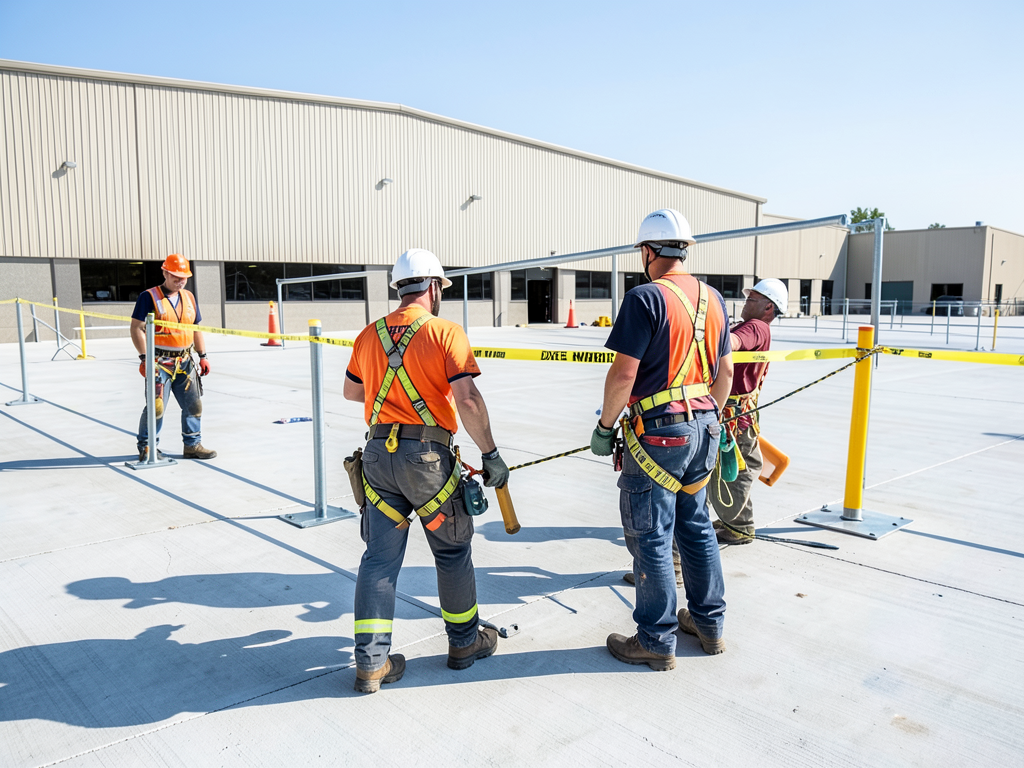
KYOSH mandates specific fall protection systems for commercial roofs with slopes under 4:12. Guardrail systems must withstand 200 pounds of force at the top rail and 150 pounds at the mid-rail. Warning line systems require flags every six feet and must be rigged at least six feet from the roof edge. These requirements directly impact your project timeline and budget.
Fall Protection Systems for Louisville Commercial Properties
Commercial buildings along Dixie Highway present varied fall protection challenges. Flat roof warehouses in the Industrial Park require different systems than the sloped roofs on older commercial buildings near Cane Run Road. For flat surfaces, Fortress Roofing implements a combination of guardrails, safety nets, and personal fall arrest systems (PFAS) depending on the work area size and duration. The most trusted roofing services in Germantown and Schnitzelburg.
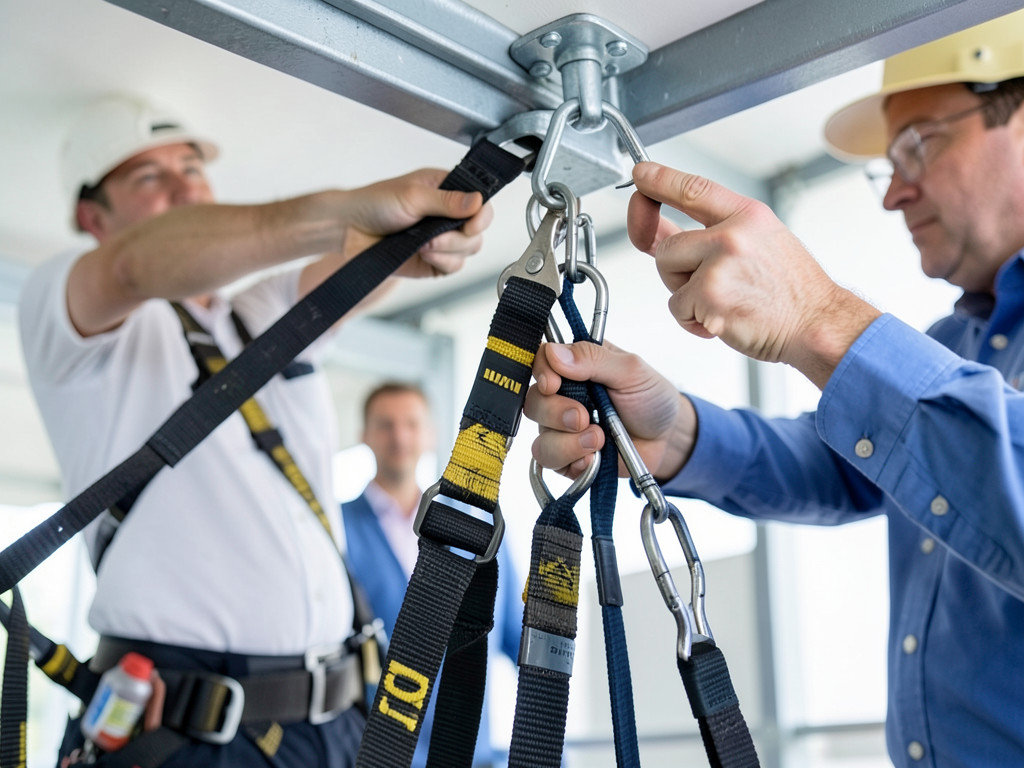
PFAS components include full-body harnesses rated for 310 pounds, lanyards with shock absorbers, and anchor points tested to 5,000 pounds. Each system undergoes inspection before daily use. Warning lines create controlled access zones on large commercial roofs, allowing workers to operate safely within designated boundaries while keeping unauthorized personnel away from fall hazards. Why we are the highest rated roofing team in the Louisville metro area.
Weather-Specific Safety: Navigating the Ohio Valley Climate
Louisville’s weather patterns create distinct safety challenges for commercial roofing crews. Summer heat indexes regularly exceed 95 degrees, requiring mandatory hydration breaks every 45 minutes and shade structures for rest areas. The Ohio Valley’s high humidity increases slip hazards on membrane surfaces, particularly during morning dew or afternoon thunderstorms.
Winter projects demand ice and snow removal protocols before work begins. Wind gusts exceeding 25 mph trigger work stoppages on elevated surfaces. The National Weather Service’s wind advisories for Jefferson County directly impact commercial roofing schedules along Dixie Highway, where open areas create wind tunnel effects between buildings. National Roofing Contractors Association.
Equipment and Material Safety
Commercial roofing equipment requires specialized safety protocols. Cranes operating near Dixie Highway must maintain minimum clearance from power lines and traffic lanes. Material hoisting systems for TPO and EPDM rolls require tag lines to prevent swinging loads. Propane torches for modified bitumen applications demand CERTA certification and fire watch protocols.
Hazardous material handling includes proper storage of adhesives, solvents, and sealants. Safety Data Sheets (SDS) must be readily available on-site for all chemicals. Workers handling these materials wear chemical-resistant gloves and eye protection. Ventilation systems prevent fume accumulation in enclosed areas during application.
The Client Advantage: Why Contractor Safety Protects Your Liability
Your commercial property’s liability exposure directly correlates with your roofing contractor’s safety practices. A contractor with poor safety records increases your risk of worker injury claims, project delays, and potential lawsuits. Fortress Roofing maintains an EMR (Experience Modification Rate) of 0.85, placing us in the top 15% of roofing contractors nationally for safety performance.
Insurance carriers recognize this distinction. Properties with documented safety compliance during roofing projects often qualify for reduced liability premiums. The documentation Fortress provides includes daily safety logs, equipment inspection records, and worker certification verification. This paper trail proves due diligence if any incident occurs during your project.
Equipment Inspection and Maintenance Protocols
Daily equipment inspections prevent failures that could cause injuries or project delays. Ladders undergo structural checks for cracks, bent rungs, or loose hardware. Scaffolding systems require level verification and guardrail inspection before each use. Power tools receive cord and switch checks to prevent electrical hazards.
Fall protection equipment receives monthly formal inspections beyond daily checks. Harnesses show wear patterns that indicate improper use or aging components. Lanyards develop abrasion points that compromise strength. Anchor points require torque verification and corrosion checks. These protocols ensure equipment reliability throughout your project.
Emergency Response and First Aid Preparedness
Commercial roofing sites maintain comprehensive first aid kits and automated external defibrillators (AEDs) on-site. At least one worker per crew holds current CPR and first aid certification. Emergency action plans include specific evacuation routes from your building and designated assembly points away from traffic on Dixie Highway.
Communication systems ensure rapid response capability. Two-way radios maintain contact between ground crews and roof teams. Cell phones stay charged and accessible. Local emergency services have site maps and access instructions for each commercial location along the corridor.
Training and Certification Requirements
Fortress Roofing requires OSHA 10-hour certification for all crew members and OSHA 30-hour certification for supervisors. Specialized training includes CERTA certification for torch applications, fall protection competent person training, and hazardous materials handling certification. These credentials ensure workers understand both general and specific safety requirements for commercial projects.
Annual refresher training covers new regulations, equipment updates, and site-specific hazards. Training records demonstrate ongoing commitment to safety excellence. This documentation satisfies KYOSH inspection requirements and provides clients with confidence in our safety protocols.
Site-Specific Safety Planning
Each commercial project along Dixie Highway receives a customized safety plan addressing site-specific hazards. Proximity to traffic requires flaggers and traffic control barriers. Limited staging areas demand careful equipment placement to maintain emergency access. Adjacent businesses need protection from dust, debris, and noise during construction.
Job Hazard Analysis (JHA) documents identify potential hazards before work begins. These analyses consider roof access methods, material storage locations, and emergency egress routes. The JHA becomes part of the project documentation that clients can review for compliance verification.
Quality Control Through Safety Excellence
Safety protocols and quality control intersect on commercial roofing projects. Proper fall protection installation ensures roofing systems perform as designed. Material handling procedures prevent damage that could compromise waterproofing. Weather monitoring prevents installation during conditions that void manufacturer warranties.
Documentation of safety compliance provides quality assurance evidence. Daily logs show adherence to installation specifications. Inspection reports verify system components meet code requirements. This documentation supports warranty claims and demonstrates professional project management to building owners.
Building Code Integration with Safety Standards
Louisville Metro building codes incorporate safety requirements into permit approvals. Commercial roofing permits require submission of fall protection plans and emergency egress documentation. Inspections verify both structural compliance and safety system installation. This integration means safety compliance becomes part of the building approval process.
State code amendments specific to Jefferson County address local conditions. Wind load requirements for commercial structures account for Dixie Highway’s exposure to Ohio Valley weather patterns. These requirements influence safety system specifications and installation methods.
Technology and Safety Innovation
Modern safety technology enhances traditional protocols. Drones conduct roof inspections without exposing workers to fall hazards. Thermal imaging identifies moisture problems before they require invasive testing. GPS tracking ensures worker accountability and rapid location in emergencies.
Mobile apps streamline safety documentation. Digital checklists replace paper forms, reducing errors and ensuring completeness. Real-time weather monitoring apps provide advance warning of approaching storms, allowing crews to secure work areas before hazardous conditions arrive.
Client Responsibilities and Partnership
Building owners play a crucial role in commercial roofing safety. Providing accurate building plans helps crews identify hazards before arrival. Maintaining clear access routes ensures emergency vehicles can reach the site. Notifying adjacent tenants about project schedules prevents conflicts and ensures cooperation with safety protocols.
Regular communication between clients and contractors addresses concerns promptly. Safety meetings include client representatives when requested. This partnership approach ensures all parties understand and support safety requirements throughout the project duration.
Measuring Safety Performance
Safety performance metrics track program effectiveness. Total recordable incident rates, near-miss reports, and safety audit scores provide objective measures of safety culture. Fortress Roofing maintains detailed statistics showing our commitment to continuous improvement.
Client references can verify safety performance on completed projects. Building managers along Dixie Highway recognize our crews by their professional safety practices and thorough documentation. This reputation supports our selection for new commercial projects.
The Financial Impact of Safety Excellence
Safety compliance affects project economics beyond direct costs. Reduced insurance premiums, fewer delays from incidents, and improved worker productivity contribute to competitive pricing. Our safety investment translates to cost savings that benefit our commercial clients.
Long-term relationships with building owners often develop through consistent safety performance. Property managers recommend contractors who protect their assets and minimize liability exposure. This trust becomes valuable when bidding on repeat projects or new developments.
Continuous Improvement and Industry Leadership
Safety standards evolve with new technologies and regulations. Fortress Roofing participates in industry associations to stay current with best practices. We contribute to safety discussions at local and national levels, sharing insights from our Dixie Highway corridor experience.
Feedback from completed projects drives protocol refinements. Lessons learned from each commercial installation improve our safety approach for future projects. This commitment to improvement ensures our safety standards remain current and effective.
Building Trust Through Safety Transparency
Open communication about safety practices builds client confidence. We welcome safety audits by client representatives and insurance carriers. Our documentation demonstrates compliance with all applicable regulations. This transparency differentiates us from contractors who view safety as merely a compliance requirement.
Safety excellence reflects our overall business philosophy. Quality workmanship, reliable scheduling, and professional communication all stem from the same commitment to excellence that drives our safety program. This comprehensive approach benefits every commercial client along Dixie Highway. Reliable residential roofing specialists serving Jeffersonville and Clarksville.
Frequently Asked Questions
What safety certifications should a commercial roofing contractor have?
Commercial roofing contractors should maintain OSHA 10 or 30-hour certification, KYOSH compliance documentation, and specialized certifications like CERTA for torch applications. They should also carry liability insurance and provide documentation of their Experience Modification Rate (EMR).
How does weather affect commercial roofing safety along Dixie Highway?
Ohio Valley weather creates unique hazards including high humidity causing slip risks, summer heat requiring frequent hydration breaks, and winter ice demanding specialized protocols. Wind tunnel effects between buildings along Dixie Highway can create unexpected gusts that exceed standard safety thresholds.
What liability protections does safety compliance provide for building owners?
Proper safety compliance reduces your exposure to worker injury claims, demonstrates due diligence to insurance carriers, and may qualify your property for reduced liability premiums. Comprehensive documentation of safety practices provides legal protection if incidents occur during roofing projects.
How are fall protection systems different for commercial versus residential roofing?
Commercial projects require more extensive fall protection due to larger roof areas, varied slopes, and higher worker counts. Systems include guardrails, safety nets, and personal fall arrest systems configured to KYOSH specifications. Warning line systems create controlled access zones not typically needed on residential projects.
What should I ask a roofing contractor about their safety practices?
Request their EMR rating, copies of safety certifications, documentation of recent safety training, and references from previous commercial clients. Ask about their emergency response protocols and whether they provide daily safety logs for your project records.
How does safety compliance affect project timelines and costs?
Proper safety protocols may extend project duration slightly but prevent costly delays from incidents. The investment in safety equipment and training often results in lower insurance costs and improved worker productivity, ultimately benefiting the project budget.
Commercial roofing safety along Dixie Highway requires expertise, preparation, and unwavering commitment to best practices. Fortress Roofing brings all three to every project, protecting your investment while ensuring worker safety. Don’t compromise on safety standards that protect your liability and ensure project success. Protecting your Lake Louisvilla home from high winds and waterfront humidity.
Call (502) 678-7557 today to schedule your inspection and learn how our safety-first approach benefits your commercial roofing project.
{
“@context”: “https://schema.org”,
“@type”: “BlogPosting”,
“headline”: “Safety Standards for Commercial Roofing Projects Along the Busy Dixie Highway Corridor”,
“description”: “Learn KYOSHA-compliant safety standards for commercial roofing along Dixie Highway. Protect your liability with certified fall protection, PPE protocols, and Ohio Valley weather strategies.”,
“wordCount”: 2037,
“datePublished”: “2026-05-14T08:25:00.000Z”,
“dateModified”: “2026-05-14T08:25:00.000Z”,
“inLanguage”: “en-US”,
“mainEntityOfPage”: {
“@type”: “WebPage”,
“@id”: “https://fortressroofinglouisville.com”
},
“publisher”: {
“@type”: “LocalBusiness”,
“name”: “Fortress Roofing Louisville”,
“url”: “https://fortressroofinglouisville.com”
},
“author”: {
“@type”: “Organization”,
“name”: “Fortress Roofing Louisville”,
“url”: “https://fortressroofinglouisville.com”
},
“image”: {
“@type”: “ImageObject”,
“url”: “https://fortressroofinglouisville.com/wp-content/uploads/2026/03/safety-standards-for-commercial-roofing-projects-a-1.png”
}
}
{
“@context”: “https://schema.org”,
“@type”: “RoofingContractor”,
“name”: “Fortress Roofing Louisville”,
“url”: “https://fortressroofinglouisville.com”,
“address”: {
“@type”: “PostalAddress”,
“addressLocality”: “Louisville”
},
“areaServed”: {
“@type”: “City”,
“name”: “Louisville”
}
}
{
“@context”: “https://schema.org”,
“@type”: “FAQPage”,
“mainEntity”: [
{
“@type”: “Question”,
“name”: “What safety certifications should a commercial roofing contractor have?”,
“acceptedAnswer”: {
“@type”: “Answer”,
“text”: “Commercial roofing contractors should maintain OSHA 10 or 30-hour certification, KYOSH compliance documentation, and specialized certifications like CERTA for torch applications. They should also carry liability insurance and provide documentation of their Experience Modification Rate (EMR).”
}
},
{
“@type”: “Question”,
“name”: “How does weather affect commercial roofing safety along Dixie Highway?”,
“acceptedAnswer”: {
“@type”: “Answer”,
“text”: “Ohio Valley weather creates unique hazards including high humidity causing slip risks, summer heat requiring frequent hydration breaks, and winter ice demanding specialized protocols. Wind tunnel effects between buildings along Dixie Highway can create unexpected gusts that exceed standard safety thresholds.”
}
},
{
“@type”: “Question”,
“name”: “What liability protections does safety compliance provide for building owners?”,
“acceptedAnswer”: {
“@type”: “Answer”,
“text”: “Proper safety compliance reduces your exposure to worker injury claims, demonstrates due diligence to insurance carriers, and may qualify your property for reduced liability premiums. Comprehensive documentation of safety practices provides legal protection if incidents occur during roofing projects.”
}
},
{
“@type”: “Question”,
“name”: “How are fall protection systems different for commercial versus residential roofing?”,
“acceptedAnswer”: {
“@type”: “Answer”,
“text”: “Commercial projects require more extensive fall protection due to larger roof areas, varied slopes, and higher worker counts. Systems include guardrails, safety nets, and personal fall arrest systems configured to KYOSH specifications. Warning line systems create controlled access zones not typically needed on residential projects.”
}
},
{
“@type”: “Question”,
“name”: “What should I ask a roofing contractor about their safety practices?”,
“acceptedAnswer”: {
“@type”: “Answer”,
“text”: “Request their EMR rating, copies of safety certifications, documentation of recent safety training, and references from previous commercial clients. Ask about their emergency response protocols and whether they provide daily safety logs for your project records.”
}
},
{
“@type”: “Question”,
“name”: “How does safety compliance affect project timelines and costs?”,
“acceptedAnswer”: {
“@type”: “Answer”,
“text”: “Proper safety protocols may extend project duration slightly but prevent costly delays from incidents. The investment in safety equipment and training often results in lower insurance costs and improved worker productivity, ultimately benefiting the project budget.”
}
}
]
}
{
“@context”: “https://schema.org”,
“@type”: “BreadcrumbList”,
“itemListElement”: [
{
“@type”: “ListItem”,
“position”: 1,
“name”: “Home”,
“item”: “https://fortressroofinglouisville.com”
},
{
“@type”: “ListItem”,
“position”: 2,
“name”: “Blog”,
“item”: “https://fortressroofinglouisville.com/blog”
},
{
“@type”: “ListItem”,
“position”: 3,
“name”: “Safety Standards for Commercial Roofing Projects Along the Busy Dixie Highway Corridor”
}
]
}
{
“@context”: “https://schema.org”,
“@type”: “Service”,
“serviceType”: “Roofing”,
“provider”: {
“@type”: “LocalBusiness”,
“name”: “Fortress Roofing Louisville”,
“url”: “https://fortressroofinglouisville.com”
},
“areaServed”: {
“@type”: “City”,
“name”: “Louisville”
},
“description”: “Learn KYOSHA-compliant safety standards for commercial roofing along Dixie Highway. Protect your liability with certified fall protection, PPE protocols, and Ohio Valley weather strategies.”
}