
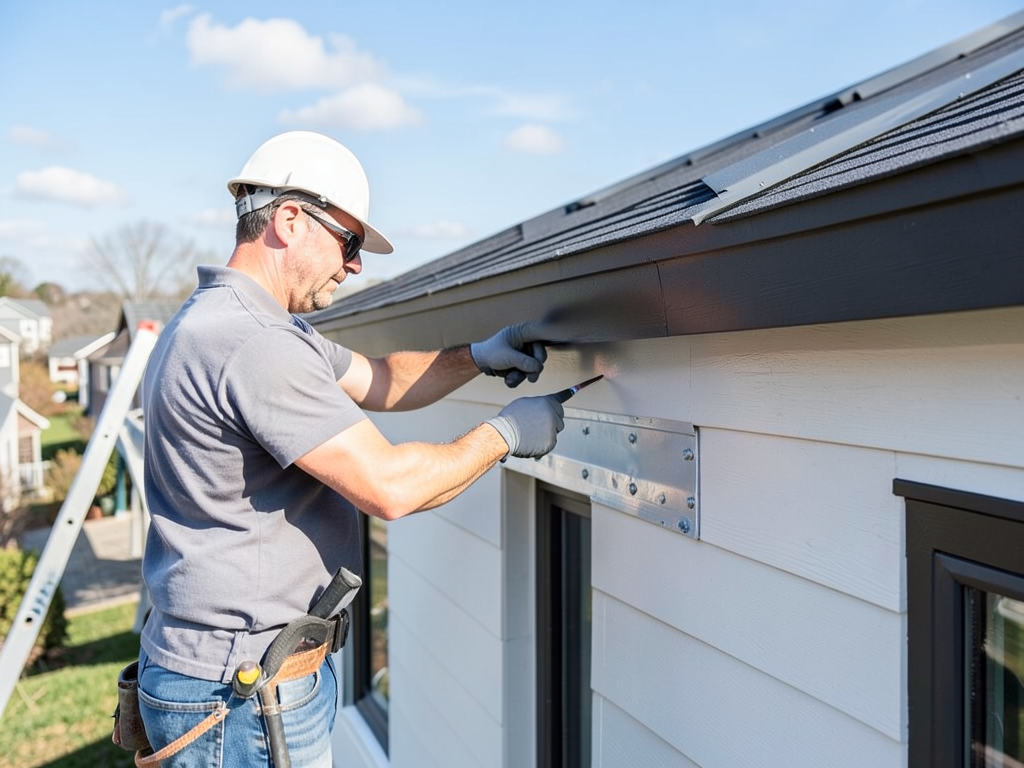
Why Modern Shed Style Roof Additions in the Highlands Leak More Often
The sloped single-plane design of modern shed roof additions creates specific vulnerabilities in Louisville’s climate. Water follows the angle of the roof directly toward the wall intersection where flashing details often fail under the weight of heavy spring rains and freeze-thaw cycles common to the Ohio Valley.. Read more about Upgrading the Flat Roof on Your Mid Century Modern Gem in Spring Valley.
Homeowners in the Highlands notice damp spots on interior walls within months of construction completion. The problem stems from material choices and installation practices that work fine in drier climates but deteriorate quickly when exposed to Kentucky’s high humidity and temperature swings.
Most shed roof leaks develop at predictable failure points. The wall-to-roof junction represents the highest risk area because it combines multiple materials that expand and contract at different rates. When fasteners loosen or sealants degrade, water finds these gaps and travels along structural members before appearing as stains on interior surfaces. Why we are the highest rated roofing team in the Louisville metro area.
The Highlands neighborhood presents unique challenges for shed roof additions. Many homes sit on hillsides with poor natural drainage, causing water to pool against foundation walls and back up under roofing materials. Older homes with balloon framing allow water to travel horizontally between stories before detection. The most trusted roofing services in Germantown and Schnitzelburg.
Understanding these patterns helps homeowners identify problems early. A small stain near the ceiling corner often indicates a much larger issue developing behind the wall. By the time visible damage appears, the structural framing may already require replacement.. Read more about Why your New Albany small business might benefit from an EPDM rubber roof system.
Identifying the Source: Where is the Water Coming From?
Water follows predictable paths through building assemblies. In shed roof additions, the entry point rarely matches the visible damage location. Water can travel along rafters, insulation, or wall studs for several feet before dripping onto finished surfaces.
Start your inspection during or immediately after rainfall. Active leaks show as dripping water, wet spots that grow larger over time, or water running down walls. Dry weather inspections require looking for discoloration, peeling paint, or swollen materials that indicate past water exposure.
Common visual indicators include ceiling stains that appear darker near walls, baseboard damage that extends upward in a triangular pattern, and exterior siding that feels soft or crumbles when pressed. These signs suggest water has penetrated the wall assembly and is working its way inward.
Temperature differences often reveal hidden moisture. Use your hand to feel for cold spots on walls or ceilings, particularly near corners where shed roofs meet existing structures. Cold areas indicate moisture presence, as water conducts heat away from surrounding materials.
Sound can also provide clues. Active leaks produce dripping sounds, while slow seepage creates a faint rushing noise as water moves through confined spaces. Press on suspect areas to check for sponginess that indicates rot or water damage beneath the surface. EPA Mold Guidelines.
Top 5 Causes of Shed Roof Leaks
1. Improperly Installed or Backed-up Drip Edges
Drip edges direct water away from fascia boards and prevent it from wicking back under roofing materials. When installers position drip edges too high or fail to secure them properly, wind-driven rain enters the gap between the roof edge and fascia. Roofing Owensboro.
Debris accumulation compounds this problem. Leaves, pine needles, and other organic material trap moisture against the roof edge, accelerating deterioration of both the drip edge and underlying materials. In the Highlands, mature oak and maple trees shed heavily in fall, creating ideal conditions for moisture retention.
Ice dam formation represents another failure mode. When attic heat melts snow on the upper roof surface, water runs down and refreezes at the colder eave edge. This ice buildup forces water under shingles and past drip edges, entering wall cavities through the roof-wall intersection.
Proper installation requires extending drip edges at least 1/2 inch beyond the fascia and securing them with roofing nails every 12 inches. The edge should curve downward to create a positive drainage angle that prevents water from flowing back toward the building.. Read more about Roofing Maintenance Strategies for Long Term Rental Properties in the Highlands.
2. Degraded Roofing Felt and Shingle Damage
Roofing felt serves as the secondary water barrier beneath shingles. In Louisville’s climate, standard 15-pound felt deteriorates within 10-15 years due to UV exposure, temperature cycling, and moisture saturation. Once felt tears or becomes brittle, water penetrates directly to the roof deck.
Shingle granule loss accelerates felt degradation. Kentucky’s frequent hailstorms knock protective granules from asphalt shingles, exposing the underlying asphalt to UV radiation. Without granules, shingles become brittle and crack, creating direct paths for water infiltration.
Wind damage poses another significant threat. Louisville experiences regular wind events exceeding 40 mph, capable of lifting shingle edges and breaking sealant bonds. Once a single shingle fails, adjacent shingles become vulnerable to wind uplift, creating progressive damage patterns.
Material selection matters significantly. Architectural shingles with enhanced sealant strips resist wind damage better than three-tab shingles. Synthetic underlayment products outperform traditional felt in high-moisture environments, maintaining flexibility and water resistance longer than organic felt products.
3. Nail Pops and Fastener Fatigue
Fasteners secure roofing materials to the deck but become failure points over time. Temperature fluctuations cause metal fasteners to expand and contract, gradually loosening their grip on wood substrates. In shed roofs, this movement concentrates at the high point where the single plane meets the wall.
Nail pops occur when fasteners push through roofing materials rather than remaining flush with the surface. This creates raised areas that collect water and accelerate material deterioration. In metal roofing applications, fastener failure often manifests as rust streaks running down from screw locations.
Wood deck movement contributes to fastener failure. Kentucky’s clay soils expand when wet and contract when dry, causing foundation movement that transfers to the roof structure. This seasonal shifting loosens fasteners and creates gaps between roofing materials and the deck below.
Proper fastening requires using the correct fastener type for each material. Roofing nails need large heads to prevent pull-through, while screws require rubber washers that maintain seals as materials move. Overdriving fasteners damages surrounding materials, while underdriven fasteners leave gaps for water entry.
4. The ‘Hidden’ Leak: Condensation and Poor Ventilation
Condensation often mimics structural leaks but stems from moisture trapped within building assemblies. In shed roof additions, limited attic space and inadequate ventilation create perfect conditions for condensation formation on underside roof surfaces.
Louisville’s high humidity levels exacerbate this problem. When warm, moist interior air contacts cold roof surfaces during winter months, water vapor condenses into liquid form. This moisture accumulates on rafters and sheathing, eventually dripping onto insulation and interior finishes.
Ventilation design flaws contribute significantly to condensation issues. Many shed roof additions lack proper intake and exhaust ventilation, preventing moisture-laden air from escaping. Bathroom exhaust fans that terminate in attic spaces rather than venting outdoors compound the problem by introducing additional moisture.
Temperature differentials drive condensation cycles. A 30-degree difference between interior and exterior temperatures creates conditions where moisture constantly forms, drips, and reabsorbs. Over time, this cycle damages wood components and promotes mold growth within wall cavities.
5. Debris Accumulation and Gutter Clogs
Debris buildup creates cascading failure patterns in shed roof systems. Leaves, twigs, and other organic matter trap moisture against roofing materials, accelerating deterioration. In the Highlands, mature tree canopy coverage increases debris accumulation rates compared to more open suburban areas.
Gutter systems require regular maintenance to function properly. When gutters clog, water overflows and runs down exterior walls, penetrating through window and door openings. The concentrated water flow also saturates soil near foundation walls, potentially causing basement moisture issues that manifest as ceiling stains on first-floor additions.. Read more about Luxury copper gutter installation for homes in the Cherokee Triangle.
Ice formation in clogged gutters creates additional problems. Water trapped behind ice dams has nowhere to go but backward under roofing materials or into wall cavities. The weight of ice also pulls gutters away from fascia boards, creating gaps for water entry.
Proper gutter design includes adequate downspout capacity for local rainfall patterns. Louisville receives approximately 45 inches of precipitation annually, with heaviest rainfall occurring in spring months. Systems must handle sudden downpours without overflowing, requiring at least one downspout per 30-40 feet of gutter length.
Material-Specific Vulnerabilities (Metal, Felt, EPDM)
Different roofing materials exhibit unique failure patterns under Louisville’s climate conditions. Understanding these vulnerabilities helps homeowners make informed material choices for shed roof additions.
Metal roofing systems offer excellent durability but require specific installation details to prevent leaks. Standing seam panels need proper clip spacing to accommodate thermal movement without creating stress points. Fastener gaskets degrade over time, particularly when exposed to UV radiation and temperature cycling.
Steel panels rust when protective coatings fail, typically at cut edges or fastener locations. Aluminum resists corrosion better but costs significantly more than steel. Both materials expand and contract at rates that can stress attachment points and create gaps over time.
EPDM rubber roofing provides excellent waterproofing for low-slope applications but suffers from UV degradation. The material becomes brittle and cracks after 15-20 years of sun exposure. Seams represent the weakest points, as adhesive bonds deteriorate faster than the base membrane.
Modified bitumen systems combine asphalt with polymer modifiers for enhanced flexibility. These materials perform well in Louisville’s climate but require proper torch application or cold adhesive installation. Poor seam welding creates failure points that allow water infiltration.
Why Louisville’s Climate Accelerates Shed Roof Damage
Louisville’s geographic location creates a perfect storm of conditions that accelerate roof deterioration. The city sits in the Ohio Valley, where weather systems from multiple directions converge, creating unpredictable storm patterns and extreme temperature variations.
Humidity levels consistently exceed 70% during summer months, promoting algae and moss growth on roofing surfaces. These organisms retain moisture against roofing materials, accelerating deterioration. The combination of high humidity and temperature creates ideal conditions for wood rot and metal corrosion.
Freeze-thaw cycles pose particular challenges for shed roof additions. When temperatures fluctuate above and below freezing, water trapped in small cracks expands as it freezes, gradually widening these openings. This process, called ice wedging, can split roofing materials and create entry points for water.
Wind patterns in Louisville create uplift forces that stress roofing attachments. The city’s position between the Appalachian Mountains and the Mississippi River creates localized wind tunnels that intensify during storm events. These winds can exceed design loads for standard residential roofing systems. Reliable residential roofing specialists serving Jeffersonville and Clarksville.
Precipitation patterns concentrate damage in specific seasons. Spring thunderstorms bring heavy rainfall in short periods, testing drainage systems and revealing design flaws. Winter ice storms add weight loads that stress structural connections and create ice dam conditions.
DIY Fix vs. Professional Repair: When to Call a Pro
Small shed roof leaks sometimes respond to DIY repairs, but determining the appropriate approach requires understanding the damage extent and underlying causes. Commercial flat roof repair and maintenance for business owners in NuLu.
DIY repairs make sense for isolated shingle damage, minor sealant failures, or debris removal. Homeowners comfortable with ladders can replace individual damaged shingles, apply roofing cement to small gaps, or clean gutters and downspouts. These repairs address symptoms rather than causes but provide temporary relief.
Professional intervention becomes necessary when leaks persist after basic repairs, when water damage extends beyond visible areas, or when structural components show signs of deterioration. Licensed roofers bring diagnostic tools, material expertise, and warranty coverage that DIY approaches cannot match.
Safety considerations often dictate professional involvement. Working on roofs requires proper fall protection equipment and knowledge of roof loading limits. Steep slopes, wet surfaces, and overhead power lines create hazards that trained professionals manage routinely.
Cost factors influence the repair decision. Simple shingle replacement might cost $200-300 DIY versus $500-800 professionally installed. However, incorrect DIY repairs often lead to more extensive damage, ultimately costing more than professional initial repairs.
Insurance implications matter for significant damage. Insurance companies may deny claims for damage resulting from improper DIY repairs or maintenance neglect. Professional repairs with proper documentation support insurance claims and maintain coverage validity.
Preventive Maintenance Checklist
Regular maintenance prevents most shed roof leaks before they develop into major problems. A seasonal inspection schedule catches minor issues while they remain inexpensive to repair.
Spring maintenance focuses on winter damage assessment. Check for lifted shingles, damaged flashing, and gutter separation. Remove debris accumulated over winter months and verify that drainage systems function properly before heavy spring rains begin.
Summer inspections target UV damage and material deterioration. Look for cracked sealants, faded roofing materials, and signs of algae or moss growth. Clean roof surfaces gently to prevent organic growth from trapping moisture against materials.
Fall maintenance prepares for winter conditions. Clear all debris from roof surfaces and gutters, paying special attention to valleys where leaves accumulate. Trim overhanging branches that could damage roofing during ice storms or high winds.. Read more about Why We Recommend Woven Valleys versus Metal Valleys for Different Louisville Roof Styles.
Winter requires minimal roof access but demands attention to ice dam formation. Monitor interior ceilings for new stains that indicate active leaks. Use roof rakes to remove excessive snow loads from shed roof additions, particularly those with shallow pitches.
Annual professional inspections identify problems before they cause interior damage. A qualified roofer can detect early signs of fastener failure, material deterioration, or design flaws that homeowners might miss. These inspections typically cost $150-300 but prevent thousands in interior damage repairs.
Documentation supports warranty claims and insurance coverage. Keep records of all maintenance activities, repairs, and professional inspections. Photos showing roof condition over time help establish maintenance history and identify developing problems.
Material selection impacts long-term maintenance requirements. Premium roofing materials cost more initially but often provide better performance and longer service life in Louisville’s challenging climate. The additional upfront investment typically pays returns through reduced maintenance costs and fewer leak repairs.
Building code compliance ensures proper installation details that prevent common failure modes. Kentucky Residential Code requires specific flashing details at roof-wall intersections, ice and water shield installation in designated areas, and proper fastener spacing for wind resistance. Professional installers understand these requirements and implement them correctly.
Local building permits verify that shed roof additions meet structural requirements for Louisville’s climate loads. Permit inspections catch design flaws before construction completes, preventing costly retrofits to fix problems that could have been avoided with proper planning.
Water damage restoration costs escalate quickly once leaks penetrate interior spaces. Ceiling repairs, wall reconstruction, and mold remediation can exceed $5,000 for moderate damage. Preventing leaks through proper maintenance and prompt repairs represents the most cost-effective approach to shed roof ownership.
Energy efficiency suffers when roof assemblies allow moisture infiltration. Wet insulation loses R-value, forcing HVAC systems to work harder and increasing utility costs. Proper roof maintenance supports both structural integrity and energy performance.
Property values reflect roof condition. Visible water damage or ongoing leak problems deter potential buyers and reduce sale prices. Well-maintained roofs with documented repair histories support higher property valuations and faster sales when owners decide to move.
Community relationships benefit from proactive maintenance. Neighbors appreciate when property owners address potential problems before they affect adjacent structures. Shared drainage patterns mean that one property’s roof issues can impact neighboring homes during heavy rainfall events.
Environmental considerations influence material choices and maintenance practices. Recyclable roofing materials reduce landfill impact, while proper installation prevents chemical runoff that could harm local waterways. Sustainable roofing practices support Louisville’s environmental quality goals.
Historical preservation requirements may apply to older Highlands homes. Shed roof additions on historic properties must comply with design guidelines that preserve architectural character while incorporating modern waterproofing techniques. Professional contractors understand these requirements and implement appropriate solutions.. Read more about Keeping your historic Carriage House roof in top shape in the Highlands and Old Louisville.
Future expansion plans should influence current roofing decisions. If homeowners anticipate adding onto existing shed roof additions, selecting compatible materials and installation details simplifies future construction. Planning ahead prevents costly tear-offs and material mismatches when expansion occurs.
Emergency preparedness includes roof maintenance awareness. Severe weather events can turn minor roof problems into major structural failures. Regular inspections and prompt repairs ensure that roofs can withstand the next storm without catastrophic damage.
Professional relationships provide ongoing support for roof maintenance needs. Establishing relationships with qualified roofing contractors before problems arise ensures prompt service when emergencies occur. Many contractors offer maintenance agreements that include regular inspections and priority service for agreement holders.
Knowledge empowers homeowners to make informed decisions about roof maintenance and repairs. Understanding common failure patterns, material characteristics, and local climate impacts helps property owners recognize problems early and choose appropriate solutions.
Community resources support roof maintenance efforts. Local building departments provide code information, while neighborhood associations may offer group purchasing programs for maintenance services. Leveraging these resources can reduce costs and improve outcomes.. Read more about Finding and fixing the source of water stains on the ceilings of your Simpsonville home.
Technology continues to improve roofing materials and installation techniques. Staying informed about new products and methods helps homeowners make decisions that provide better long-term performance and value. Professional contractors serve as valuable sources of current information about roofing technology.
Peace of mind comes from knowing that roof systems protect homes effectively. Regular maintenance, prompt repairs, and professional oversight ensure that shed roof additions continue to serve their intended purposes without causing damage or requiring emergency interventions.
Investment protection requires ongoing attention to roof condition. Homes represent significant financial commitments, and roof systems protect these investments from water damage that could compromise structural integrity and indoor air quality. Proper maintenance preserves both property value and occupant health.
Call (502) 678-7557 today to schedule your inspection. Our experienced team understands the unique challenges that Louisville’s climate creates for shed roof additions and can identify problems before they cause interior damage. Don’t wait for the next storm to reveal hidden leaks that have been developing for months.
Pick up the phone and call (502) 678-7557 before the next storm hits. Early detection and repair prevent the costly interior damage that results from prolonged water infiltration. Our diagnostic expertise helps Highlands homeowners protect their investments and maintain comfortable living spaces year-round.
Frequently Asked Questions
How can I tell if my shed roof leak is from condensation or actual water intrusion?
Condensation typically appears as uniform dampness across ceiling areas, especially during temperature swings. Actual leaks show as growing stains or drips concentrated near roof-wall intersections. Run a dehumidifier – if moisture decreases, it’s likely condensation rather than structural failure.
How often should shed roof additions in Louisville be professionally inspected?
Schedule professional inspections annually, preferably in late spring after winter damage but before summer storms. Additionally, inspect after any severe weather event including hail, high winds, or ice storms that could compromise roofing materials.
Can I repair a shed roof leak myself or should I always call a professional?
DIY repairs work for simple issues like replacing a few damaged shingles or cleaning debris. Call a professional when leaks persist, damage extends beyond visible areas, or when you’re unsure about the leak source. Professional diagnosis prevents costly mistakes.
What’s the average lifespan of different shed roof materials in Louisville’s climate?
Asphalt shingles typically last 15-20 years, metal roofing 30-40 years with proper maintenance, and EPDM rubber membranes 20-25 years. Louisville’s humidity and temperature swings reduce these lifespans by 3-5 years compared to drier climates. For more information, visit FEMA Winter Weather Protection.
You may also find this helpful. Keeping your detached backyard studio or she shed dry with a small scale roofing upgrade in NuLu.
{
“@context”: “https://schema.org”,
“@type”: “BlogPosting”,
“headline”: “Why Modern Shed Style Roof Additions in the Highlands Leak More Often”,
“description”: “Modern shed roof additions in Louisville’s Highlands neighborhood suffer from unique leak patterns. Learn the diagnostic causes and how our local expertise fixes them.”,
“wordCount”: 3159,
“datePublished”: “2026-06-11T08:38:00.000Z”,
“dateModified”: “2026-06-11T08:38:00.000Z”,
“inLanguage”: “en-US”,
“mainEntityOfPage”: {
“@type”: “WebPage”,
“@id”: “https://fortressroofinglouisville.com”
},
“publisher”: {
“@type”: “LocalBusiness”,
“name”: “Fortress Roofing Louisville”,
“url”: “https://fortressroofinglouisville.com”
},
“author”: {
“@type”: “Organization”,
“name”: “Fortress Roofing Louisville”,
“url”: “https://fortressroofinglouisville.com”
},
“image”: {
“@type”: “ImageObject”,
“url”: “https://fortressroofinglouisville.com/wp-content/uploads/2026/03/why-modern-shed-style-roof-additions-in-the-highla-1.png”
}
}
{
“@context”: “https://schema.org”,
“@type”: “RoofingContractor”,
“name”: “Fortress Roofing Louisville”,
“url”: “https://fortressroofinglouisville.com”,
“address”: {
“@type”: “PostalAddress”,
“addressLocality”: “Louisville”
},
“areaServed”: {
“@type”: “City”,
“name”: “Louisville”
}
}
{
“@context”: “https://schema.org”,
“@type”: “FAQPage”,
“mainEntity”: [
{
“@type”: “Question”,
“name”: “Identifying the Source: Where is the Water Coming From?”,
“acceptedAnswer”: {
“@type”: “Answer”,
“text”: “Water follows predictable paths through building assemblies. In shed roof additions, the entry point rarely matches the visible damage location. Water can travel along rafters, insulation, or wall studs for several feet before dripping onto finished surfaces.”
}
},
{
“@type”: “Question”,
“name”: “How can I tell if my shed roof leak is from condensation or actual water intrusion?”,
“acceptedAnswer”: {
“@type”: “Answer”,
“text”: “Condensation typically appears as uniform dampness across ceiling areas, especially during temperature swings. Actual leaks show as growing stains or drips concentrated near roof-wall intersections. Run a dehumidifier – if moisture decreases, it’s likely condensation rather than structural failure.”
}
},
{
“@type”: “Question”,
“name”: “How often should shed roof additions in Louisville be professionally inspected?”,
“acceptedAnswer”: {
“@type”: “Answer”,
“text”: “Schedule professional inspections annually, preferably in late spring after winter damage but before summer storms. Additionally, inspect after any severe weather event including hail, high winds, or ice storms that could compromise roofing materials.”
}
},
{
“@type”: “Question”,
“name”: “Can I repair a shed roof leak myself or should I always call a professional?”,
“acceptedAnswer”: {
“@type”: “Answer”,
“text”: “DIY repairs work for simple issues like replacing a few damaged shingles or cleaning debris. Call a professional when leaks persist, damage extends beyond visible areas, or when you’re unsure about the leak source. Professional diagnosis prevents costly mistakes.”
}
},
{
“@type”: “Question”,
“name”: “What’s the average lifespan of different shed roof materials in Louisville’s climate?”,
“acceptedAnswer”: {
“@type”: “Answer”,
“text”: “Asphalt shingles typically last 15-20 years, metal roofing 30-40 years with proper maintenance, and EPDM rubber membranes 20-25 years. Louisville’s humidity and temperature swings reduce these lifespans by 3-5 years compared to drier climates. For more information, visit FEMA Winter Weather Protection.”
}
}
]
}
{
“@context”: “https://schema.org”,
“@type”: “BreadcrumbList”,
“itemListElement”: [
{
“@type”: “ListItem”,
“position”: 1,
“name”: “Home”,
“item”: “https://fortressroofinglouisville.com”
},
{
“@type”: “ListItem”,
“position”: 2,
“name”: “Blog”,
“item”: “https://fortressroofinglouisville.com/blog”
},
{
“@type”: “ListItem”,
“position”: 3,
“name”: “Why Modern Shed Style Roof Additions in the Highlands Leak More Often”
}
]
}
{
“@context”: “https://schema.org”,
“@type”: “Service”,
“serviceType”: “Roofing”,
“provider”: {
“@type”: “LocalBusiness”,
“name”: “Fortress Roofing Louisville”,
“url”: “https://fortressroofinglouisville.com”
},
“areaServed”: {
“@type”: “City”,
“name”: “Louisville”
},
“description”: “Modern shed roof additions in Louisville’s Highlands neighborhood suffer from unique leak patterns. Learn the diagnostic causes and how our local expertise fixes them.”
}