menu

Mold & Algae Stain Removal in Louisville – Restore Your Roof's Appearance and Extend Its Lifespan

Professional roof fungus cleaning and shingle algae treatment eliminate those stubborn black streaks and organic stains that damage your roof and hurt your home's curb appeal in Louisville's humid climate.

Slider Image 1
Slider Image 2
Slider Image 3
Slider Image 4
Slider Image 5
Slider Image 7
Slider Image 8
Slider Image 9
Slider Image 10
Slider Image 11

Why Louisville Roofs Turn Black and Green

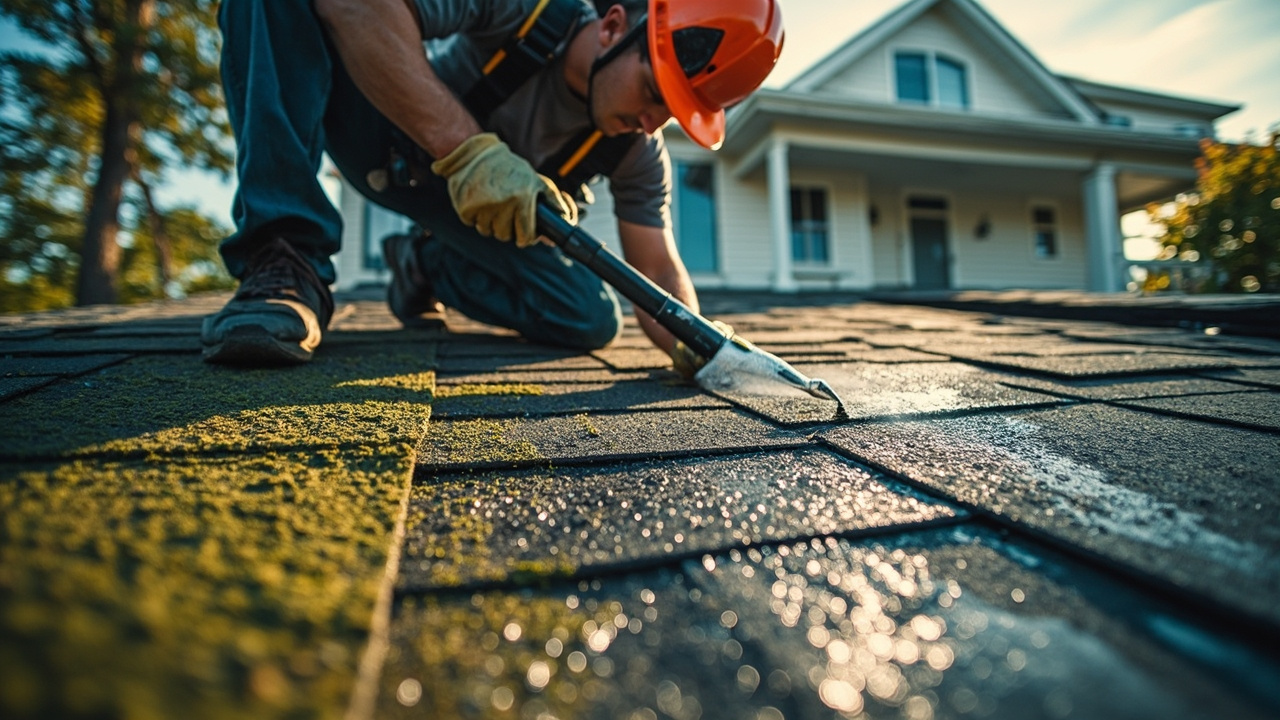
You step back to look at your house and notice dark streaks running down your shingles. Those black stains are not just dirt. They are gloeocapsa magma, a type of cyanobacteria that feeds on the limestone filler in asphalt shingles. The green patches are algae and moss taking root in the tiny crevices of your roofing material.

Louisville's climate creates the perfect breeding ground for these organisms. The Ohio River Valley humidity keeps roofs damp for extended periods. Warm springs and hot summers accelerate growth. Tree cover from neighborhoods like Crescent Hill and Cherokee Park means less direct sunlight, which allows roof mildew to thrive in shaded areas.

This is not a cosmetic issue. The organisms retain moisture against your shingles, accelerating granule loss and reducing your roof's reflectivity. A darker roof absorbs more heat, which drives up your cooling costs in July and August. The roots of moss and algae work their way under shingle edges, creating entry points for water. Left untreated, these organic roof stains can cut years off your roof's expected lifespan.

You cannot pressure wash these stains away without damaging your shingles. High-pressure water strips protective granules and voids most manufacturer warranties. Removing black streaks on roof surfaces requires a specialized approach that kills the organisms at the root without compromising your roofing material. Fortress Roofing Louisville uses industry-approved methods that clean without destruction.

Why Louisville Roofs Turn Black and Green
How We Remove Roof Stains Without Damaging Your Shingles

How We Remove Roof Stains Without Damaging Your Shingles

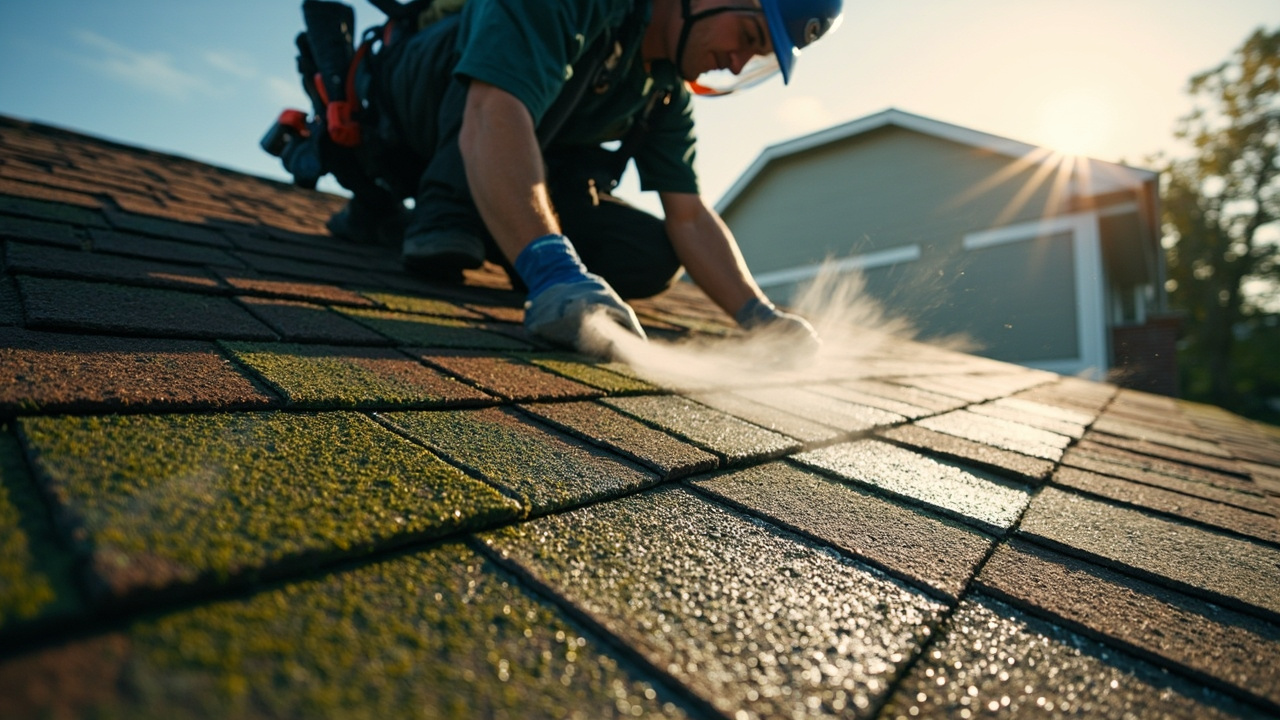
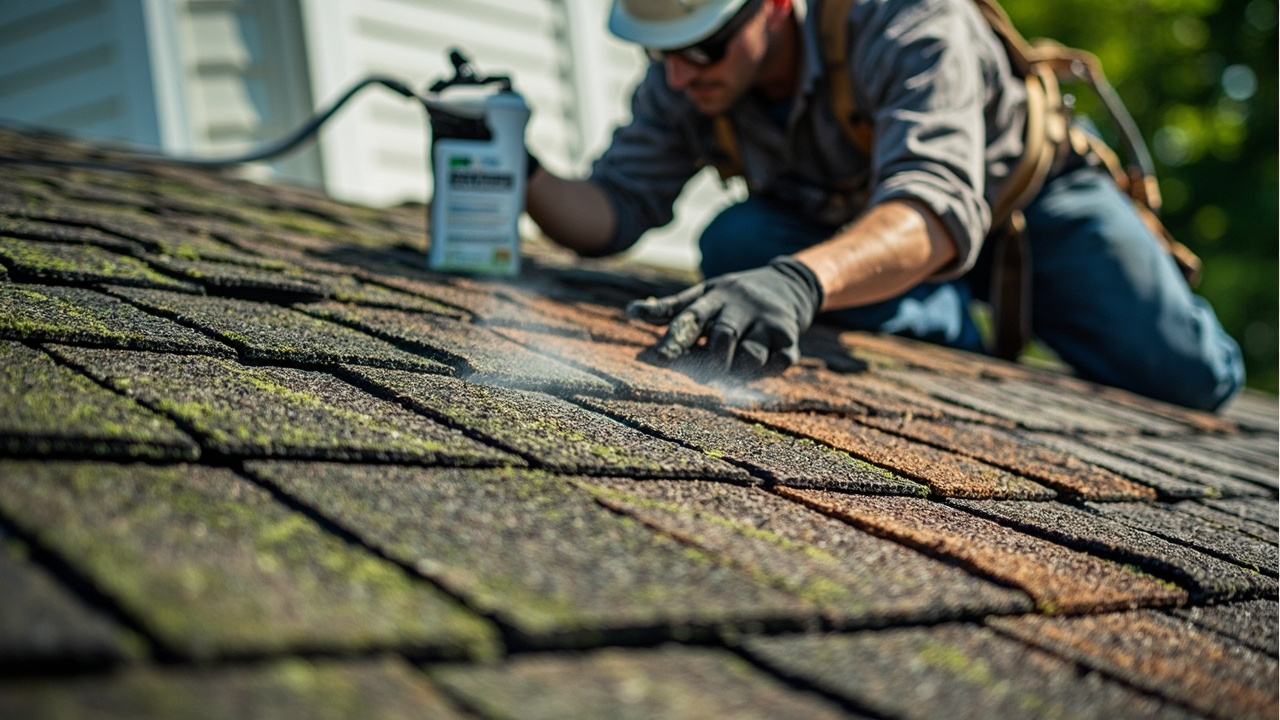
Our shingle algae treatment process uses a low-pressure soft wash system that applies a biocide solution specifically formulated for roof fungus cleaning. This method follows Asphalt Roofing Manufacturers Association guidelines and protects your warranty.

We start with a detailed roof inspection to identify the extent of colonization and check for any existing damage. We look for compromised flashing, lifted shingles, or areas where moisture has already penetrated. This tells us if you need repairs before or after the cleaning process.

The application uses a pump sprayer that delivers the cleaning solution at garden-hose pressure, around 60 PSI. This is far below the damaging threshold of pressure washing, which typically operates at 1,500 to 3,000 PSI. The biocide solution contains sodium hypochlorite and surfactants that break down the cell walls of algae, moss, and bacteria. The organisms die on contact, and the solution continues working for weeks after application.

We protect your landscaping with pre-wetting and tarps. The runoff is diluted and poses minimal risk to established plants, but we take precautions with delicate ornamentals and new plantings. We also rinse your gutters and downspouts to prevent buildup of dead organic material.

The roof typically shows immediate improvement, but full results appear over the next few rain cycles as dead organisms wash away naturally. For heavily stained roofs, we may apply a second treatment to eliminate deeply embedded colonies. The result is a clean roof that looks years younger without any damage to the protective granule layer or underlying asphalt.

What Happens During Your Roof Cleaning Appointment

Mold & Algae Stain Removal in Louisville – Restore Your Roof's Appearance and Extend Its Lifespan
01

Pre-Treatment Inspection

We walk your roof to map out stain patterns and identify vulnerable areas like skylights, chimneys, and valley flashing. We check for loose or damaged shingles that might need attention before cleaning. We also inspect your attic ventilation, because inadequate airflow contributes to moisture problems that encourage algae growth. This assessment takes 20 to 30 minutes and ensures we customize the treatment to your specific roof conditions.
02

Soft Wash Application

We mix the biocide solution on-site to the correct concentration for your roof type and stain severity. The soft wash pump delivers even coverage across the entire roof surface, with extra attention to heavily colonized areas. The solution needs 15 to 20 minutes of dwell time to penetrate the organism structure. We work in sections to maintain consistent coverage and prevent premature runoff. The entire application process typically takes one to two hours depending on roof size and complexity.
03

Post-Treatment Protection

We rinse gutters and downspouts to clear away dead material and inspect all treated areas for complete coverage. You will see immediate lightening of stains, with continued improvement over the next four to six weeks as rain naturally removes dead organisms. We provide maintenance recommendations, including trimming overhanging branches and installing zinc or copper strips at the ridge line to prevent future colonization. Most roofs stay clean for three to five years after professional treatment.

Why Louisville Homeowners Choose Fortress Roofing for Algae Removal

We understand the specific challenges of maintaining roofs in the Louisville metro area. The combination of Ohio Valley humidity, dense tree canopy in established neighborhoods, and older housing stock with north-facing roof planes creates conditions where algae and moss thrive. We have cleaned roofs from Clifton to St. Matthews, from Germantown bungalows to Anchorage estates.

Our technicians are trained in proper chemical handling and application techniques. We carry general liability insurance that specifically covers soft wash operations, which protects you if something goes wrong. Many fly-by-night operators lack proper coverage and use incorrect chemical concentrations that either fail to clean effectively or damage your roof.

We use cleaning solutions that meet environmental guidelines and break down naturally after doing their job. The sodium hypochlorite concentration we apply is similar to pool shock and dissipates rapidly in sunlight. We do not use harsh acids or solvents that can etch shingles or harm the underlying roof deck.

Fortress Roofing Louisville also understands local building practices. We know that many Louisville homes built before 2000 use three-tab shingles that require gentler treatment than modern architectural shingles. We adjust our approach based on your specific roofing material, age, and condition.

We provide written documentation of our process, including pre- and post-treatment photos. This protects your investment if you ever need to file an insurance claim or if you sell your home. A professional roof cleaning often adds thousands of dollars to perceived home value by improving curb appeal and demonstrating proactive maintenance.

You get straightforward communication about what we can and cannot fix. If your roof has underlying damage that cleaning will not resolve, we tell you upfront and provide options for repair or replacement.

What to Expect from Professional Roof Stain Removal

Timeline and Scheduling

Most roof cleaning projects take three to four hours from setup to completion, depending on roof size and complexity. We schedule services during dry weather with mild temperatures, typically spring through fall. We avoid cleaning when rain is forecast within 24 hours, as premature rinse-off reduces treatment effectiveness. We can usually schedule your service within one to two weeks of your initial call. You do not need to be home during the work, but we ask that you move vehicles from the driveway to prevent overspray on paint finishes.

Initial Assessment Process

We start with a free estimate that includes a visual roof inspection from the ground and from the roof surface if safely accessible. We identify all stain types, check for existing damage, and note any areas that need special attention. We explain what results you can expect and point out any conditions that might require additional work. The assessment takes 30 to 45 minutes, and you receive a written quote with a detailed scope of work before we schedule the cleaning.

Results and Appearance

Your roof will look noticeably cleaner immediately after treatment, with dark stains lightening by 60 to 80 percent on the first day. Full results appear over the following month as rain washes away dead organisms. Very old or heavily embedded stains may leave some shadow, but the active growth will be completely eliminated. The cleaning process restores your roof's original color and improves its solar reflectivity, which can reduce attic temperatures by 10 to 15 degrees during summer months. You will notice the difference from the street immediately.

Longevity and Maintenance

Professional roof fungus cleaning typically keeps your roof clean for three to five years, depending on environmental conditions and tree coverage. North-facing roof sections may show regrowth sooner than south-facing areas due to reduced sunlight exposure. We recommend annual inspections to catch early colonization before it becomes visible from the ground. Installing zinc or copper strips along the ridge provides ongoing protection, as rainwater carries microscopic metal particles down the roof, creating an inhospitable environment for algae and moss. We offer maintenance programs that include periodic inspections and reapplication before stains return.

Frequently Asked Questions

You Have Questions,
We Have Answers

Can algae stains be removed? +

Yes, algae stains can be removed from most roofing materials. Those dark streaks you see on your roof are typically Gloeocapsa magma, a type of algae that thrives in Louisville's humid climate. Professional soft washing with specialized cleaners breaks down the algae at the root without damaging shingles. Pressure washing alone can strip granules and void warranties. The key is addressing both the surface stain and the underlying growth. Louisville's moisture levels mean algae returns quickly without proper treatment. A professional service treats the problem and helps prevent regrowth for years.

Can active mold stains be removed? +

Active mold stains require immediate attention because the organism is still growing and releasing spores. Surface cleaning with household products only removes visible discoloration but leaves the root system intact. Professional mold remediation targets both the stain and the live colony using antimicrobial agents. Louisville's humidity creates ideal conditions for mold growth, so proper ventilation and moisture control are critical after removal. Simply scrubbing stains pushes spores into the air and spreads contamination. Active mold also signals an underlying moisture problem that must be fixed to prevent recurrence.

What is the best algae mold remover? +

The best algae and mold remover depends on the surface material. For roofing, sodium hypochlorite solutions applied through soft washing effectively kill algae without damaging shingles. Zinc or copper strips provide long-term prevention. For siding, oxygen bleach products work well on vinyl and wood. Louisville homeowners should avoid straight bleach on certain materials like asphalt shingles, as it can accelerate granule loss. Professional-grade treatments use surfactants that help cleaners penetrate deeper and last longer. Store-bought sprays often provide temporary cosmetic fixes without addressing root growth.

Can mold leave permanent stains? +

Mold can leave permanent stains on porous surfaces if not treated quickly. Materials like drywall, wood, and concrete absorb mold pigments deep into their structure. Even after killing the organism, the discoloration may remain. Non-porous surfaces like metal or glass rarely stain permanently. In Louisville's older homes with plaster walls and hardwood floors, delayed treatment often means replacement rather than cleaning. The stain itself is not dangerous once the mold is dead, but it signals past water intrusion. Professional remediation focuses on killing active growth first, then treating stains.

Does white vinegar remove algae stains? +

White vinegar can remove light algae stains from non-porous surfaces but lacks the strength for heavy roof contamination. Its acidity kills some algae on contact, making it useful for small patio areas or deck furniture. For Louisville roofs covered in dark streaks, vinegar is too weak and requires repeated applications. It also does not prevent regrowth. Professional treatments use stronger concentrations that penetrate deeper and include inhibitors. Vinegar works as a maintenance tool between professional cleanings but should not replace proper roof treatment, especially given our humid climate.

What is the hardest stain to remove from clothes? +

This question relates to fabric care rather than roofing or exterior cleaning. Protein-based stains like blood or grass are typically the hardest to remove from clothing because they bond with fabric fibers. However, for Louisville homeowners dealing with exterior mold and algae stains on surfaces, the challenge is different. Organic growth penetrates porous materials like wood siding or concrete, making removal difficult without professional equipment. The humidity here accelerates staining on outdoor surfaces. If you are seeing dark stains on your home's exterior, professional soft washing addresses the problem effectively.

What is the best mold stain remover? +

The best mold stain remover depends on the surface and stain severity. For hard surfaces, oxygen bleach solutions lift stains without harsh fumes. For fabric and porous materials, enzymatic cleaners break down organic matter. On Louisville roofs and siding, professional-grade sodium hypochlorite with proper dilution removes stains and kills spores. Avoid ammonia-based products, which can react dangerously with bleach residue. The real challenge is not just removing the stain but eliminating the moisture source. Professional services assess what caused the mold and recommend fixes to prevent return growth.

Will OxiClean remove mold stains? +

OxiClean can remove some mold stains from fabric and non-porous surfaces because it releases oxygen that lifts organic discoloration. It works on laundry, grout, and vinyl siding with light contamination. However, it does not kill mold. You are removing the stain but leaving live spores that will regrow. For Louisville homes with exterior mold on roofing or wood siding, OxiClean lacks the antimicrobial strength needed. Professional treatments combine stain removal with fungicidal action. OxiClean is useful for maintenance cleaning but is not a replacement for proper mold remediation.

Will magic eraser remove mold stains? +

Magic Eraser can remove surface mold stains from smooth, non-porous materials like tile or glass. The melamine foam works like ultra-fine sandpaper, abrading away discoloration. It does not kill mold, so regrowth happens quickly. On porous surfaces like drywall or wood, it only removes the top layer while spores remain embedded. Louisville's humidity means mold returns within days without proper treatment. Magic Eraser also wears down painted surfaces with repeated use. For cosmetic quick fixes on bathroom tile, it helps. For actual mold problems, you need antimicrobial cleaning.

Which kills mold better, bleach or vinegar? +

Bleach kills mold faster and more completely than vinegar, but both have limitations. Bleach works on non-porous surfaces like tile and glass but cannot penetrate wood or drywall where roots grow. Vinegar penetrates better but takes longer and is less effective on heavy contamination. Neither addresses the moisture problem causing mold. In Louisville homes, professional remediation uses EPA-registered fungicides stronger than household products. Bleach fumes can irritate lungs, and vinegar smells linger. For small surface mold, bleach is more effective. For widespread growth, call a professional.

How Louisville's Ohio Valley Climate Accelerates Roof Algae Growth

The Ohio River Valley creates a microclimate that holds moisture longer than surrounding regions. Louisville averages 45 inches of annual rainfall with high relative humidity from May through September. Morning dew often lingers on shaded roof sections until midday, giving algae spores the extended moisture contact they need to colonize. The mature tree canopy in neighborhoods like Cherokee Triangle and Old Louisville blocks direct sunlight that would otherwise inhibit organism growth. North-facing roof planes on these older homes may stay damp for days after rain, creating ideal conditions for roof mildew and fungus. This combination of factors means Louisville roofs develop visible staining faster than homes in drier climates or newer subdivisions with less tree cover.

Fortress Roofing Louisville has worked on hundreds of homes throughout Jefferson County and understands how local conditions affect different roofing materials. We know that Victorian homes in Old Louisville often have steeper roof pitches that shed water quickly but also create shadowed areas where moss takes hold. Ranch homes in the East End typically have lower slopes with more sun exposure but larger roof areas that show streaking earlier. We adjust our treatment approach based on your specific neighborhood conditions and architectural style. Our familiarity with local roofing contractors and building practices means we can spot substandard previous work that might complicate cleaning or indicate underlying problems.

Roofing Services in The Louisville Area

Fortress Roofing Louisville is proud to serve the entire metro area and surrounding communities. We've included a map here to help you easily locate our main office and visualize the broad service region we cover, ensuring that expert, trustworthy roofing help is always within reach for our neighbors. If you are located slightly outside the highlighted area, please call us—we are often able to accommodate projects across a wider geographic region to provide our quality services to those who need it most.

Address:
Fortress Roofing Louisville, 10200 Forest Green Blvd, Louisville, KY, 40223

Additional Services We Offer

Our news updates

Latest Articles & News from The Blogs

Replacing the TPO roof on your small business along Bardstown Road Your Bardstown Road commercial property faces unique challenges from…

Replacing the TPO roof on your small business along Bardstown Road

Replacing the TPO roof on your small business along Bardstown Road Your Bardstown Road commercial property faces unique challenges from…

How to get a professional roof certification before selling your Crestwood house

Selling a home in Crestwood KY means buyers expect proof your roof is sound. A professional roof certification gives buyers…

Luxury copper gutter installation for homes in the Cherokee Triangle

Luxury Copper Gutter Installation for Homes in the Cherokee Triangle\n\nCherokee Triangle homeowners understand that protecting their historic Victorian and Craftsman…

Contact Us

Those black streaks are eating away at your shingles right now. Call Fortress Roofing Louisville at (502) 678-7557 for a free roof assessment. We will show you exactly what is growing on your roof and how we can safely remove it without voiding your warranty or damaging your shingles.